THE CLASSIC COLLECTION✦An outlaw’s diary: the CommuneCLASSIC FREE BOOKS
An outlaw’s diary: the Commune
Cécile Tormay
THE CLASSIC COLLECTION · 1880
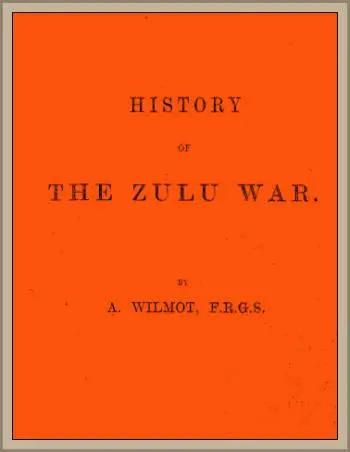
"History of the Zulu War" by Alexander Wilmot is a historical account written in the late 19th century. The book provides an overview of the significant events leading up to and during the Zulu War, focusing on the interactions between the Zulu nation and British colonial forces. It aims to give readers a better understanding of the causes, actions, and implications of this conflict. At the start of the work, the author explores the early history of the Zulu nation and its environment in Natal, detailing the migrations of different races to Southern Africa. The narrative highlights the rise of King Chaka and the militarization of the Zulu people, illustrating the transformation from a small tribe into a formidable military power. This opening sets the stage for an analysis of the political and social dynamics that culminated in the war, hinting at the catastrophic events that will follow as the British attempt to assert their control over the region.
Introduction adapted from the source catalogue; source summaries may be automatically generated.
Free to read · English · 73,674 words · No account needed
MAKE TIME FOR A GOOD BOOK
On by default. Untick to stop anonymous reading totals. Each page counts after 10 seconds in view. How this works.
Anonymous counting is on unless you have switched it off.
The Kafir war of 1835 was exceedingly disastrous to the colonists. Shortly after it had commenced Colonel Smith (afterwards Sir Harry Smith) wrote: "Already are 7000 persons dependent upon the Government for the necessaries of life. The land is filled with the lamentations of the widows and the fatherless. The indelible impressions already made upon myself by the horrors of an irruption of savages upon a scattered population, almost exclusively engaged in the peaceful occupation of husbandry, are such as make me look on those I have witnessed in a service of thirty years as trifles to what I have now witnessed." The Kafirs were on this occasion, as on every other, the aggressors, and plunder was the principal motive of the war. Fifteen years previously Great Britain had taken the responsibility of settling 5000 of her subjects in the frontier districts of the Cape Colony, and then defence and protection became both the duty and the interest of the home country. With great exertions and after immense loss the war was brought to a close. As a glorious trophy of the war no fewer than 15,000 Fingoes were literally saved from cruel captivity. The Moses who led them out of their house of bondage was Sir Benjamin D'Urban, and it was this wise and enlightened Governor who annexed the province of Queen Adelaide, and determined that the liberated people should be placed in this territory, so as to form "the best barrier against the entrance of the Kafirs into the great Fish River jungle." This extensive bush was the "quadrilateral" of the Kafirs, and it was only acquired by the best blood of the British and colonial troops.
During the whole period of the war of 1835 a very small section of colonists had endeavoured to poison the minds of our Downing Street rulers. Their arguments were based on several fictions, including affirmations about violence on the part of colonists having begot violence on the part of Kafirs, and that the great body of Kafirs had never offended us. They even went so far as to make use of glaring untruths respecting Hintza not having been engaged in the war, and misled Lord Glenelg so much respecting the particulars of that chief's death as to induce his lordship to make use of expressions which he was afterwards compelled to retract. A steady fire of prejudice, fed by pre-conceived ideas, constantly existed at home in favour of the Kafir tribes—and indeed all savages—which required very little effort to turn into a consuming fire of anger and indignation. These little efforts were sedulously made and constantly continued in South Africa with the most disastrous results. A number of well-meaning and prejudiced men, who can be styled the Exeter Hall party, declaimed with virulence against the colonists, and unfortunately Lord Glenelg was enrolled among their number. This nobleman evidently considered that humanitarian efforts were due to savages only, not to colonists, and through his contemptible folly became the means of inflicting the most severe injuries upon both. Sir Benjamin D'Urban, who was completely master of the situation, and had proved himself an honest and wise administrator, was entirely ignored, his policy was stigmatized in the most insulting manner, and the sentimental ideas of theorists made to take its place. In a despatch, dated 28th December, 1835, the Secretary of State entirely exculpates the Kafirs and censures both Sir Benjamin D'Urban and the colonists. He says: "In the conduct which was pursued towards the Kafir nation by the colonists, and the public authorities of the colony, through a long series of years, the Kafirs had ample justification of the late war; they had a perfect right to hazard the experiment, however hopeless, of extorting by force that redress which they could not expect otherwise to obtain; and the claim of sovereignty over the new province, bounded by the Keiskamma and the Kei, must be renounced. It rests upon a conquest resulting from a war in which, as far as I am at present able to judge, the original justice is on the side of the conquered, not of the conquering party." The governor is severely reproved for styling the Kafirs "irreclaimable savages," and the Wesleyan missionaries are also censured. As a sequence the whole country between the Fish and Buffalo rivers had to be handed over to the Kafirs, although that portion of this territory which extended between the Fish and Keiskamma rivers had been ceded by Gaika to the colony so far back as the year 1819, and was therefore not conquered in the recent war. The extraordinary fatuity of this course, judged from a military point of view, is evident from the description of the boundary furnished by Major Charters, military secretary to Sir George Napier. This able officer says: "The line of frontier is all in favour of the Kafirs; a dense jungle—the medium breadth is about five miles—torn and intersected by deep ravines, a great part impenetrable except to Kafirs and wild beasts, occupies about one hundred miles of frontier, following the sinuosities of the Great Fish river. The whole British army would be insufficient to guard it." In fact, this country comprised what, by analogy, may be styled the Kafir quadrilateral, or combination of almost impregnable fortresses. British and colonial blood had to be poured out as water in the wars of 1845 and 1852 to recapture this country; but fanaticism and prejudice are always impervious to argument. "Their blood be upon us and upon our children" is a sentence often repeated in history, so when the Waterloo veteran and gallant British soldier, Sir Benjamin D'Urban, was dismissed for doing his duty, Lord Glenelg defiantly wrote, "You announce to me the abandonment of the province of Adelaide and cast on me the responsibility of all the consequent disasters you predict. I am perfectly ready to take upon myself the sole and exclusive responsibility on this occasion."
Your reading position is saved on this browser. Take it to another device with a library code. Reading pages adapt to text, rather than matching a printed edition.
BEHIND THE BOOK
This eBook is for the use of anyone anywhere in the United States and most other parts of the world at no cost and with almost no restrictions whatsoever. You may copy it, give it away or re-use it under the terms of the Project Gutenberg License included with this eBook or online at www.gutenberg.org. If you are not located in the United States, you will have to check the laws of the country where you are located before using this eBook. Read the source licence.
The original source file, including credits and licence, is retained by this library. Request an original-format copy at no charge. Please include the book title and Project Gutenberg identifier #46166.
KEEP YOUR CURIOSITY GOING
Cécile Tormay

Moritz Busch
John L. Ransom
Frances Wright
Cécile Tormay

Mabel Potter Daggett