THE CLASSIC COLLECTION✦An outlaw’s diary: the CommuneCLASSIC FREE BOOKS
An outlaw’s diary: the Commune
Cécile Tormay
THE CLASSIC COLLECTION · 1880
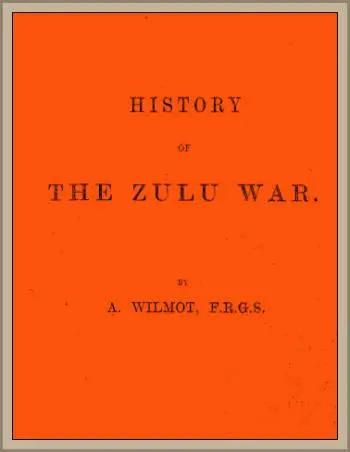
"History of the Zulu War" by Alexander Wilmot is a historical account written in the late 19th century. The book provides an overview of the significant events leading up to and during the Zulu War, focusing on the interactions between the Zulu nation and British colonial forces. It aims to give readers a better understanding of the causes, actions, and implications of this conflict. At the start of the work, the author explores the early history of the Zulu nation and its environment in Natal, detailing the migrations of different races to Southern Africa. The narrative highlights the rise of King Chaka and the militarization of the Zulu people, illustrating the transformation from a small tribe into a formidable military power. This opening sets the stage for an analysis of the political and social dynamics that culminated in the war, hinting at the catastrophic events that will follow as the British attempt to assert their control over the region.
Introduction adapted from the source catalogue; source summaries may be automatically generated.
Free to read · English · 73,674 words · No account needed
MAKE TIME FOR A GOOD BOOK
On by default. Untick to stop anonymous reading totals. Each page counts after 10 seconds in view. How this works.
Anonymous counting is on unless you have switched it off.
[Sidenote: Ignorance of Lord Chelmsford.]
While these occurrences had been taking place, Lord Chelmsford, with Colonel Glyn and a large portion of the third column, were absent in advance. On the 20th of January, the general had made a reconnoissance as far as a place called Matyana's stronghold—a deep valley, full of caves. Not having time to examine this place thoroughly, two separate parties were ordered out to bring back a full description of it. One of these, under Major Dartnell, reported that he found the enemy in force, and would be able to attack if three companies of infantry were sent to him. This was not acceded to. At 2.30 a.m. on the 22nd of January, Colonel Glyn was ordered to move to Dartnell's assistance with six companies 2-24th, four guns, and the mounted infantry. Colonel Durnford was at the same time ordered up to strengthen the Isandhlwana camp. The general followed Colonel Glyn's reinforcements, and reached Major Dartnell at 6.30 a.m. The enemy shortly showed at a distance, but retreated when a general advance was made. All this was, no doubt, part of the Zulu plan of amusing this portion of our forces, and keeping them from the Isandhlwana camp. The only actual engagement that took place was at the extreme right, where 500 Zulus were cut off, of whom 30 were killed. At 9 a.m. a short note was received from Lieutenant-Colonel Pulleine, stating that firing had been heard, but giving no further particulars. Lieutenant Milne, A.D.C., was sent by the general to the top of a high hill from which the camp could be seen, and he remained there for at least an hour, with a very powerful telescope, but could detect nothing unusual in that direction. A site for a new camp was then fixed upon, and the troops were ordered to bivouac there that night. The general then started to return to camp with the mounted infantry under Colonel Russell. When within six miles from Isandhlwana, Lord Chelmsford found the 1st Battalion, Native Contingent, halted, and shortly after Commandant Lonsdale rode up to report that he had ridden into camp, and found it in possession of the Zulus. Intimation had been received so far back as between 9.30 and 10 a.m.[25] that there was a force of the enemy in the close neighbourhood of the camp. Major Clery at this time received a half sheet of foolscap from Lieutenant-Colonel Pulleine, giving him that information, and as the force was only twelve miles from camp, an immediate rapid advance would have saved the day. The exact words of this letter are not given in the evidence, and are clearly of the utmost consequence. It was after this, however, that Lieutenant Milne, A.D.C., descended the hill, with the report that he noticed nothing except the cattle being driven into camp. This fact, however, was of great consequence, taken in connection with the pressing nature of the despatch from Colonel Pulleine. Notwithstanding all this, nothing was suspected until the dreadful news came like a thunderclap, that the camp had been taken and its defenders killed. So soon as the general heard the awful news, he sent back Major Gossett, A.D.C., to order Colonel Glyn to advance with all his force. He was six miles off, and it was then 4 p.m. The advance party, with the general, continued to go forward, until they were within two miles from the camp, when they halted. Colonel Russell went to the front to reconnoitre, and returned about 5.45 with a report that "all was as bad as could be." The Zulus held the camp. At 6 p.m. Colonel Glyn came up with his troops, which, having been formed into fighting order, were addressed by the general. No sign of wavering was perceptible. They advanced with steady courage, determined to attack and go through any enemy. Guns in the centre; three companies 2-24th on each flank in fours; Native Contingent; mounted infantry on extreme right, Natal Mounted Volunteers on the extreme left; Mounted Police in reserve;—in this order the force went forward with great speed. The artillery shelled the crest of the narrow neck over which the line of retreat lay, and positions were seized without opposition. The curtain of night had fallen over the dreadful scene of carnage, and the entire force, tired and dispirited, lay down amidst the débris of the plundered camp and the corpses of men, horses, and oxen. The weariness and sorrow of these hours of darkness will never be forgotten. The troops fully expected to be attacked in front and rear; but fortunately the Zulus knew better how to gain than how to improve a victory, and although there were several alarms, not a shot was fired, and Lord Chelmsford, with the remnant of his forces, was able at dawn of day to hurry on to the relief of Rorke's Drift.
Your reading position is saved on this browser. Take it to another device with a library code. Reading pages adapt to text, rather than matching a printed edition.
BEHIND THE BOOK
This eBook is for the use of anyone anywhere in the United States and most other parts of the world at no cost and with almost no restrictions whatsoever. You may copy it, give it away or re-use it under the terms of the Project Gutenberg License included with this eBook or online at www.gutenberg.org. If you are not located in the United States, you will have to check the laws of the country where you are located before using this eBook. Read the source licence.
The original source file, including credits and licence, is retained by this library. Request an original-format copy at no charge. Please include the book title and Project Gutenberg identifier #46166.
KEEP YOUR CURIOSITY GOING
Cécile Tormay

Moritz Busch
John L. Ransom
Frances Wright
Cécile Tormay

Mabel Potter Daggett