THE CLASSIC COLLECTION✦An outlaw’s diary: the CommuneCLASSIC FREE BOOKS
An outlaw’s diary: the Commune
Cécile Tormay
THE CLASSIC COLLECTION · 1880
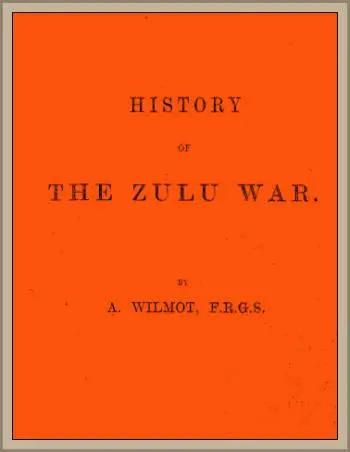
"History of the Zulu War" by Alexander Wilmot is a historical account written in the late 19th century. The book provides an overview of the significant events leading up to and during the Zulu War, focusing on the interactions between the Zulu nation and British colonial forces. It aims to give readers a better understanding of the causes, actions, and implications of this conflict. At the start of the work, the author explores the early history of the Zulu nation and its environment in Natal, detailing the migrations of different races to Southern Africa. The narrative highlights the rise of King Chaka and the militarization of the Zulu people, illustrating the transformation from a small tribe into a formidable military power. This opening sets the stage for an analysis of the political and social dynamics that culminated in the war, hinting at the catastrophic events that will follow as the British attempt to assert their control over the region.
Introduction adapted from the source catalogue; source summaries may be automatically generated.
Free to read · English · 73,674 words · No account needed
MAKE TIME FOR A GOOD BOOK
On by default. Untick to stop anonymous reading totals. Each page counts after 10 seconds in view. How this works.
Anonymous counting is on unless you have switched it off.
[45] On the 27th of June, Major-General Gifford telegraphs. "Black wires from Isandhlwana, 'I have just completed burying the dead; the outlying bodies may remain lost but those on the field of battle are now interred. The few remaining bodies far down on the Fugitives' Drift track will be interred in a day or two.'" Subsequently another party was sent, and suitable cairns were erected.
[46] The following graphic description of the pursuit of stragglers, and a narrow escape from falling into a Zulu trap, will be read with interest:—"During the first two days the king made no sign, and his people were marching, drilling, and performing war-dances in a fashion that did not strike me as being very pacific. On the day the armistice expired at noon (July 3rd), the question was solved in a way that must at least have convinced even Lord Chelmsford himself, that Cetywayo had been making a fool of him. Early in the morning (about 9 a.m.), lurking Zulus crept down to the strong kopje commanding the drift, and fired on the soldiers, who were washing and bathing in the river below. There was a great panic and scamper, but I believe no one was wounded. That, however, was not all, for some of them came across the river and drove off fifty trek oxen which were feeding, taking them over the river and some distance up the opposite bank. The cattle guard promptly crossed and recaptured them, but up to noon our camp was insulted by the impudent rascals firing at us, and some few of the Martini-Henry bullets actually fell in the camp and laager. This was carrying things too far, and at noon Buller's brigade was ordered out to try and cut off a few of them. We crossed the river at a drift below the camp, and galloping round the base of the hill, tried to pick off a few; but we were too late. They had seen our preparations and were off, and we saw them racing off near Nodwengu. We started in pursuit, and on nearing the kraal we overtook the rear fugitive. There was a race to get him, amongst half a dozen of us, but he fell to Lord William Beresford, who gave point with his sabre, just as the Zulu turned to use his assegai, running him through the shield and through the body. We then turned and galloped after the others, at least 150, whom we should have cut off had everything been on the square; but the black rascals were leading us into a nice trap, which had been laid for the express purpose. Half-way between Nodwengu and Ulundi there is a sluggish spruit, with a deep bed, which runs parallel with this road for some distance, and then turns sharply across it at right angles. I had doubts when I saw some of these fugitives disappear in the spruit bed, and these doubts became certainty when I heard Buller shout out to 'retire,' and almost at the same moment, before we could get our horses up and round, two lines of Zulus rose in the spruit bed and poured in a volley within 100 yards. If they had known how to shoot, which happily for us they do not, nearly every saddle ought to have been emptied; but only three men and half a dozen horses were over. Lord William Beresford took up a dismounted man, and Commandant D'Arcy one who was wounded. The former got his man out safely; the latter, I am sorry to say, was thrown by his horse bucking at the unaccustomed burden. The poor trooper was overtaken and killed, while the commandant was so severely bruised from falling on his revolver, that he was able to get back safe, but not able to take part in the next day's fight. It is hardly necessary to say that we galloped back at least as fast as we had come, perhaps even a little faster, for we were seen and pursued, Zulus springing up from the grass in all directions and firing continuously. We ran the gauntlet the whole way back, making only one rally on a crest sprinkled with small trees. The line in our rear was 500 yards off, and some of them were shot, but we were not able to stop very long, for we saw columns making for the drift to cut us off. Happily Colonel Buller had left Baker and his men on the stony kopje to cover our retreat, and his men peppered one of these intercepting columns so effectually as to stop their advance. Our peril was seen from the camp, and Major Le Grice's battery of 9-pounders took up a position on the high ground in front, from which they so astonished the other column of Zulus by a well-directed fire of shrapnel at long range, that they too were prevented from carrying out their philanthropic intention. We had only, therefore, the pursuing Zulus to deal with, but they followed up closely as far as the ford, where Captain Whalley, with the Natal Light Horse, drew up and covered our crossing. It is a marvel to me, considering the heavy fire that we were under, that we only lost three men killed, four wounded, and thirteen horses missing."
Your reading position is saved on this browser. Take it to another device with a library code. Reading pages adapt to text, rather than matching a printed edition.
BEHIND THE BOOK
This eBook is for the use of anyone anywhere in the United States and most other parts of the world at no cost and with almost no restrictions whatsoever. You may copy it, give it away or re-use it under the terms of the Project Gutenberg License included with this eBook or online at www.gutenberg.org. If you are not located in the United States, you will have to check the laws of the country where you are located before using this eBook. Read the source licence.
The original source file, including credits and licence, is retained by this library. Request an original-format copy at no charge. Please include the book title and Project Gutenberg identifier #46166.
KEEP YOUR CURIOSITY GOING
Cécile Tormay

Moritz Busch
John L. Ransom
Frances Wright
Cécile Tormay

Mabel Potter Daggett