READ · DISCOVER · ENJOYClassic literature · Always free
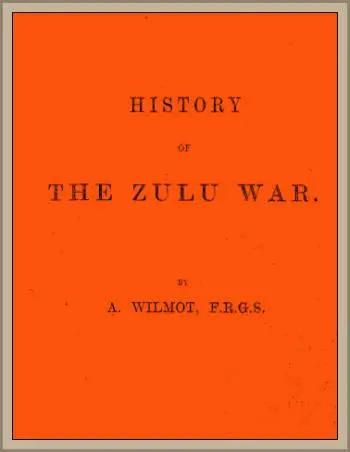
History of the Zulu War — digital edition cover

THE CLASSIC COLLECTION · 1880

History of the Zulu War

"History of the Zulu War" by Alexander Wilmot is a historical account written in the late 19th century. The book provides an overview of the significant events leading up to and during the Zulu War, focusing on the interactions between the Zulu nation and British colonial forces. It aims to give readers a better understanding of the causes, actions, and implications of this conflict. At the start of the work, the author explores the early history of the Zulu nation and its environment in Natal, detailing the migrations of different races to Southern Africa. The narrative highlights the rise of King Chaka and the militarization of the Zulu people, illustrating the transformation from a small tribe into a formidable military power. This opening sets the stage for an analysis of the political and social dynamics that culminated in the war, hinting at the catastrophic events that will follow as the British attempt to assert their control over the region.

Introduction adapted from the source catalogue; source summaries may be automatically generated.

Start reading ↓

Free to read · English · 73,674 words · No account needed

MAKE TIME FOR A GOOD BOOK

History of the Zulu War

On by default. Untick to stop anonymous reading totals. Each page counts after 10 seconds in view. How this works.

Anonymous counting is on unless you have switched it off.

History of the Zulu War

"Sir,—In my despatch of January 24th last, I only partially answered your despatch of December 18th. I was, in fact, interrupted while writing by the intelligence of our disaster at the headquarter camp on the 22nd, and was obliged to close my unfinished despatch to be in time for the mail. The very serious check which we received on the 22nd does not, however, seem to me to call for any modification in the opinions I had already ventured to lay before her Majesty's Government; on the contrary, it seems to confirm most strongly the arguments I had already advanced in my despatch of the 24th, to show that it was impossible, with any regard to the safety of these colonies, to defer placing in the hands of the general commanding her Majesty's forces the enforcement of the demands made on Cetywayo. Deeply as, in common with every subject of her Majesty, I deplore the disastrous check we have received, it is impossible to shut one's eyes to the fact that it was, in all human probability, mainly due to disregard of the general's orders that so great a disaster occurred; whilst every circumstance accompanying or following the events of that day proves what an insecure position we occupied both here and in the Transvaal with such a neighbour along so many hundred miles of undefended frontier. As a consequence of the crippling of Colonel Glyn's and Colonel Durnford's columns, and the shock which has been given to the colonial forces, Europeans as well as natives, the columns of Colonel Pearson and Colonel Wood have been obliged to suspend their advance and await reinforcements, which can only be looked for to the extent required from more distant parts of South Africa and from England. It has become painfully evident that the Zulu king has an army at his command, which could almost any day unexpectedly invade Natal, and, owing to the great extent of frontier and utter helplessness of the undisciplined hordes of Natal natives to offer effectual resistance, the Zulus might march at will through the country, devastating and murdering, without a chance of being checked, so long as they abstained from attacking the entrenched posts of her Majesty's troops, which are from fifty to a hundred miles apart. The capital and all the principal towns are at this moment in 'laager,' prepared for attack, which, even if successfully resisted, would leave two-thirds of them in ashes, and the country around thoroughly desolated. From every part of South Africa outside the colony, where the native races predominate, come the same reports of uneasiness and of intended rising of the native race against the white man; whilst the majority of the Transvaal European population is in a state of avowed readiness to take any opportunity of shaking off the yoke of the English Government. It may be said that these are only the stronger reasons why hostilities should not have been commenced with the Zulu king. But I submit that every circumstance which has lately occurred shows how impossible it is to defer hostilities for more than a few weeks at the utmost, possibly till the harvest now ripening was gathered, and till the Tugela was fordable. The feeling which has just burst out, both among native tribes and in the Transvaal, was there already, and in the Transvaal, at all events, its expression could not have been deferred by any postponement of hostilities with the Zulus. But what possible chance was there that Cetywayo himself would for any length of time have remained quiescent within his own borders? He had not acknowledged officially, and in the usual form, the award of the disputed territory in his favour, nor had he condescended even to discuss the terms of the High Commissioner's messages to him. Had Lord Chelmsford's large force been kept permanently on his frontier, he might possibly have refrained from action as long as this force remained. But its permanent retention was not, as Cetywayo knew, probable, and the removal of the force would assuredly have led to a renewal of the encroachments and the violations of the territory which he had directed or acquiesced in during the preceding year and a half; the slightest accident might have led to a collision taking us at a disadvantage, and what he had the power to do in a colony so little prepared for self-defence may be judged from what he has done since her Majesty's troops crossed the border. It seems to me vain, I had almost said criminal, to shut our eyes to the fact that there has grown up, by our sufferance, alongside this colony, a very powerful military organization, directed by an irresponsible, bloodthirsty, and treacherous despot, and that as long as this organization exists and is so directed it is impossible for peaceful subjects of her Majesty to feel security of life or property within fifty miles of his border. The existence of this military organization makes that of a peaceful English community in his neighbourhood impossible, and unless Cetywayo's power of murder and plunder be restrained, this colony can only continue to exist as an armed camp. Again, it may be said that before attempting to coerce Cetywayo the presence of a large force in the field should have been secured. To this I can only answer that though a larger force might undoubtedly have lessened the chance of successful opposition, there was no reason whatever at the time to suppose that the force at our disposal was too small for the task attempted. I will not dwell on what might have been the case had orders been obeyed, and had things happened otherwise than they did happen. I stand on the broad fact that I sought information in every possible quarter, and had, and have, no reason whatever to suppose that there was anything rash in the undertaking. I know of no one who is supposed to know the Zulus whose advice had not been as fully heard as I could obtain it. Of the three persons who, among unofficial as well as official authorities, are supposed best to know the Zulus, their feelings and probable intentions, one expressed to me his own belief in the ultimate acceptance of the terms offered without fighting; another considered we had, in our military calculations, greatly over-estimated the Zulu power; and a third, who had perhaps better means of judging than any one else, whilst agreeing that the Zulu power had been much overrated, was convinced that the Zulu people themselves would bring their tyrant to reason, and that, after a single action or two, the military system of the Zulus would collapse. It is a singular coincidence that the latter opinion was expressed to me on the 22nd, at the very time that our camp at Isandala was in possession of the Zulus. Looking back on the past in the light of what has happened, I cannot think the work was rashly undertaken. But even if I could have hoped that further reinforcements could be expected within a reasonable time in answer to a call for them, there was no time to wait. No one who had carefully studied the events of the last two years, and knew the ways of these barbarians, could reasonably have expected the Zulus to remain quiet, and it was clear that, even if they deferred action, there were elements of strife elsewhere which could not be evaded or delayed. As I have said before, and in other communications, the die for peace or for war had been cast more than two years ago. It was a simple question whether we should steadily bring our differences to an issue on a clear and unmistakable demand for our right to live at peace with our neighbours, or whether we should await the convenience of the Zulu king, and be taken at disadvantage when he saw his opportunity. It seems to me that this same principle of self-preservation and self-defence should be steadfastly adhered to in all our future proceedings. It may be quite possible to patch up a peace with this or that tribe, which shall for the time be more or less satisfactory to some of the interests in this or in a neighbouring colony. But I submit that her Majesty's Government should not permit peace to be made till her Majesty's unquestioned supremacy has been established and recognized by all Zulu tribes who now acknowledge Cetywayo between this and the Portuguese territory around Delagoa Bay. This I firmly believe to be the only guarantee for peace, security, good government, and progressive civilization throughout her Majesty's possessions and all neighbouring territories in South Africa; and without such security I feel assured that this colony of Natal can never be a safe residence for peace-loving and civilized men of European descent.

Your reading position is saved on this browser. Take it to another device with a library code. Reading pages adapt to text, rather than matching a printed edition.

BEHIND THE WORDS

About Alexander Wilmot

Alexander Wilmot (1836–1924). Explore History of the Zulu War in this collection. These books span history.

Explore this author’s books →

THE READERS’ VERDICT

How did this story stay with you?

Not rated yet
Your rating for History of the Zulu War

Be the first to share your verdict.

One rating per browser, which you can change or remove. A necessary browser identifier remembers your vote. How ratings work

A GOOD STORY DESERVES COMPANY

Pass this book along.

A great read is even better when it’s shared.

SEND A LITTLE INSPIRATION

Share this book

BEHIND THE BOOK

Edition & source details.

Title
History of the Zulu War
Author
Alexander Wilmot
First publication (Open Library catalogue match)
1880
Digital edition publisher
Project Gutenberg
Gutenberg release date
2014-07-01
Language
English
Source edition imprint
Not stated in source catalogue
Source identifier
Project Gutenberg #46166
Contributors
No additional named contributors in source metadata

Public-domain source & licence

This eBook is for the use of anyone anywhere in the United States and most other parts of the world at no cost and with almost no restrictions whatsoever. You may copy it, give it away or re-use it under the terms of the Project Gutenberg License included with this eBook or online at www.gutenberg.org. If you are not located in the United States, you will have to check the laws of the country where you are located before using this eBook. Read the source licence.

Full source licence and obtaining an original copy

The original source file, including credits and licence, is retained by this library. Request an original-format copy at no charge. Please include the book title and Project Gutenberg identifier #46166.

the full Project Gutenberg License must appear
prominently whenever any copy of a Project Gutenberg work (any work
on which the phrase “Project Gutenberg” appears, or with which the
phrase “Project Gutenberg” is associated) is accessed, displayed,
performed, viewed, copied or distributed:

This eBook is for the use of anyone anywhere in the United States and most
other parts of the world at no cost and with almost no restrictions
whatsoever. You may copy it, give it away or re-use it under the terms
of the Project Gutenberg™ License included with this eBook or online
at www.gutenberg.org. If you
are not located in the United States, you will have to check the laws
of the country where you are located before using this eBook.

1.E.2. If an individual Project Gutenberg electronic work is
derived from texts not protected by U.S. copyright law (does not
contain a notice indicating that it is posted with permission of the
copyright holder), the work can be copied and distributed to anyone in
the United States without paying any fees or charges. If you are
redistributing or providing access to a work with the phrase “Project
Gutenberg” associated with or appearing on the work, you must comply
either with the requirements of paragraphs 1.E.1 through 1.E.7 or
obtain permission for the use of the work and the Project Gutenberg
trademark as set forth in paragraphs 1.E.8 or 1.E.9.

1.E.3. If an individual Project Gutenberg electronic work is posted
with the permission of the copyright holder, your use and distribution
must comply with both paragraphs 1.E.1 through 1.E.7 and any
additional terms imposed by the copyright holder. Additional terms
will be linked to the Project Gutenberg License for all works
posted with the permission of the copyright holder found at the
beginning of this work.

1.E.4. Do not unlink or detach or remove the full Project Gutenberg
License terms from this work, or any files containing a part of this
work or any other work associated with Project Gutenberg.

1.E.5. Do not copy, display, perform, distribute or redistribute this
electronic work, or any part of this electronic work, without
prominently displaying the sentence set forth in paragraph 1.E.1 with
active links or immediate access to the full terms of the Project
Gutenberg License.

1.E.6. You may convert to and distribute this work in any binary,
compressed, marked up, nonproprietary or proprietary form, including
any word processing or hypertext form. However, if you provide access
to or distribute copies of a Project Gutenberg work in a format
other than “Plain Vanilla ASCII” or other format used in the official
version posted on the official Project Gutenberg website
(www.gutenberg.org), you must, at no additional cost, fee or expense
to the user, provide a copy, a means of exporting a copy, or a means
of obtaining a copy upon request, of the work in its original “Plain
Vanilla ASCII” or other form. Any alternate format must include the
full Project Gutenberg License as specified in paragraph 1.E.1.

1.E.7. Do not charge a fee for access to, viewing, displaying,
performing, copying or distributing any Project Gutenberg works
unless you comply with paragraph 1.E.8 or 1.E.9.

1.E.8. You may charge a reasonable fee for copies of or providing
access to or distributing Project Gutenberg electronic works
provided that:

• You pay a royalty fee of 20% of the gross profits you derive from
the use of Project Gutenberg works calculated using the method
you already use to calculate your applicable taxes. The fee is owed
to the owner of the Project Gutenberg trademark, but he has
agreed to donate royalties under this paragraph to the Project
Gutenberg Literary Archive Foundation. Royalty payments must be paid
within 60 days following each date on which you prepare (or are
legally required to prepare) your periodic tax returns. Royalty
payments should be clearly marked as such and sent to the Project
Gutenberg Literary Archive Foundation at the address specified in
Section 4, “Information about donations to the Project Gutenberg
Literary Archive Foundation.”

• You provide a full refund of any money paid by a user who notifies
you in writing (or by e-mail) within 30 days of receipt that s/he
does not agree to the terms of the full Project Gutenberg™
License. You must require such a user to return or destroy all
copies of the works possessed in a physical medium and discontinue
all use of and all access to other copies of Project Gutenberg™
works.

• You provide, in accordance with paragraph 1.F.3, a full refund of
any money paid for a work or a replacement copy, if a defect in the
electronic work is discovered and reported to you within 90 days of
receipt of the work.

• You comply with all other terms of this agreement for free
distribution of Project Gutenberg™ works.


1.E.9. If you wish to charge a fee or distribute a Project
Gutenberg™ electronic work or group of works on different terms than
are set forth in this agreement, you must obtain permission in writing
from the Project Gutenberg Literary Archive Foundation, the manager of
the Project Gutenberg™ trademark. Contact the Foundation as set
forth in Section 3 below.

1.F.

1.F.1. Project Gutenberg volunteers and employees expend considerable
effort to identify, do copyright research on, transcribe and proofread
works not protected by U.S. copyright law in creating the Project
Gutenberg™ collection. Despite these efforts, Project Gutenberg™
electronic works, and the medium on which they may be stored, may
contain “Defects,” such as, but not limited to, incomplete, inaccurate
or corrupt data, transcription errors, a copyright or other
intellectual property infringement, a defective or damaged disk or
other medium, a computer virus, or computer codes that damage or
cannot be read by your equipment.

1.F.2. LIMITED WARRANTY, DISCLAIMER OF DAMAGES - Except for the “Right
of Replacement or Refund” described in paragraph 1.F.3, the Project
Gutenberg Literary Archive Foundation, the owner of the Project
Gutenberg™ trademark, and any other party distributing a Project
Gutenberg™ electronic work under this agreement, disclaim all
liability to you for damages, costs and expenses, including legal
fees. YOU AGREE THAT YOU HAVE NO REMEDIES FOR NEGLIGENCE, STRICT
LIABILITY, BREACH OF WARRANTY OR BREACH OF CONTRACT EXCEPT THOSE
PROVIDED IN PARAGRAPH 1.F.3. YOU AGREE THAT THE FOUNDATION, THE
TRADEMARK OWNER, AND ANY DISTRIBUTOR UNDER THIS AGREEMENT WILL NOT BE
LIABLE TO YOU FOR ACTUAL, DIRECT, INDIRECT, CONSEQUENTIAL, PUNITIVE OR
INCIDENTAL DAMAGES EVEN IF YOU GIVE NOTICE OF THE POSSIBILITY OF SUCH
DAMAGE.

1.F.3. LIMITED RIGHT OF REPLACEMENT OR REFUND - If you discover a
defect in this electronic work within 90 days of receiving it, you can
receive a refund of the money (if any) you paid for it by sending a
written explanation to the person you received the work from. If you
received the work on a physical medium, you must return the medium
with your written explanation. The person or entity that provided you
with the defective work may elect to provide a replacement copy in
lieu of a refund. If you received the work electronically, the person
or entity providing it to you may choose to give you a second
opportunity to receive the work electronically in lieu of a refund. If
the second copy is also defective, you may demand a refund in writing
without further opportunities to fix the problem.

1.F.4. Except for the limited right of replacement or refund set forth
in paragraph 1.F.3, this work is provided to you ‘AS-IS’, WITH NO
OTHER WARRANTIES OF ANY KIND, EXPRESS OR IMPLIED, INCLUDING BUT NOT
LIMITED TO WARRANTIES OF MERCHANTABILITY OR FITNESS FOR ANY PURPOSE.

1.F.5. Some states do not allow disclaimers of certain implied
warranties or the exclusion or limitation of certain types of
damages. If any disclaimer or limitation set forth in this agreement
violates the law of the state applicable to this agreement, the
agreement shall be interpreted to make the maximum disclaimer or
limitation permitted by the applicable state law. The invalidity or
unenforceability of any provision of this agreement shall not void the
remaining provisions.

1.F.6. INDEMNITY - You agree to indemnify and hold the Foundation, the
trademark owner, any agent or employee of the Foundation, anyone
providing copies of Project Gutenberg™ electronic works in
accordance with this agreement, and any volunteers associated with the
production, promotion and distribution of Project Gutenberg™
electronic works, harmless from all liability, costs and expenses,
including legal fees, that arise directly or indirectly from any of
the following which you do or cause to occur: (a) distribution of this
or any Project Gutenberg work, (b) alteration, modification, or
additions or deletions to any Project Gutenberg work, and (c) any
Defect you cause.

Section 2. Information about the Mission of Project Gutenberg

Project Gutenberg is synonymous with the free distribution of
electronic works in formats readable by the widest variety of
computers including obsolete, old, middle-aged and new computers. It
exists because of the efforts of hundreds of volunteers and donations
from people in all walks of life.

Volunteers and financial support to provide volunteers with the
assistance they need are critical to reaching Project Gutenberg’s
goals and ensuring that the Project Gutenberg collection will
remain freely available for generations to come. In 2001, the Project
Gutenberg Literary Archive Foundation was created to provide a secure
and permanent future for Project Gutenberg and future
generations. To learn more about the Project Gutenberg Literary
Archive Foundation and how your efforts and donations can help, see
Sections 3 and 4 and the Foundation information page at www.gutenberg.org.

Section 3. Information about the Project Gutenberg Literary Archive Foundation

The Project Gutenberg Literary Archive Foundation is a non-profit
501(c)(3) educational corporation organized under the laws of the
state of Mississippi and granted tax exempt status by the Internal
Revenue Service. The Foundation’s EIN or federal tax identification
number is 64-6221541. Contributions to the Project Gutenberg Literary
Archive Foundation are tax deductible to the full extent permitted by
U.S. federal laws and your state’s laws.

The Foundation’s business office is located at 41 Watchung Plaza #516,
Montclair NJ 07042, USA, +1 (862) 621-9288. Email contact links and up
to date contact information can be found at the Foundation’s website
and official page at www.gutenberg.org/contact

Section 4. Information about Donations to the Project Gutenberg
Literary Archive Foundation

Project Gutenberg™ depends upon and cannot survive without widespread
public support and donations to carry out its mission of
increasing the number of public domain and licensed works that can be
freely distributed in machine-readable form accessible by the widest
array of equipment including outdated equipment. Many small donations
($1 to $5,000) are particularly important to maintaining tax exempt
status with the IRS.

The Foundation is committed to complying with the laws regulating
charities and charitable donations in all 50 states of the United
States. Compliance requirements are not uniform and it takes a
considerable effort, much paperwork and many fees to meet and keep up
with these requirements. We do not solicit donations in locations
where we have not received written confirmation of compliance. To SEND
DONATIONS or determine the status of compliance for any particular state
visit www.gutenberg.org/donate.

While we cannot and do not solicit contributions from states where we
have not met the solicitation requirements, we know of no prohibition
against accepting unsolicited donations from donors in such states who
approach us with offers to donate.

International donations are gratefully accepted, but we cannot make
any statements concerning tax treatment of donations received from
outside the United States. U.S. laws alone swamp our small staff.

Please check the Project Gutenberg web pages for current donation
methods and addresses. Donations are accepted in a number of other
ways including checks, online payments and credit card donations. To
donate, please visit: www.gutenberg.org/donate.

Section 5. General Information About Project Gutenberg electronic works

Professor Michael S. Hart was the originator of the Project
Gutenberg concept of a library of electronic works that could be
freely shared with anyone. For forty years, he produced and
distributed Project Gutenberg eBooks with only a loose network of
volunteer support.

Project Gutenberg eBooks are often created from several printed
editions, all of which are confirmed as not protected by copyright in
the U.S. unless a copyright notice is included. Thus, we do not
necessarily keep eBooks in compliance with any particular paper
edition.

Most people start at our website which has the main PG search
facility: www.gutenberg.org.

This website includes information about Project Gutenberg,
including how to make donations to the Project Gutenberg Literary
Archive Foundation, how to help produce our new eBooks, and how to
subscribe to our email newsletter to hear about new eBooks.


KEEP YOUR CURIOSITY GOING

Your next chapter awaits.