THE CLASSIC COLLECTION✦An outlaw’s diary: the CommuneCLASSIC FREE BOOKS
An outlaw’s diary: the Commune
Cécile Tormay
THE CLASSIC COLLECTION · 1880
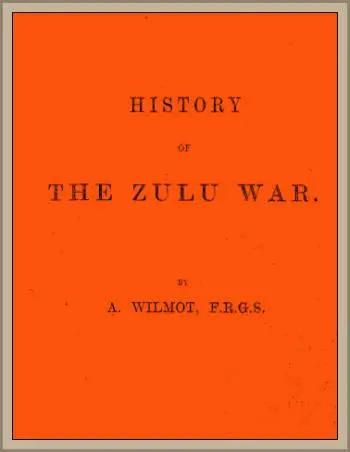
"History of the Zulu War" by Alexander Wilmot is a historical account written in the late 19th century. The book provides an overview of the significant events leading up to and during the Zulu War, focusing on the interactions between the Zulu nation and British colonial forces. It aims to give readers a better understanding of the causes, actions, and implications of this conflict. At the start of the work, the author explores the early history of the Zulu nation and its environment in Natal, detailing the migrations of different races to Southern Africa. The narrative highlights the rise of King Chaka and the militarization of the Zulu people, illustrating the transformation from a small tribe into a formidable military power. This opening sets the stage for an analysis of the political and social dynamics that culminated in the war, hinting at the catastrophic events that will follow as the British attempt to assert their control over the region.
Introduction adapted from the source catalogue; source summaries may be automatically generated.
Free to read · English · 73,674 words · No account needed
MAKE TIME FOR A GOOD BOOK
On by default. Untick to stop anonymous reading totals. Each page counts after 10 seconds in view. How this works.
Anonymous counting is on unless you have switched it off.
In spite of his large proportions, Cetywayo is a handsome man, of much dignity of aspect. His limbs are large, but symmetrical; very broad chest, large and lustrous eyes, intelligent and not unamiable countenance. With plenty of food and perfect safety, he lost all inclination to be shot. Speaking of the war, he took all the responsibility for the battle of Kambula, but declared that Ulundi was fought against his wish, and in consequence of the determination of his young men once more to try the arbitration of the sword. Now that his power is broken, he laughs to scorn the idea of any more fighting being possible against British rule.
A great meeting was called by the white "inkosi" (Sir Garnet) for the 1st of September—the same day, six years ago, on which Cetywayo was crowned. It was fitting that the anniversary of the day of promises never fulfilled should be also a day of atonement. Two hundred Zulus were seated a few paces from Sir Garnet's tent, and although naturally great talkers, the silence of death prevailed. Ranged in rows four deep, with the principal chiefs in front, they listened with perfect attention to the words which decided the fate of their country and of themselves. Two of the king's brothers and the prime minister of the king were present. At half-past four, Sir Garnet Wolseley left his tent, and, as he walked towards the assembly, was greeted with uplifted hands and shouts of "Inkose." Leaning upon the hilt of his sword, he calmly gazed for a few moments upon the representatives of a conquered nation assembled to hear its doom. Mr. Shepstone interpreted into Zulu sentence by sentence as Sir Garnet Wolseley spoke, as follows:—
[Sidenote: Sir Garnet Wolseley and the Zulus.]
"It is six years ago on this very day, the 1st of September, that Cetywayo was crowned King of the Zulus, and only yesterday you yourselves have seen him carried away a prisoner, never to return again to Zululand. On the occasion of his coronation Cetywayo made certain promises regarding laws to be observed in the future, which promises he never fulfilled, and his country is now about to be divided into different chieftainships, and I hope his fate will be a warning to all of the chiefs not to follow in his footsteps, but to act according to the commands and terms given by the English Queen, who will most certainly punish any who do not do so. The interests and welfare of the South African races are very dear to the Queen, and she is anxious that the natives of this country should thrive, as those in Natal have done up to the present time. She will be lenient to faults arising from ignorance; but although inclined, as I have said, to deal leniently when ignorance causes them to commit faults, those who persistently go contrary to good government and peace will assuredly be punished as Cetywayo has been. As they are aware, she lives far away; but her power is very great, and she is quite able to, and will, punish those who take life or make wars contrary to her orders. Cetywayo took the lives of his people for trivial offences, without giving them a chance of defending themselves, or allowing them a fair trial. This must cease. In future, trivial offences will be punishable by fines. Cetywayo kept on foot a large and powerful army, and did not allow his men to marry without his permission; in future, the young men will be allowed to marry when and whom they like, provided always they have sufficient for the support of a wife, and the consent of the girl's parents. Disobedience of this law is to be punishable by a fine inflicted by the headmen of the kraal. As Zululand is almost entirely surrounded by country under the Queen of England's rule, and not threatened in any way, there is no need of a larger army; and in future no guns or ammunition will be allowed to be imported, or to be in the hands of any Zulu. Nor will any stores be permitted to be landed on the Zulu coast, in case, under the guise of merchandise, arms should be brought into the country. The young men are to be encouraged to labour, and are to be allowed to come and leave when they like; for only by work can they become rich and prosperous. Cetywayo encouraged witchcraft, and what is known as 'smelling out.' That I look to the chiefs to put down, and an end to such ridiculous and foolish practices arrived at. Cetywayo, by this practice of witchcraft, caused many lives to be taken, and neither life nor property was safe. And each chief must clearly understand, before he signs his name to the treaty, that none of his people must be taken without a fair trial before the chief being granted, and the accused being allowed to call his witnesses. In what I have said there is nothing new, though the young men may have forgotten; but these laws and customs held good before Chaka's ancient laws and usages introduced what is known as the military system. I intend leaving an English officer here as Resident, to be the eyes and ears of England, to watch over the people, to see the laws observed, and that the chiefs rule with justice and equity. I am aware there are still a considerable number of rifles and guns of ours, as well as cattle scattered about the country, and those chiefs who wish to stand well with the English Queen will lose no time in bringing them in and delivering them up to the British Resident.
Your reading position is saved on this browser. Take it to another device with a library code. Reading pages adapt to text, rather than matching a printed edition.
BEHIND THE BOOK
This eBook is for the use of anyone anywhere in the United States and most other parts of the world at no cost and with almost no restrictions whatsoever. You may copy it, give it away or re-use it under the terms of the Project Gutenberg License included with this eBook or online at www.gutenberg.org. If you are not located in the United States, you will have to check the laws of the country where you are located before using this eBook. Read the source licence.
The original source file, including credits and licence, is retained by this library. Request an original-format copy at no charge. Please include the book title and Project Gutenberg identifier #46166.
KEEP YOUR CURIOSITY GOING
Cécile Tormay

Moritz Busch
John L. Ransom
Frances Wright
Cécile Tormay

Mabel Potter Daggett