THE CLASSIC COLLECTION✦An outlaw’s diary: the CommuneCLASSIC FREE BOOKS
An outlaw’s diary: the Commune
Cécile Tormay
THE CLASSIC COLLECTION · 1865
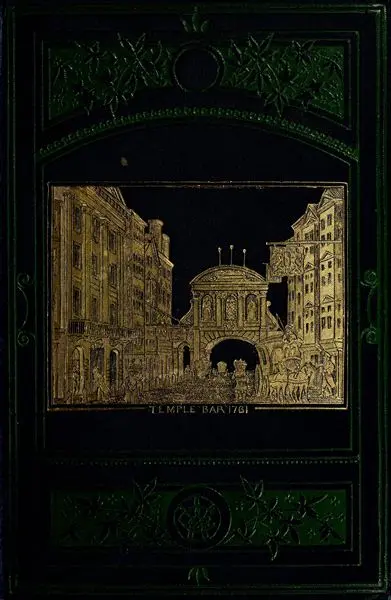
"Haunted London" by Walter Thornbury is a historical account written in the late 19th century. The book delves into the intricate layers of London's past, exploring not only its well-known ghost stories but also the rich traditions, historical events, and notable figures associated with various locations throughout the city. Through its pages, Thornbury aims to reveal the city's transformation over time and the social dynamics that have characterized London. The opening of "Haunted London" introduces the reader to the grandiosity and complexity of London as perceived by historical figures like Dr. Johnson and Boswell. It sets the stage by reflecting on the sheer vastness of human habitation within the city and how its past is intricately woven into its fabric. Thornbury expresses a deep affection for London and hints at his intent to guide readers through various locales, uncovering fascinating anecdotes and events tied to them. He describes the physical and cultural changes in London, underlining the tension between progress and the preservation of historical memory, which propels the journey he invites readers to embark upon through the book.
Introduction adapted from the source catalogue; source summaries may be automatically generated.
Free to read · English · 162,936 words · No account needed
MAKE TIME FOR A GOOD BOOK
On by default. Untick to stop anonymous reading totals. Each page counts after 10 seconds in view. How this works.
Anonymous counting is on unless you have switched it off.
Theatre, the Duke’s, 429;
a sword-fight between two factions in, 430;
the principal ladies of, ib.;
Pepys’s visits to, 431;
the principal performers at, 432 et seq.;
plays of Congreve produced at, 434;
Steele’s account of an audience in, 435;
the last proprietor of, ib.;
riot at, 436;
Macklin’s performance at, 437;
Quin’s appearance at, ib.
Thomson, the music-seller, 177
Thornbury, the Rev. Nathaniel, 47
Thornhill, Sir James, 72
Thurloe, Secretary, 392-393
Thurtell, the murderer of Weare, 165
Thynne, Tom, 193
Tillotson, Dr., 390
Tobacco, introduction of, 96
Tom’s Coffee-house, 37
Tonson, Jacob, 54
Tories, they establish tavern-clubs, 284
Townley, execution of, 14
Trafalgar Square, 220;
statues and fountains in, 221, 456
Trojan Horse, Bushnell’s, 7
Tunstall, Bishop, 92
Turk’s Head Coffee-house, 53
Turk’s Head, Gerrard Street, 72
Turner, J. W. M., anecdote of, 78;
his opinion of the Thames scenery, 136;
characteristics of his works, 224;
his bequests to the nation, ib.
Tyburn, criminals on their way to, 373
Tyler Wat, 112;
a mistake of Shakspere regarding, 114 (note)
Tyrconnel, the Duchess of. See Widow, the White
Twinings, the Messrs., 35, 152
Ussher, Archbishop, 396
Union Club, the, 457
Vanderbank starts an academy of art, 72
Vane, Sir Harry, 200
Vere Street, Clare Market, 345
Vernon, Robert, 224
Vertue, 8
Vestris, Madame, 175
Via Trinovantica, 349
Victoria embankment, 191
“Ville de Paris,” the Olympic Theatre partially built of its timbers, 164
Villiers Street, 135
“Vine,” the, in St. Giles’s, 375
Vine Street, origin of the name, 300
Vinegar Yard, Drury Lane, 300
Voltaire rebukes Congreve’s vanity, 52
“Vortigern,” by W. H. Ireland, 46
Waagen, Dr., 199
Waldo, Sir Timothy, 412
Wallack, the actor, 334
Waller, the poet, Saville’s saying of, 62;
lines by, 210
Wallis, Albany, residence of, 46
Walpole, a circumstance to surprise, 78;
visits the Cock Lane ghost, 196
Warburton, Bishop, 397
Ward, Dr., inventor of “Friar’s Balsam,” disposal of his statue by
Carlini, 100;
attends on George II., ib.
Ward, Edward, 281
Waterloo Bridge, Dupin and Canova’s declaration respecting, 124; chief features of, ib.; anecdote of Old Jack, a horse employed to drag the stone to, ib.; the dark arch of, 451
Watling Street, 349
Weare, Mr. William, 165
Webster, Benjamin, as an actor, 184
Wedderburn, his insincerity, 415;
Lord Clive’s reward to, ib.
Welch, Judge, apprehends a highwayman, 378
Wellington Street, newspapers and periodicals in, 167, 168, 454
West, anecdote of, 73;
his patronage of Proctor, 80
Westminster Fire Office, 257
Whetstone Park, 400
Whitefoord, Caleb, 141;
Adam’s room in the house of, 142;
Goldsmith’s lines on, ib.
White Horse livery stables, 257
Whitelock, Bulstrode, 234
Whittington Club, the, 152
Wickliffe, John, refuses tribute to the Pope, 109; appears before the Bishop of London, ib.
Widow, the White, the story of, 94
Wild House, 277, 459
Wilkes, Robert, actor, 311
Wilkinson, Tate, 123
Willis, Dr. Thomas, 241
Wilson, the painter, 189, 283
Wimbledon House, Strand, and Doyley’s warehouse erected on the site of,
168
Winchester House, 271
Wither, George, 120, 121
Woffington, Peg, president of the Beefsteak Club, 173;
her career, 316
Wolcot, Dr. (Peter Pinder), 84
Wollaston, Dr., discoveries of, 88;
anecdote of, 85
Woodward, the actor, 315
Wych Street, 164, 454
Wynford, Lord, epigram on, 415
Your reading position is saved on this browser. Take it to another device with a library code. Reading pages adapt to text, rather than matching a printed edition.
BEHIND THE BOOK
This eBook is for the use of anyone anywhere in the United States and most other parts of the world at no cost and with almost no restrictions whatsoever. You may copy it, give it away or re-use it under the terms of the Project Gutenberg License included with this eBook or online at www.gutenberg.org. If you are not located in the United States, you will have to check the laws of the country where you are located before using this eBook. Read the source licence.
The original source file, including credits and licence, is retained by this library. Request an original-format copy at no charge. Please include the book title and Project Gutenberg identifier #41580.
KEEP YOUR CURIOSITY GOING
Cécile Tormay

Moritz Busch
John L. Ransom
Frances Wright
Cécile Tormay

Mabel Potter Daggett