THE CLASSIC COLLECTION✦An outlaw’s diary: the CommuneCLASSIC FREE BOOKS
An outlaw’s diary: the Commune
Cécile Tormay
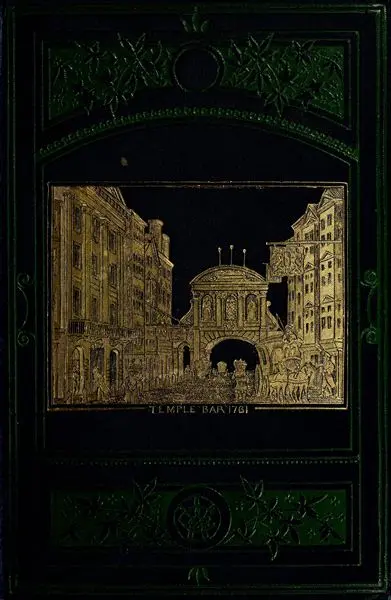
THE CLASSIC COLLECTION · 1865
"Haunted London" by Walter Thornbury is a historical account written in the late 19th century. The book delves into the intricate layers of London's past, exploring not only its well-known ghost stories but also the rich traditions, historical events, and notable figures associated with various locations throughout the city. Through its pages, Thornbury aims to reveal the city's transformation over time and the social dynamics that have characterized London. The opening of "Haunted London" introduces the reader to the grandiosity and complexity of London as perceived by historical figures like Dr. Johnson and Boswell. It sets the stage by reflecting on the sheer vastness of human habitation within the city and how its past is intricately woven into its fabric. Thornbury expresses a deep affection for London and hints at his intent to guide readers through various locales, uncovering fascinating anecdotes and events tied to them. He describes the physical and cultural changes in London, underlining the tension between progress and the preservation of historical memory, which propels the journey he invites readers to embark upon through the book.
Introduction adapted from the source catalogue; source summaries may be automatically generated.
Free to read · English · 162,936 words · No account needed
MAKE TIME FOR A GOOD BOOK
On by default. Untick to stop anonymous reading totals. Each page counts after 10 seconds in view. How this works.
Anonymous counting is on unless you have switched it off.
Yates, Mr., the actor, 183
Yates, Mrs., actress, 317
York House, old, 126;
river view of, 127;
celebrated men connected with, ib.;
Lord Bacon’s life here, ib.;
pictures, busts, and statues at, 131;
paintings placed in it by the Duke of Buckingham, ib.;
Pepys’s visit to, 132;
streets built on its site, 135
York Stairs, description of, 134
York Buildings, waterworks, 135, 445
York Buildings, Water Company, 445
Young, Charles, the actor, 323, 335
Zoffany, the artist, 303;
Garrick’s patronage of, 304
[1] Tom Taylor’s Life of Haydon, vol. i. p. 49.
[2] Strype, B. iii. p. 278.
[3] It was pulled down in January 1878.
[4] The steepness of Holborn Hill was abolished by the new viaduct in
1869.
[5] Cunningham’s London, vol. i. p. 260.
[6] Archenholz, p. 227.
[7] Beautifully reprinted in 1863 by Mr. J. C. Hotten.
[8] Walpole’s Anecdotes of Painting, vol. iii. p. 274.
[9] Pamphlet “The Burning of the Pope,” quoted in Brayley’s Londiniana,
vol. iv. p. 74.
[10] Roger North’s Examen, p. 574.
[11] Ibid. p. 574.
[12] For a further account of these Anti-Papal proceedings the reader may refer to Sir Roger de Coverly, with notes by W. H. Wills.
[13] State Trials, x. pp. 105-124; Burnet, ii. p. 407.
[14] Hume, vol. vii. p. 220.
[15] Evelyn, vol. ii. p. 341.
[16] Temple Bar, the City Golgotha (1853), p. 33.
[17] Cobbett’s State Trials, vol. xviii.
[18] State Trials, vol. xviii. p. 375.
[19] Annual Register (1766), p. 52.
[20] Nichol’s Literary Anecdotes.
[21] Brayley.
[22] Boswell, p. 258.
[23] Ovid, de Art. Amand., B. v. 339.
[24] Recollections of the Life of John O’Keefe, vol. i. p. 81.
[25] O’Keefe’s Life, vol. i. p. 101.
[26] London Scenes, by Aleph (1863), p. 75.
[27] Stow’s Annals.
[28] Hall’s Chronicle (condensed in Nichols’ London Pageants).
[29] Leland’s Collectanea, vol. iv. pp. 310 et seq.
[30] Holinshed.
[31] Nichols’ Progresses, vol. i. p. 58.
[32] Nichols’ London Pageants, p. 63.
[33] London Gazette.
[34] Nichols p. 83.
[35] Dugdale.
[36] Holinshed’s Chronicles, vol. iii. p. 338.
[37] Sharon Turner’s Hist. of England, vol. xii. p. 276.
[38] Hygford’s Exam. Murd., 57.
[39] Ibid.
[40] Pennant.
[41] Camden, p. 632.
[42] Hepworth Dixon’s Story of Lord Bacon’s Life (1862), p. 120.
[43] Hepworth Dixon’s Story of Lord Bacon’s Life (1862), p. 121.
[44] Wotton, Reliquiæ, p. 160.
[45] Dr. Birch’s Memoirs of the Reign of James I.
[46] Ben Jonson’s Works (Gifford), vol. vii. p. 75.
[47] Clarendon’s History of the Rebellion, x. 80.
[48] MS. Journal of the House of Commons.
[49] Smith’s Nollekens.
[50] Boswell’s Johnson (1860), p. 751.
[51] Jeaffreson’s Book about Doctors, p. 97.
[52] Boswell, vol. iv. p. 276.
[53] J. T. Smith’s Streets of London (1846), vol. i. p. 412.
[54] The Intelligencer, Jan. 23, 1664-5.
[55] Disraeli’s Curios. of Lit., p. 289.
[56] Evelyn, vol. i. p. 10.
[57] Dr. King’s Anecdotes, p. 117.
[58] Thoresby’s Diary, ii. 111-117.
[59] British Bibliographer, vol. i. p. 574.
[60] Pope’s Works (Carruthers), vol. ii. p. 379.
[61] Hawkins’s Life of Johnson, pp. 207-244.
[62] Jeaffreson’s Book about Doctors (2d edit.) pp. 207, 208.
[63] Stow, p. 161.
[64] Dryden’s Misc. Poems, iv. 275, ed. 1727 (Cunningham).
[65] Latimer’s Fourth Sermon, 1st ed.
Your reading position is saved on this browser. Take it to another device with a library code. Reading pages adapt to text, rather than matching a printed edition.
BEHIND THE BOOK
This eBook is for the use of anyone anywhere in the United States and most other parts of the world at no cost and with almost no restrictions whatsoever. You may copy it, give it away or re-use it under the terms of the Project Gutenberg License included with this eBook or online at www.gutenberg.org. If you are not located in the United States, you will have to check the laws of the country where you are located before using this eBook. Read the source licence.
The original source file, including credits and licence, is retained by this library. Request an original-format copy at no charge. Please include the book title and Project Gutenberg identifier #41580.
KEEP YOUR CURIOSITY GOING
Cécile Tormay

Moritz Busch
John L. Ransom
Frances Wright
Cécile Tormay

Mabel Potter Daggett