THE CLASSIC COLLECTION✦An outlaw’s diary: the CommuneCLASSIC FREE BOOKS
An outlaw’s diary: the Commune
Cécile Tormay
THE CLASSIC COLLECTION · 1865
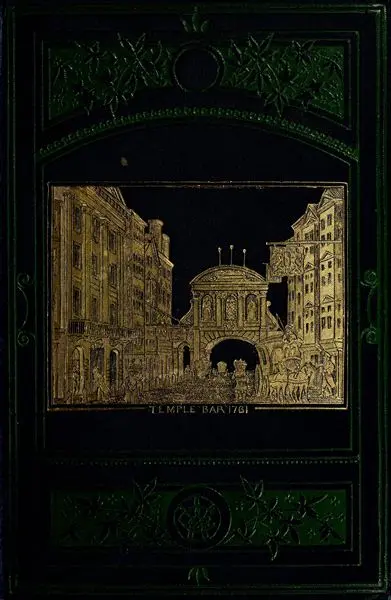
"Haunted London" by Walter Thornbury is a historical account written in the late 19th century. The book delves into the intricate layers of London's past, exploring not only its well-known ghost stories but also the rich traditions, historical events, and notable figures associated with various locations throughout the city. Through its pages, Thornbury aims to reveal the city's transformation over time and the social dynamics that have characterized London. The opening of "Haunted London" introduces the reader to the grandiosity and complexity of London as perceived by historical figures like Dr. Johnson and Boswell. It sets the stage by reflecting on the sheer vastness of human habitation within the city and how its past is intricately woven into its fabric. Thornbury expresses a deep affection for London and hints at his intent to guide readers through various locales, uncovering fascinating anecdotes and events tied to them. He describes the physical and cultural changes in London, underlining the tension between progress and the preservation of historical memory, which propels the journey he invites readers to embark upon through the book.
Introduction adapted from the source catalogue; source summaries may be automatically generated.
Free to read · English · 162,936 words · No account needed
MAKE TIME FOR A GOOD BOOK
On by default. Untick to stop anonymous reading totals. Each page counts after 10 seconds in view. How this works.
Anonymous counting is on unless you have switched it off.
Strand, the:--
Essex Street, 25;
Exeter House, 26;
Exeter Place, ib.;
Essex House 29;
Milford Lane, 38;
Devereux Court, ib.;
Arundel House, 39;
Arundel Street, 43;
Norfolk Street, 44;
Surrey Street, 48;
Howard Street, 49;
Strand Lane, 53;
Anderson’s pills in, ib.;
Turk’s Head Coffee-house, ib.;
residence of Jacob Tonson in, 54;
occupants of No. 141, ib.;
office of the “Illustrated London News” in, 55;
Somerset House, 56;
Haydon’s first London lodgings in, 77;
Beaufort House, 83;
the residence of Blake, in, ib.;
office of the “Sun” newspaper, 83;
Coutts’s Bank, 86;
Cecil Street, 88;
Salisbury Street and House, 89;
Mrs. Siddons’s residence in, 91;
Durham Street and House, ib.;
Buckingham Street, 135;
Villiers Street, ib.;
Duke Street, ib.;
York Buildings, ib.;
Hungerford Bridge and Market, 136;
Craven Street, 139;
Northumberland Street, 143;
the strata of, 146;
the footway in Edward II.’s time, 147;
discovery of a small bridge in, ib.;
houses on the north side of, ib. et seq.;
Butcher Row, 148;
Palsgrave Place, 151;
the Maypole in, 160;
St. Clement’s Danes, 152;
a scene of Elizabeth’s time in, 161;
St. Mary’s-le-Strand, 162;
New Inn, 164;
Wych Street, ib.;
Lyon’s Inn, 165;
Catherine Street, 166;
Doyley’s warehouse in, 168;
Wellington Street, ib.;
Lyceum Theatre, 171;
Exeter Change, 175;
familiar sounds to the old residents in, 177;
Exeter Street, 178;
Exeter Hall, ib.;
a resident in, ib.;
Exeter House, 179;
Burleigh Street, ib.;
Adelphi Theatre, 180;
Southampton Street, 185;
Bedford Street, 186;
Gaiety Theatre, 452;
memoranda relating to the south side of, 443;
do. relating to the north side of, 452
Strand, Bridge, the, 169
Strand Lane, 53;
mentioned by Addison, 169
Strand Theatre, 444, 446
Streets, the nomenclature of, 103
Strype, the antiquary, 117
Suckling, Sir John, 195;
his death, 241
Suett, the actor, 321
Suffolk House, 194
Sullivan, Luke, engraver, 251
“Sun,” office of the, 83
Surrey Street, 48
Surgeons, College of, 419
Swan, the, Charing Cross, 236
Tart-Hall, 43
Taylor, the water-poet, 279;
his complaint regarding carriages and tobacco, ib.;
epitaph on, 280
Tempest, Peter Molyn, engraver, 167
Temple Bar, its erection, 4;
description of, 5;
threatened destruction of, 6;
fixing the heads of traitors on, 11;
curious print of, 13;
heads of Fletcher, Townley, and Oxburgh, exposed on, ib.;
apprehension of a man for firing bullets at the two last heads
exhibited on, 16;
Counsellor Layer’s head blown by a terrible wind from, ib.;
removal of the last iron spike from, 17;
a quotation of Dr. Johnson’s at, ib.;
proclamation of peace at, 18;
its adornment on public occasions, 19;
opening its gates to the sovereign, 20;
reception of Queen Elizabeth at, ib.;
reception of royal persons at, 21;
pageants on the passage of King James, ib.;
the mournful celebrity of, 22
Temple Club, 453
Tenison, Dr. Thomas, 247
Tennyson, Alfred, 418
Terry, an actor, 183
Thames, the, scenery on its banks, 136;
embankment of, 190;
old watermen on, 247;
Copper Holme’s ark on, ib.
Theatres, an old custom at, 172;
a riot in one, 186
Your reading position is saved on this browser. Take it to another device with a library code. Reading pages adapt to text, rather than matching a printed edition.
BEHIND THE BOOK
This eBook is for the use of anyone anywhere in the United States and most other parts of the world at no cost and with almost no restrictions whatsoever. You may copy it, give it away or re-use it under the terms of the Project Gutenberg License included with this eBook or online at www.gutenberg.org. If you are not located in the United States, you will have to check the laws of the country where you are located before using this eBook. Read the source licence.
The original source file, including credits and licence, is retained by this library. Request an original-format copy at no charge. Please include the book title and Project Gutenberg identifier #41580.
KEEP YOUR CURIOSITY GOING
Cécile Tormay

Moritz Busch
John L. Ransom
Frances Wright
Cécile Tormay

Mabel Potter Daggett