THE CLASSIC COLLECTION✦An outlaw’s diary: the CommuneCLASSIC FREE BOOKS
An outlaw’s diary: the Commune
Cécile Tormay
THE CLASSIC COLLECTION · 1865
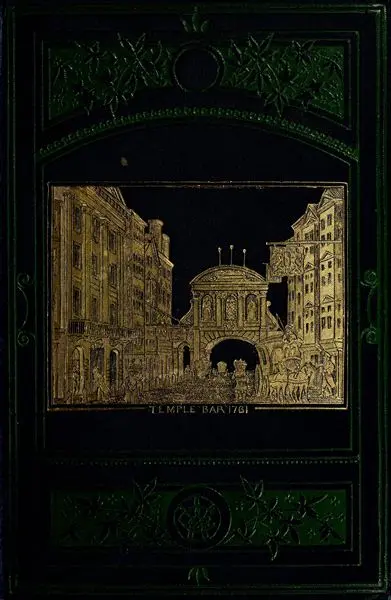
"Haunted London" by Walter Thornbury is a historical account written in the late 19th century. The book delves into the intricate layers of London's past, exploring not only its well-known ghost stories but also the rich traditions, historical events, and notable figures associated with various locations throughout the city. Through its pages, Thornbury aims to reveal the city's transformation over time and the social dynamics that have characterized London. The opening of "Haunted London" introduces the reader to the grandiosity and complexity of London as perceived by historical figures like Dr. Johnson and Boswell. It sets the stage by reflecting on the sheer vastness of human habitation within the city and how its past is intricately woven into its fabric. Thornbury expresses a deep affection for London and hints at his intent to guide readers through various locales, uncovering fascinating anecdotes and events tied to them. He describes the physical and cultural changes in London, underlining the tension between progress and the preservation of historical memory, which propels the journey he invites readers to embark upon through the book.
Introduction adapted from the source catalogue; source summaries may be automatically generated.
Free to read · English · 162,936 words · No account needed
MAKE TIME FOR A GOOD BOOK
On by default. Untick to stop anonymous reading totals. Each page counts after 10 seconds in view. How this works.
Anonymous counting is on unless you have switched it off.
Gravelot, the drawing-master, 250
Gray’s Inn, Bacon’s chambers in, 130
Grecian, the, Addison’s description of, 36;
a quarrel at, ib.;
meetings of savans at, 37;
the privy-council held at, ib.
Greenhill, John, 271
Green Ribbon Club, the, 8
Gresham College, 68
Grimaldi at Drury Lane, 334
Gwynn, Nell, her last resting-place, 244;
the birthplace, life, and character of, 301;
a descendant of, 302;
Pepys’s allusion in his “Diary” to, ib.;
her death, ib.;
a memorandum of Evelyn’s regarding, ib.;
Pepys’s estimate of the other actresses associated with, 307;
her last original part, 308
Hackman, the Rev. Mr., the murderer of Miss Ray, 160;
his execution, ib.
Haines, Joe, a clever actor, 308
Hale, Sir Matthew, an eminent student of Lincoln’s Inn, 390
Hare, the murderer, the lamentable condition of, 461
Harley, John Pritt, actor, 336
Harrison, General, the Anabaptist, the brave end of, 205
Haverhill, William de, Henry III.’s treasurer, his mansion and the various uses to which it was put, 388
Haycock’s Ordinary, 443
Haydon, anecdote of, 1;
another, of his early life in London, 77
Hayman, Frank, a St. Martin’s Lane worthy, amusing anecdotes of, 255
Haymarket Theatre, the, Fielding’s “Tom Thumb” brought out at, 438
Hazlitt, William, his criticism of the elder Mathews, 182
Heber, Bishop, 397
Helmet Court, memoranda of, 447
Hemings’ Row, St. Martin’s Lane, origin of its name, 458
Henderson, the actor, 319
Henley, Orator, sketch of his life, 339;
his defence of action in a preacher, ib.;
his correspondence with William Whiston, 340;
the shameless advertisements issued by, 340, 341;
lines by Pope in the “Dunciad” on, 342;
his controversy with Pope, ib.;
a contemporary description of, ib.;
his plans for raising money, 343;
a joke on Archbishop Herring by, ib.;
his appearance before the privy-council, ib.;
Hogarth’s two caricatures of, 344;
beginning of one of his sermons, 345;
overawed by two Oxonians, 346
Henrietta Maria, queen of Charles I., the insolent conduct of her French household, and the king’s difficulty in getting rid of them, 58; her last masques at Somerset House, 59
Henry VII., hospital founded on the site of the Savoy by, 114
Herbert, Lord, of Cherbury, a Quixotic quarrel of, 194; commencement of his work, “De Veritate,” 265; a remarkable vision which is said to have appeared to, ib.; reflections on passing the residence of, 266
Herring, Archbishop, Swift’s opposition to, 344
Hewson, the supposed original Strap of “Roderick Random,” 136
Heywood, Dr., rector of St. Giles’s, Puritan petition against, 365
Hill, Captain, a well-known profligate bully, his drunken jealousy of Mountfort the actor, 49; his attempt to carry off Mrs. Bracegirdle, 50; cowardly murder of Mountfort, by, 51
Hill, Mr. Thomas, the supposed prototype of Paul Pry, 103
Hilliard, Nicholas, Queen Elizabeth’s miniature-painter, 244
“Histriomastix,” the, Prynne’s punishment for a scurrilous note in, 59
Hodges, Dr., his account of the commencement and progress of the plague,
262
Hogarth, 72;
his picture of “Noon,” 372
Your reading position is saved on this browser. Take it to another device with a library code. Reading pages adapt to text, rather than matching a printed edition.
BEHIND THE BOOK
This eBook is for the use of anyone anywhere in the United States and most other parts of the world at no cost and with almost no restrictions whatsoever. You may copy it, give it away or re-use it under the terms of the Project Gutenberg License included with this eBook or online at www.gutenberg.org. If you are not located in the United States, you will have to check the laws of the country where you are located before using this eBook. Read the source licence.
The original source file, including credits and licence, is retained by this library. Request an original-format copy at no charge. Please include the book title and Project Gutenberg identifier #41580.
KEEP YOUR CURIOSITY GOING
Cécile Tormay

Moritz Busch
John L. Ransom
Frances Wright
Cécile Tormay

Mabel Potter Daggett