THE CLASSIC COLLECTION✦An outlaw’s diary: the CommuneCLASSIC FREE BOOKS
An outlaw’s diary: the Commune
Cécile Tormay
THE CLASSIC COLLECTION · 1865
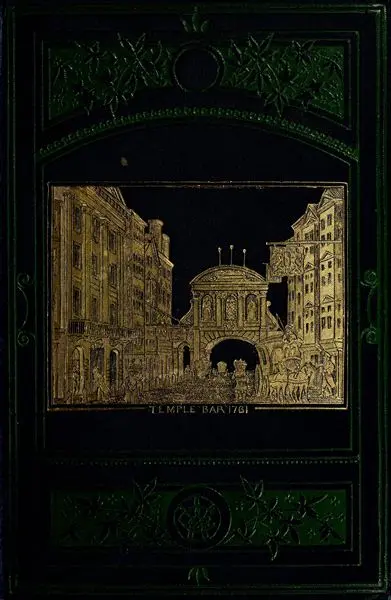
"Haunted London" by Walter Thornbury is a historical account written in the late 19th century. The book delves into the intricate layers of London's past, exploring not only its well-known ghost stories but also the rich traditions, historical events, and notable figures associated with various locations throughout the city. Through its pages, Thornbury aims to reveal the city's transformation over time and the social dynamics that have characterized London. The opening of "Haunted London" introduces the reader to the grandiosity and complexity of London as perceived by historical figures like Dr. Johnson and Boswell. It sets the stage by reflecting on the sheer vastness of human habitation within the city and how its past is intricately woven into its fabric. Thornbury expresses a deep affection for London and hints at his intent to guide readers through various locales, uncovering fascinating anecdotes and events tied to them. He describes the physical and cultural changes in London, underlining the tension between progress and the preservation of historical memory, which propels the journey he invites readers to embark upon through the book.
Introduction adapted from the source catalogue; source summaries may be automatically generated.
Free to read · English · 162,936 words · No account needed
MAKE TIME FOR A GOOD BOOK
On by default. Untick to stop anonymous reading totals. Each page counts after 10 seconds in view. How this works.
Anonymous counting is on unless you have switched it off.
Fountain Club, the, 84
Fountain Court Tavern, 84;
the Coal Hole in, 85
Fountain, the, King Street, 381
Franklin, Benjamin, 139;
his landlady and the charitable nun, 275;
extravagance of his fellow-pressmen, 276;
his visit as ambassador of Massachusetts, 277
Freemasons’ Hall, the, 274
Friend, Sir John, 13
Fuseli, 76;
his residence, 259
Gaiety Theatre, 452
Gardelle, the artist and murderer, 251
Garrick, David, 96, 99;
Johnson’s esteem for, ib.;
his “Chinese Festival,” 185, 186;
anecdote of, 273;
Zoffany’s portrait of, 304;
his career, 313;
his first appearance at Drury Lane, ib.;
his varied talent, 314;
appears on the stage with Quin, ib.;
his death, 315
Gatti’s café, 189
George, Madame St., 59
Geological Society, the, 69
George III., his patronage of art, 73;
his coolness, 338
George IV., Chantrey’s statue of, 226
Gerbier, Sir Balthasar, 72
Gibbons, Grinling, 139
Gibbons’s Tennis Court, 429
Gibbs, the architect, 162
Giles, St., tradition of, 353;
a scurvy worshipper of, 463
Giles’s, St., ancient toll in, 350;
hospital for lepers in, 350;
death of Sir John Oldcastle in, 351;
the gallows in, 352;
site of the hospital, 353;
the manor of, 352-3;
gradual growth of, 355, 356;
its progress after the Great Fire, 356;
settlement of foreigners in, 357;
its increase in Queen Anne’s reign, ib.;
resort of Irish to, ib.;
entries in the parish records of, ib.;
increase of French refugees in, 357;
relief to well-known mendicants in, 359;
the plague in, 360;
the plague-cart of, ib.;
rates levied in consequence of the plague, 361;
hospital church of, 363;
Dr. Mainwaring rector of, ib.;
new church of, 364;
Dr. Heywood, the rector of, ib.;
celebration of the Restoration in, 365;
church extension in, ib.;
a sexton’s bargain with the rector of, 367;
the Resurrection Gate in the churchyard of, ib.;
churchyard of, 367, 368;
new burial-ground of, 368;
celebrated persons buried in the churchyard of, 369, 370;
the oldest monument in the burial-ground of, 370;
persons relieved in, 371;
erection of the new almshouses and school for, ib.;
Hogarth’s studies and scenes in, 372;
Nollekens Smith’s description of, ib.;
the whipping-stone of, ib.;
the Pound in, 373;
the inns of, 374;
resort of Irish beggars to, 376, 377;
the cellars of, 378;
lodgings in, ib.;
beggars, conjurors, and pickpockets of, 379;
the mendicants of, 381;
low Irish in, 385, 386;
persons connected with several streets in, 463;
the author’s visit with a missionary to houses in, 463
Giles’s, St., Hospital, criminals at its gate, on their way to Tyburn,
373
Giraud, his quarrel, 93;
execution, ib.
Globe Theatre, 165
Glover, Mrs., as an actress, 336
Godfrey, Sir E., murder of, 61;
residence of, 142
Godwin, William, 444
Golden Cross, the, 232
Goldsmith, Oliver, a quotation of Dr. Johnson’s cleverly capped by, 18;
lines on Caleb Whitefoord by, 141;
his friends, 197;
an earl’s patronage of, 198;
anecdote of, ib.;
his visit to Northumberland House, ib.
Gondomar, Spanish ambassador, 298
Goodman, and the Drury Lane Company, 308
Gordon, Lord George, 278
Gorges, Sir Ferdinand, 30
Graham, Dr., a London Cagliostro, his rooms and their chief priestess,
102;
his “celestial bed” and “elixir of life,” 103
Grange Inn, 440
Your reading position is saved on this browser. Take it to another device with a library code. Reading pages adapt to text, rather than matching a printed edition.
BEHIND THE BOOK
This eBook is for the use of anyone anywhere in the United States and most other parts of the world at no cost and with almost no restrictions whatsoever. You may copy it, give it away or re-use it under the terms of the Project Gutenberg License included with this eBook or online at www.gutenberg.org. If you are not located in the United States, you will have to check the laws of the country where you are located before using this eBook. Read the source licence.
The original source file, including credits and licence, is retained by this library. Request an original-format copy at no charge. Please include the book title and Project Gutenberg identifier #41580.
KEEP YOUR CURIOSITY GOING
Cécile Tormay

Moritz Busch
John L. Ransom
Frances Wright
Cécile Tormay

Mabel Potter Daggett