THE CLASSIC COLLECTION✦An outlaw’s diary: the CommuneCLASSIC FREE BOOKS
An outlaw’s diary: the Commune
Cécile Tormay
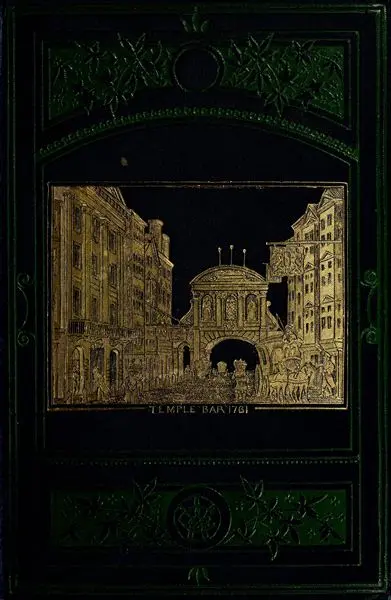
THE CLASSIC COLLECTION · 1865
"Haunted London" by Walter Thornbury is a historical account written in the late 19th century. The book delves into the intricate layers of London's past, exploring not only its well-known ghost stories but also the rich traditions, historical events, and notable figures associated with various locations throughout the city. Through its pages, Thornbury aims to reveal the city's transformation over time and the social dynamics that have characterized London. The opening of "Haunted London" introduces the reader to the grandiosity and complexity of London as perceived by historical figures like Dr. Johnson and Boswell. It sets the stage by reflecting on the sheer vastness of human habitation within the city and how its past is intricately woven into its fabric. Thornbury expresses a deep affection for London and hints at his intent to guide readers through various locales, uncovering fascinating anecdotes and events tied to them. He describes the physical and cultural changes in London, underlining the tension between progress and the preservation of historical memory, which propels the journey he invites readers to embark upon through the book.
Introduction adapted from the source catalogue; source summaries may be automatically generated.
Free to read · English · 162,936 words · No account needed
MAKE TIME FOR A GOOD BOOK
On by default. Untick to stop anonymous reading totals. Each page counts after 10 seconds in view. How this works.
Anonymous counting is on unless you have switched it off.
Hog Lane, St. Giles’s (now Crown Street), 371
Holborn, gradual extension and first pavement of, 355; allusions to a doleful procession up the Heavy Hill of, 374
Hollar, the German engraver, description of a scarce view of Somerset
House by, 63;
the residence of, 157
Holmes, Copper, a well-known character on the river, 247
Holy Land, the, a part of St. Giles’s, 386
Hone, Nathaniel, 258
Hood, Thomas, his “Bridge of Sighs,” 450
Hook, Theodore, 102
Howard, Lady Margaret, Sir John Suckling’s fantastic simile in lines on
her feet, 195
Howard, Thomas, Duke of Norfolk, discovery of the cipher used by--his treason and death, 27
Howard, Thomas, Earl of Arundel, an amateur of art, Clarendon’s description of, 42; Vansomer’s portrait of, ib.; his devotion in the pursuit of objects of art, 43; disposal of his statues, marbles, and library, ib.; remarks made by him in a dispute with Charles I., ib.
Howard, Philip, Earl of Arundel, a letter to, 27;
memorial in the Tower of, ib.
Hudson, the portrait-painter, 272
Hungerford, Lord Walter, first Speaker of the House of Commons, 137
Hungerford, Sir Edward, founder of Hungerford Market, 137
Hungerford Market, the site of, 137;
the origin and object of, 138;
vicissitudes of, ib.;
an unlucky speculation at, ib.
Hungerford Suspension Bridge, 138;
the purchase of, 451;
the new railway bridge in place of, 138;
the railway station at, ib.
Hunter, Dr. William, O’Keefe’s description of him lecturing on anatomy,
78
Hunter, Dr. John, particulars of his professional life, 420, 421
Hunt, Leigh, the imprisonment of, 123;
his critical remarks on the elder Mathews, 182
“Illustrated London News,” the proprietor and staff of, 55
Ingram, Mr. Herbert, proprietor of the “Illustrated London News,” career and death of, 55
Ireland, Samuel, father of the celebrated literary impostor, the
residence of, 46;
his belief in the genuineness of “Vortigern” as a work of Shakspere’s,
47
Ireland, W. H., the true story of the Shakspere forgery committed by, 46; effect of the extraordinary praise lavished on, 47; supporters and opponents of, ib.; damnation of his play of “Vortigern,” ib.
“Isabella,” Southerne’s tragedy of, effect of Mrs. Siddons’s acting in,
91
Ivy Bridge, narrow passage to the Thames under, and mansion near, 91
Jacobites, the cant words used by, 15
James I., pageants on his passage through the city, 21
James Street, Adelphi, No. 2, the residence of Mr. Thomas Hill, the Hull of “Gilbert Gurney,” 103
Jansen, an architect, works by, 191
Jekyll, Sir Joseph, his obnoxious bill, and the fury of the mob against,
410;
his bon-mot on Lord Kenyon’s spits, 423
Jennings, Frances. See Widow, the White
Jerdan, William, 83
John, King of France, his entrance as a captive into London, 112;
his honourable return to England after having been liberated on
parole, ib.;
his death at the Savoy, ib.
John of Padua, Henry VIII.’s architect, 57
Your reading position is saved on this browser. Take it to another device with a library code. Reading pages adapt to text, rather than matching a printed edition.
BEHIND THE BOOK
This eBook is for the use of anyone anywhere in the United States and most other parts of the world at no cost and with almost no restrictions whatsoever. You may copy it, give it away or re-use it under the terms of the Project Gutenberg License included with this eBook or online at www.gutenberg.org. If you are not located in the United States, you will have to check the laws of the country where you are located before using this eBook. Read the source licence.
The original source file, including credits and licence, is retained by this library. Request an original-format copy at no charge. Please include the book title and Project Gutenberg identifier #41580.
KEEP YOUR CURIOSITY GOING
Cécile Tormay

Moritz Busch
John L. Ransom
Frances Wright
Cécile Tormay

Mabel Potter Daggett