THE CLASSIC COLLECTION✦An outlaw’s diary: the CommuneCLASSIC FREE BOOKS
An outlaw’s diary: the Commune
Cécile Tormay
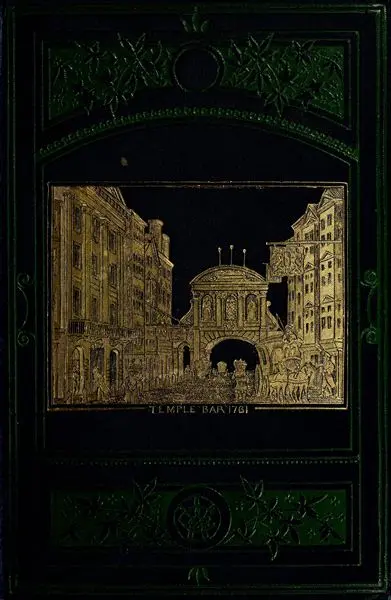
THE CLASSIC COLLECTION · 1865
"Haunted London" by Walter Thornbury is a historical account written in the late 19th century. The book delves into the intricate layers of London's past, exploring not only its well-known ghost stories but also the rich traditions, historical events, and notable figures associated with various locations throughout the city. Through its pages, Thornbury aims to reveal the city's transformation over time and the social dynamics that have characterized London. The opening of "Haunted London" introduces the reader to the grandiosity and complexity of London as perceived by historical figures like Dr. Johnson and Boswell. It sets the stage by reflecting on the sheer vastness of human habitation within the city and how its past is intricately woven into its fabric. Thornbury expresses a deep affection for London and hints at his intent to guide readers through various locales, uncovering fascinating anecdotes and events tied to them. He describes the physical and cultural changes in London, underlining the tension between progress and the preservation of historical memory, which propels the journey he invites readers to embark upon through the book.
Introduction adapted from the source catalogue; source summaries may be automatically generated.
Free to read · English · 162,936 words · No account needed
MAKE TIME FOR A GOOD BOOK
On by default. Untick to stop anonymous reading totals. Each page counts after 10 seconds in view. How this works.
Anonymous counting is on unless you have switched it off.
Drury Lane Theatre, 305;
Pepys’s visits to, 306;
scuffle in the king’s presence in, ib.;
distinguished actresses of, 309 et seq.;
plays produced at, ib.;
Garrick’s first appearance at, 313;
Dr. Johnson’s address on its re-opening, 322;
a riot in 1740 in, 324;
Charles Lamb’s description of, 324, 325;
the rebuilding of, 329;
competitive poems for the opening of, 330;
Byron’s opening address at, ib.;
statue over its entrance, ib.;
pecuniary statements relating to, ib.;
revival of its fortunes by Edmund Kean, 331;
Grimaldi at, 334;
various actors of, ib.;
pictures of royalty at, 338;
recent productions at, ib.
Drury, Sir Robert, 288
Dryden, his lines on the death of Buckingham, 132;
his squabbles with Jacob Tonson, 54;
attack on, 280;
established jokes against, ib.;
Mulgrave’s lines on, 281;
Otway’s defence of, ib.
Dudley, Sir Robert, 369
Dudley, Duchess of, 369
Duke Street, 135
Duke’s Theatre, 429
Durham House, residents of, 92;
sufferings of the Princess Elizabeth in, ib.;
its last occupants, ib.;
banquets given by Henry VII. at, ib.;
mint established at, 95;
Lady Jane Grey’s marriage in, ib.;
the scene of an old legend, 96;
Raleigh in his turret study at, ib.;
purchased by the brothers Adam, ib.
Durham Street, 91
Dyot Street, 462
Eccentrics, club of, 259
Edward III., 110;
his conduct on the death of John of Gaunt, 114
Edward VI. at Temple Bar, 21
Egerton, Lord Chancellor, 391
Eleanor Cross, model of, 138
Eleanor, Queen, crosses in memory of, 138, 202;
tombs of, 203;
the preservation of her body, 204
Elizabeth, Queen, procession on the anniversary of her accession, 9;
adornment of her statue at Temple Bar, 10;
her reception at Temple Bar, 21;
the plot of Essex against, 29;
her relations with Admiral Seymour, 39;
story of the Essex ring, 40;
her favour for Raleigh, 92
Ellesmere. See Egerton
Elliston, Robert William, 326;
stories told of, 327
Epigram, an, a legacy gained by, 139
Erskine, Lord, 424
Essex House, 29;
occupants of, 31;
the Parliamentary general a resident in, 33
Essex, Robert, Earl of, Ben Jonson’s masque on his marriage, 33; divorce of his countess, and her marriage with Robert Carr, ib.; general for the Parliament, ib.; attempts to seize his papers, 34
Essex Street, Strand, 25;
residents in, 34;
Johnson’s club at the Essex Head, 35;
Unitarian chapel in, 443;
memoranda of, ib.
Estcourt, 452;
Steele’s compliments to, 180
Etherage, Sir George, 301;
play by, 431
Etty, residence of, 136
Evans’s Hotel, Covent Garden, 460
Evelyn, John, 134
“Examiner,” the, 123
Exchange, the New, 93;
a tragedy in, ib.;
legends about, ib.;
the White Widow, 94;
the walks of, ib.;
a frequenter of, ib.;
its destruction, 95
Exeter Change, 175;
exhibitions in, ib.;
last tenants of, 176
Exeter Hall, 178
Exeter House, 179
Exeter Place, 261
Exeter Street, 178
Faithorne, William, 148
Fanshawe, Lady, 423
Fanshawe, Sir Richard, 421
Farren, Miss, the actress, 318
Farren, the actor, 335
Faucit, Helen (Mrs. T. Martin), 337
“Field” newspaper, 168
Finch, Lord Chancellor, 265
Finett, Sir John, 240
Fletcher, his execution, 14
Folkes, Martin, 272
Folly, the, 82
Foote, the actor, 315
Fordyce, George, 34
Fortescue, Judge, 394
Fortescue, Pope’s lawyer, 37
Your reading position is saved on this browser. Take it to another device with a library code. Reading pages adapt to text, rather than matching a printed edition.
BEHIND THE BOOK
This eBook is for the use of anyone anywhere in the United States and most other parts of the world at no cost and with almost no restrictions whatsoever. You may copy it, give it away or re-use it under the terms of the Project Gutenberg License included with this eBook or online at www.gutenberg.org. If you are not located in the United States, you will have to check the laws of the country where you are located before using this eBook. Read the source licence.
The original source file, including credits and licence, is retained by this library. Request an original-format copy at no charge. Please include the book title and Project Gutenberg identifier #41580.
KEEP YOUR CURIOSITY GOING
Cécile Tormay

Moritz Busch
John L. Ransom
Frances Wright
Cécile Tormay

Mabel Potter Daggett