THE CLASSIC COLLECTION✦An outlaw’s diary: the CommuneCLASSIC FREE BOOKS
An outlaw’s diary: the Commune
Cécile Tormay
THE CLASSIC COLLECTION · 1865
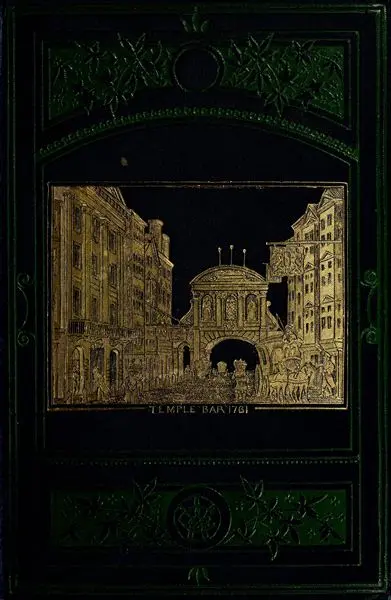
"Haunted London" by Walter Thornbury is a historical account written in the late 19th century. The book delves into the intricate layers of London's past, exploring not only its well-known ghost stories but also the rich traditions, historical events, and notable figures associated with various locations throughout the city. Through its pages, Thornbury aims to reveal the city's transformation over time and the social dynamics that have characterized London. The opening of "Haunted London" introduces the reader to the grandiosity and complexity of London as perceived by historical figures like Dr. Johnson and Boswell. It sets the stage by reflecting on the sheer vastness of human habitation within the city and how its past is intricately woven into its fabric. Thornbury expresses a deep affection for London and hints at his intent to guide readers through various locales, uncovering fascinating anecdotes and events tied to them. He describes the physical and cultural changes in London, underlining the tension between progress and the preservation of historical memory, which propels the journey he invites readers to embark upon through the book.
Introduction adapted from the source catalogue; source summaries may be automatically generated.
Free to read · English · 162,936 words · No account needed
MAKE TIME FOR A GOOD BOOK
On by default. Untick to stop anonymous reading totals. Each page counts after 10 seconds in view. How this works.
Anonymous counting is on unless you have switched it off.
Coutts’s Bank, the strong room of, 86, 87;
the first deposit in, 87;
story of one of the clerks of, ib.;
the site of, and additions to, ib.
Coutts, Thomas, his origin, and marriage, 86;
anecdote of, 448
Covent Garden, 93
Covent Garden Theatre and Sheridan, 328
Coventry, Secretary, 245
Cowley, enmity of the Royalists to, 115;
occasion of “The Complaint” by, ib.;
beautiful lines by, 116;
his death at Chertsey, ib.
Cox, Bessy, 282
Craig’s Court, Charing Cross, 227
Craven, Lord, his life, etc., 294;
miniature Heidelberg erected by, ib.;
his services to the Queen of Bohemia, 295;
patronage of literature, ib.;
employment in King William’s reign, 296;
Miss Benger’s estimate of, ib.;
Quixotic character of, 460
Craven Buildings, fresco portrait at, 297
Craven House, 292, 459
Craven Street, residents of, 139;
diplomatic consultation in, ib.;
epigrams by James Smith and Sir George Rose on it, ib.
“Cries of London,” the, 167
Crockford, his shop in the Strand, 148;
his club, ib.
Cromwell, Oliver, residences of, 226, 279
Crook, Japhet, his punishment, 213;
lines by Pope on, 214
Crouch, Mrs., the singer, 333
Crowle, bon mot on Judge Page by, 217
Crown and Anchor, the, 152, 153;
the great room of, 444
Cumberland, George, Earl of, 120
Cuper’s Gardens, 43
Curl, Edmund, 212
Curtis, Mrs., visits Mrs. Siddons, 91
Davenant, Lady, 404
Davenant, the actor, 429
Davies, Moll, 430
Dawson, Jemmy, 15
Denham, Sir John, works written by, 393;
a drunken frolic of, 452
Denzil Street, 460
Deptford, and Peter the Great in, 45
Design, the School of, 446
De Sully, Duc, 41
Devereux Court, 36;
duel in, ib.;
death of Marchmont Needham in, 37;
relic of Pope at Tom’s Coffee-house, ib.
Devereux, Robert, Earl of Essex, 28;
Spenser’s relation to, ib.;
his house near the Temple, 29;
his plot against Elizabeth, ib.;
his running a-muck in the City, and flight to Essex Gardens, 30;
his capture and death 31;
his mother and sister, 32;
his crimes, 34
Devonshire Club, 148
Dibdin, Charles, his entertainments, 34
Dickens, Charles, 170;
on Seven Dials and Monmouth Street, 385;
Digby, Sir Kenelm, 241;
Ben Jonson’s lines on, ib.
Dilke, Sir C. Wentworth, 170
Disraeli, B., 400
Dobson, Vandyke’s protégé, 200
Dodd, the actor, 328
Doggett, the actor, 310
Donne, Dr., the tomb of his wife, 154;
his want of self-respect, 289;
strange circumstance recorded, 290;
vision seen by, ib.;
conceits of, 291;
his picture in his shroud, 292;
a divine and a poet, 390
Dowton, the actor, 323
Doyley, 168
Drinking-fountains, the first, 445
Drummond’s Bank, 227, 457
Drury family, 288
Drury House, secret meetings there arranged by Essex, 29;
outbreak decided on at, 288;
site of, 237
Drury Lane, origin of its name, 288;
residents in, 297 et seq.;
a strange scene in, 298;
a duel in, ib.;
pictures of, 299;
the poor poet’s home in, ib.;
its bad repute during the Regency, 460
Your reading position is saved on this browser. Take it to another device with a library code. Reading pages adapt to text, rather than matching a printed edition.
BEHIND THE BOOK
This eBook is for the use of anyone anywhere in the United States and most other parts of the world at no cost and with almost no restrictions whatsoever. You may copy it, give it away or re-use it under the terms of the Project Gutenberg License included with this eBook or online at www.gutenberg.org. If you are not located in the United States, you will have to check the laws of the country where you are located before using this eBook. Read the source licence.
The original source file, including credits and licence, is retained by this library. Request an original-format copy at no charge. Please include the book title and Project Gutenberg identifier #41580.
KEEP YOUR CURIOSITY GOING
Cécile Tormay

Moritz Busch
John L. Ransom
Frances Wright
Cécile Tormay

Mabel Potter Daggett