THE CLASSIC COLLECTION✦An outlaw’s diary: the CommuneCLASSIC FREE BOOKS
An outlaw’s diary: the Commune
Cécile Tormay
THE CLASSIC COLLECTION · 1865
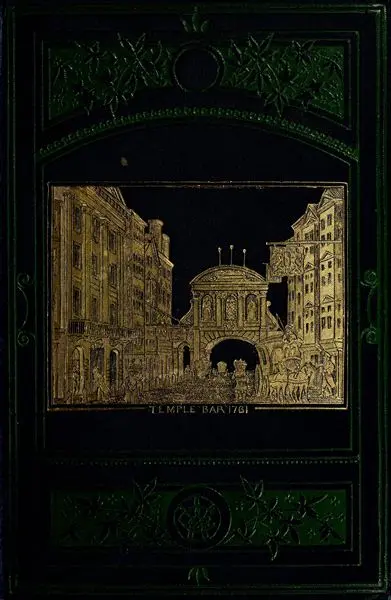
"Haunted London" by Walter Thornbury is a historical account written in the late 19th century. The book delves into the intricate layers of London's past, exploring not only its well-known ghost stories but also the rich traditions, historical events, and notable figures associated with various locations throughout the city. Through its pages, Thornbury aims to reveal the city's transformation over time and the social dynamics that have characterized London. The opening of "Haunted London" introduces the reader to the grandiosity and complexity of London as perceived by historical figures like Dr. Johnson and Boswell. It sets the stage by reflecting on the sheer vastness of human habitation within the city and how its past is intricately woven into its fabric. Thornbury expresses a deep affection for London and hints at his intent to guide readers through various locales, uncovering fascinating anecdotes and events tied to them. He describes the physical and cultural changes in London, underlining the tension between progress and the preservation of historical memory, which propels the journey he invites readers to embark upon through the book.
Introduction adapted from the source catalogue; source summaries may be automatically generated.
Free to read · English · 162,936 words · No account needed
MAKE TIME FOR A GOOD BOOK
On by default. Untick to stop anonymous reading totals. Each page counts after 10 seconds in view. How this works.
Anonymous counting is on unless you have switched it off.
Cecil Street, its residents, 88
Celeste, Madam, 184
Centlivre, Mrs., 230;
her hatred to the Jacobites, 231;
Pope’s dislike to, ib.;
Leigh Hunt’s treatment of, 232
Ceracchi, Giuseppe, 66
Chambers, Sir William, 65
Chapone, Mrs. Hester, 428
Charing, village of, 201;
population under Edward I., ib.;
the Falconry or Mews at, 218
Charing Cross, tradition concerning, 201;
Peele’s lines on, 202;
tradition of Queen Eleanor connected with, ib.;
erection and demolition of, 204;
a Royalist ballad on, ib.;
executions at, 205;
introduction of Punch into England at, 208;
Titus Oates, in the pillory at, ib.;
the royal statue at, 209;
Waller’s lines on the statue, 210;
Andrew Marvell’s lines on the Cross, 211;
loss of parts of, 212;
a tradition concerning, ib.;
the pedestal of, ib.;
a rogue exposed in the pillory at, ib.;
punishment of Japhet Crook at, 213;
old prints of, 215;
poetical eulogiums of, ib.;
coffee-houses in the neighbourhood of, 226;
Locket’s ordinary at, 227;
Milton’s lodging at, 232;
other memoranda, 248;
a strange scene at, ib.;
a remark of Dr. Johnson’s on, 234;
site of the post office at, ib.;
ancient hospital at, 235;
former improvements at, ib.;
the “Swan,” and verses by Johnson, 236
Charing Cross Hospital, 233
Charles I., letter written by, 58;
his statue at Charing Cross, 209;
strange story regarding the statue of, 212
Charles II., his progress through London, his coronation, 22; the two courts in the reign of, 61
Chatterton, 80;
story concerning, 197
Chaucer, his marriage, 108;
favours obtained, 109;
royal post held by, 218
Chesterfield, Earl of, 187
Child’s Bank, 6
Christian Knowledge, Society for Promoting, 414, 464
Chunee, the elephant, 95, 419
Cibber, Colley, 312;
characters originated by, 316;
his success as actor and manager, ib.
Cibber, Theophilus, his fate, 317;
his wife, ib.
Clare House Court, 298
Clare Market, 339;
Orator Henley’s appearances in, ib.;
artists’ club at the Bull’s Head in, 346;
Mrs. Bracegirdle’s visits to, 347
Clarges, John, farrier, 93, 301
Clarke, William, proprietor of Exeter Change, 177
Clement’s Inn, 156;
a tradition concerning, ib.;
the hall of, 157;
the New Court and Independent Meeting-house in, 159
Clement’s, St., Church, improvements round, 152;
general dislike to, ib.;
a ferment in the parish of, 153;
distinguished men baptized and buried in, ib.;
adornments of, 155;
Dr. Johnson’s attendance in, ib.
Clement’s, St., Well, 156;
Cleopatra’s Needle, 145
Clifton, bridge over the Avon at, 451
Clifton’s Eating-house, 149
Clinch, Tom, the highwayman, 373
Clive, Kitty, 315
Coaches and coach-stands, 166, 167
Coal Hole, the, 85
Cobb, the upholsterer, anecdote of, 258
Cock and Pye Fields, 356
Cock Lane ghost, the, 196;
the contriver of, 214
Cockpit, or Phoenix Theatre, its site, 304;
Puritan violence against, ib.;
its reopening at the Restoration, 305
Coffee, 36
Coffee-houses, 36;
mentioned by Steele in the Tatler, ib.
Coleridge, S. T., 170
Commons, House of, 101
Congreve, William, 53;
Pope’s declaration regarding, 51;
the successful career of, ib.;
Voltaire’s visit to, ib.;
Curll’s life of, 52
Congreve, Sir William, 88
Conway, Lord, memoranda of, 270
Cooke, George Frederick, 321
Cooke, T. P., 174
Cottenham, Lord, 395
Your reading position is saved on this browser. Take it to another device with a library code. Reading pages adapt to text, rather than matching a printed edition.
BEHIND THE BOOK
This eBook is for the use of anyone anywhere in the United States and most other parts of the world at no cost and with almost no restrictions whatsoever. You may copy it, give it away or re-use it under the terms of the Project Gutenberg License included with this eBook or online at www.gutenberg.org. If you are not located in the United States, you will have to check the laws of the country where you are located before using this eBook. Read the source licence.
The original source file, including credits and licence, is retained by this library. Request an original-format copy at no charge. Please include the book title and Project Gutenberg identifier #41580.
KEEP YOUR CURIOSITY GOING
Cécile Tormay

Moritz Busch
John L. Ransom
Frances Wright
Cécile Tormay

Mabel Potter Daggett