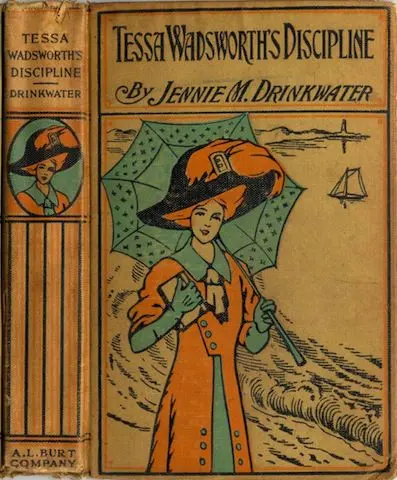
Tessa Wadsworth’s Discipline: A Story of the Development of a Young Girl’s Life
Nathaniel, Mrs. Conklin
THE CLASSIC COLLECTION · 1894
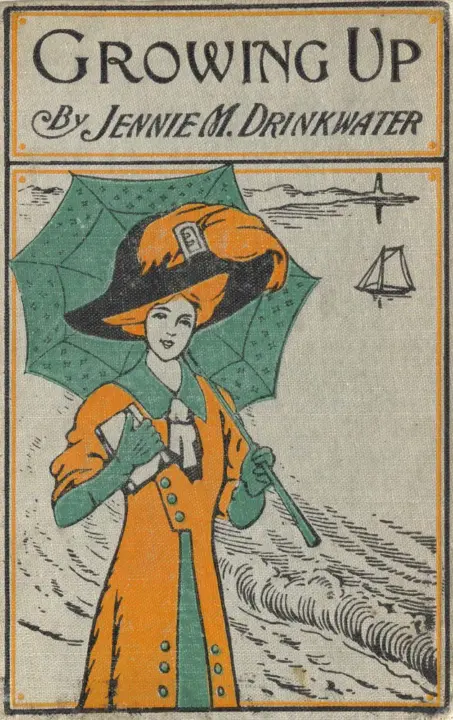
"Growing Up: A Story of the Girlhood of Judith Mackenzie" by Jennie M. Drinkwater is a fictional novel written in the late 19th century. The story revolves around the life of young Judith Mackenzie, exploring her experiences and thoughts as she navigates the complexities of girlhood while caring for her bedridden mother. The narrative is steeped in themes of love, family, and personal growth, as Judith's character develops and matures through her interactions with her mother and other relatives. The opening of the story presents a tender scene between Judith and her mother, where Judith takes joy in sharing her imaginative "pictures" with her mother while she is confined to a wheelchair. The dialogue reveals their strong bond and Judith's ambitions, dreams, and curiosity about the world. Through Judith's storytelling, we see her growing independence and aspirations for the future, including the desire to help her mother gain strength. This introduction sets the tone for a narrative rich in emotional depth and life lessons as Judith learns about love, responsibility, and growing up in a world filled with expectations and challenges.
Introduction adapted from the source catalogue; source summaries may be automatically generated.
Free to read · English · 81,489 words · No account needed
MAKE TIME FOR A GOOD BOOK
On by default. Untick to stop anonymous reading totals. Each page counts after 10 seconds in view. How this works.
Anonymous counting is on unless you have switched it off.
“Then I hope I shall not have to do anything I don’t want to. I’m afraid Don will be like a stranger. I was only a little girl when he went away. I do not feel at home with him, only with the thought of him.”
“With your thought of him?”
“And my thought may be very far wrong. O, Roger, do you believe it
is?” bringing her earnest face within range of his too sympathetic
eyes.
“Tell me what is your thought of him,” he said, gently, taking the reins from her hands. “You see you cannot talk and drive, too. Daisy was walking into a fence.”
She gave up the reins without any consciousness of the action; she was looking at her Cousin Don’s face as she had told a “picture” of it to her mother.
“He is so fine, so unselfish, so true, so considerate, a refuge from everything that troubles me, a part of my mother to me—I have saved all his letters, they are my chief treasures. If I should be disappointed in him the sun would drop out of the sky.”
“Poor little girl,” thought the man beside her, tenderly. “Suppose you are disappointed in me,” he asked, lightly; “have you ever thought about that?”
“No. I cannot even think that,” she said, impulsively.
“Because you have not placed me on any such pedestal?”
“Perhaps so,” she laughed.
“Is that the reason?”
“No, for when I was a little girl I placed my Cousin Don and his friend Roger on the same pedestal. You haven’t tumbled off yet, and I’ve been with you ever since.”
“Judith, I do not like that,” he answered, seriously; “you shouldn’t look at people like that.”
“I don’t. At people. But I do at you, and Don, and Marion, and Aunt Affy and Ruskin and George Macdonald and Miss Mulock and Tennyson and—”
“Then I will not be frightened if we are all there. If one of us fail, you will have all the others to keep the sun in your sky.”
“Now, give me back the reins, because I have told you.”
He laid the reins in her hand, asking what she had been doing with
herself all the morning.
“Writing a story.”
“O, Judith, not another one,” he exclaimed in pretended dismay.
“I had to. It was burning in my bones. Don’t you know I got five dollars for the last one?”
“Can nothing but a five-dollar bill quench the burning in your bones?”
“Oh, yes; the burning is quenched by writing it. I am quenched now for
quite a while.”
“What was your inspiration this time?”
Your reading position is saved on this browser. Take it to another device with a library code. Reading pages adapt to text, rather than matching a printed edition.
Nathaniel, Mrs. Conklin
BEHIND THE BOOK
This eBook is for the use of anyone anywhere in the United States and most other parts of the world at no cost and with almost no restrictions whatsoever. You may copy it, give it away or re-use it under the terms of the Project Gutenberg License included with this eBook or online at www.gutenberg.org. If you are not located in the United States, you will have to check the laws of the country where you are located before using this eBook. Read the source licence.
The original source file, including credits and licence, is retained by this library. Request an original-format copy at no charge. Please include the book title and Project Gutenberg identifier #42408.
KEEP YOUR CURIOSITY GOING
Coulson Kernahan

Maurice Baring
Frances Wright
Cécile Tormay

Frederic Jesup Stimson

W. H. P. (William Henry Pope) Jarvis