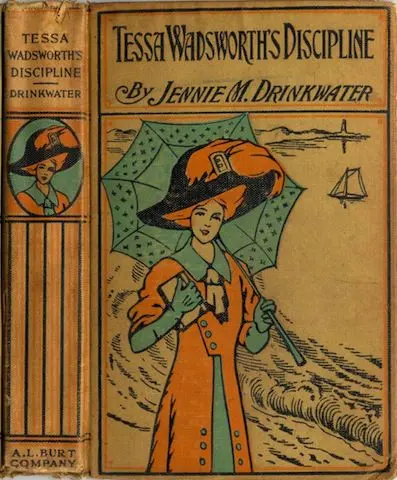
Tessa Wadsworth’s Discipline: A Story of the Development of a Young Girl’s Life
Nathaniel, Mrs. Conklin
THE CLASSIC COLLECTION · 1894
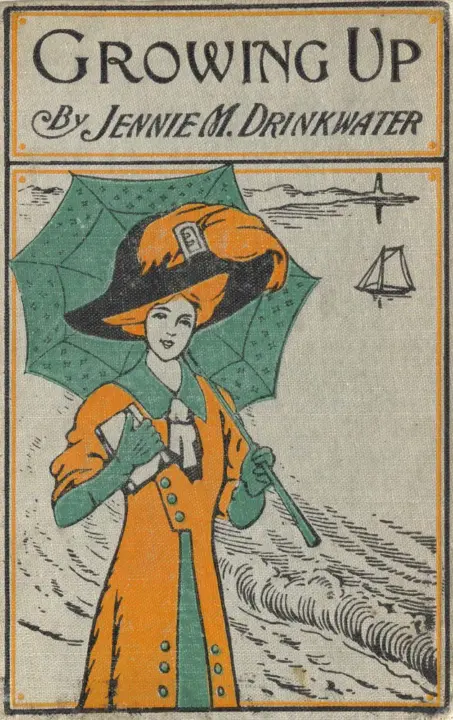
"Growing Up: A Story of the Girlhood of Judith Mackenzie" by Jennie M. Drinkwater is a fictional novel written in the late 19th century. The story revolves around the life of young Judith Mackenzie, exploring her experiences and thoughts as she navigates the complexities of girlhood while caring for her bedridden mother. The narrative is steeped in themes of love, family, and personal growth, as Judith's character develops and matures through her interactions with her mother and other relatives. The opening of the story presents a tender scene between Judith and her mother, where Judith takes joy in sharing her imaginative "pictures" with her mother while she is confined to a wheelchair. The dialogue reveals their strong bond and Judith's ambitions, dreams, and curiosity about the world. Through Judith's storytelling, we see her growing independence and aspirations for the future, including the desire to help her mother gain strength. This introduction sets the tone for a narrative rich in emotional depth and life lessons as Judith learns about love, responsibility, and growing up in a world filled with expectations and challenges.
Introduction adapted from the source catalogue; source summaries may be automatically generated.
Free to read · English · 81,489 words · No account needed
MAKE TIME FOR A GOOD BOOK
On by default. Untick to stop anonymous reading totals. Each page counts after 10 seconds in view. How this works.
Anonymous counting is on unless you have switched it off.
“Our eyes see all around, in gloom or glow, Hues of their own fresh borrowed from the heart.”
—Keble.
It was chilly that evening in the old rooms of the house with three windows in the roof; Roger Kenney’s father and mother sat near the grate in the front parlor; curtains and portieres were dropped, the piano lamp with its crimson silk shade threw a glow over the two faces sitting in cosy content opposite each other. The house was still; the girls, Martha and Lou, and the two boys, Maurice and John, had gone down town to an illustrated lecture on India; the maid had her evening out; even Nip, the house-dog, had gone out for an evening ramble; the two “old people,” as in their early sixties they loved to call each other, were alone with each other and a new anxiety.
Mr. Kenney told his wife that nothing in the world made her quite so happy as a new worry, and he wished he could get one for her oftener.
“This will do for awhile,” she remarked; “but this isn’t as bad as that old trouble of Marion’s; a man can work himself out; and Roger has work enough on hand for two worries.”
“Now, what are you going to do about this?” inquired her husband, folding the evening’s paper and laying it upon his knee. “You sent Marion to Bensalem for her charm; will you get Roger away for his?”
“That would do no good,” she replied, discontentedly, “he would not be got away in the first place, and Judith is not a fixture in Bensalem.”
“Judith is worth having,” was the complacent reply.
“That’s the worst of it. So was Don Mackenzie.”
“It’s the best of it, I think. You wouldn’t have your boys and girls carried away by somebody not worth having.”
“But, then, being disappointed in somebody might help them bear it, and turn them around to look at somebody else.”
“A disappointment like that is poor consolation.”
“I don’t suppose the disappointment is the consolation. The
somebody else is.”
“You never had the consolation of the somebody else.”
“I have only had the consolation of you,” she retorted.
“Marion has never taken up with anybody,” he said, reflectively.
“She has had no chance—”
“That you know,” he interrupted.
“—That I know,” she accepted meekly, “excepting David Prince.”
“She wouldn’t look at him.”
“No, she wouldn’t. He was younger in the first place—and so different
from Don.”
“I’d like to see that English beauty Don has married.”
Your reading position is saved on this browser. Take it to another device with a library code. Reading pages adapt to text, rather than matching a printed edition.
Nathaniel, Mrs. Conklin
BEHIND THE BOOK
This eBook is for the use of anyone anywhere in the United States and most other parts of the world at no cost and with almost no restrictions whatsoever. You may copy it, give it away or re-use it under the terms of the Project Gutenberg License included with this eBook or online at www.gutenberg.org. If you are not located in the United States, you will have to check the laws of the country where you are located before using this eBook. Read the source licence.
The original source file, including credits and licence, is retained by this library. Request an original-format copy at no charge. Please include the book title and Project Gutenberg identifier #42408.
KEEP YOUR CURIOSITY GOING
Coulson Kernahan

Maurice Baring
Frances Wright
Cécile Tormay

Frederic Jesup Stimson

W. H. P. (William Henry Pope) Jarvis