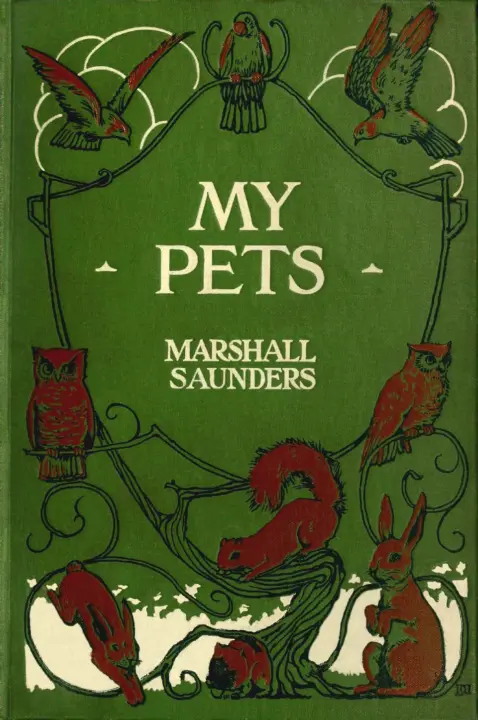
My pets
Marshall Saunders
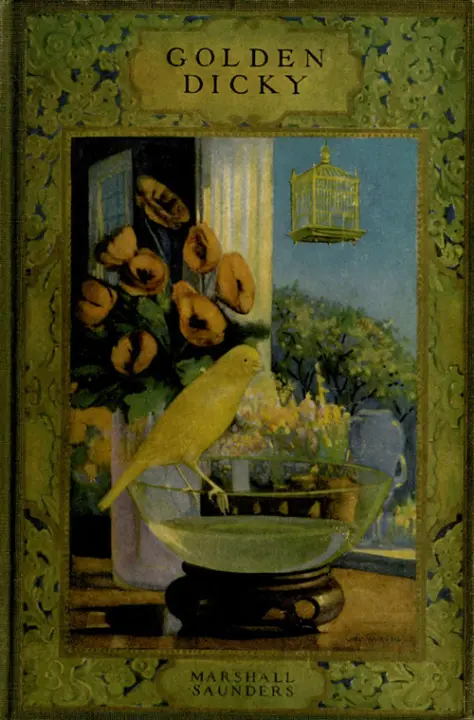
THE CLASSIC COLLECTION · 1919
"Golden Dicky, The Story of a Canary and His Friends" by Marshall Saunders is a children's novel written in the early 20th century. It presents an endearing tale revolving around a canary named Dicky-Dick and his family and friends in a bird room, intertwined with moral lessons about compassion for animals and the importance of kindness. The book likely appeals to young readers with its charming cast of animal characters and lighthearted adventures. The opening of the story introduces Dicky-Dick as he reflects on his early life as a baby bird in a comfortable bird-room, lovingly cared for by his mother, Dixie, and father, Norfolk. The narrative showcases the canary's initial experiences, including the excitement of opening his eyes for the first time and meeting his siblings. Dicky-Dick's complicated relationship with his brother, Green-Top, begins to unfold as the canary learns valuable lessons about family, rivalry, and self-worth while also offering glimpses into the vibrant lives of the other birds around him. The chapters set the stage for an exploration of his friendships and the adventures that await as he navigates his world beyond the nest.
Introduction adapted from the source catalogue; source summaries may be automatically generated.
Free to read · English · 53,204 words · No account needed
MAKE TIME FOR A GOOD BOOK
On by default. Untick to stop anonymous reading totals. Each page counts after 10 seconds in view. How this works.
Anonymous counting is on unless you have switched it off.
When he said, “I—love—you,” he rose still higher on his hoofs, blew the ladies a kiss with one of his forefeet, and spoke in such a tender kind of a voice that they just shrieked with laughter. Then he lost his head more than Sammy-Sam had, and, gamboling on the green, announced that he wished not money but souvenirs.
After a while he controlled himself and went soberly from one to another and had pinned on his pony coat neckties, a bangle, a ring or two, some purses and one lady put round one of his forefeet a handsome string of beads which she took from her own neck.
The children bowed, kissed their hands, then trooped down the street to tell our Mary, who had helped them dress, of the success of their entertainment.
Chummy gazed affectionately after them.
“Good children,” he said. “We sparrows love them.”
“Let’s fly down to our house and hear what they say,” I proposed to
him.
“Hurrah!” said Chummy. “Of course I’ll go to see the most beautiful birds on the street—the Martins’.”
Deeply pleased, I gave him an affectionate tap with my bill, and we flew to the upper veranda railing, where Mrs. Martin was just bringing out Billie and Niger to the sunshine.
She had been bathing them, and she handed our Mary a towel, and asked her to finish drying their ears, for her back was most broken from bending over the dogs’ bath tub.
“Oh, Mary! Mary!” called the children, and they all burst on the veranda and exhibited their collections.
“Look at Billy,” I whispered to Chummy.
She was pressing close to Niger and was licking his sides dry before
she touched her own.
“And we were afraid she would be jealous of Niger,” said Chummy. “She is a pretty good dog, after all.”
“We are all good,” I said happily, and, strange to say, just at that moment Missie turned to Chummy.
“Sparrow bird,” she said, for she did not know my name of Chummy for him, “sparrow bird, I am perfectly delighted at the attitude of your family toward the wild birds that are coming back. I expect you to eat very little food at my table in the garden this summer, but join with the wild birds in killing many tussock moths—will you?” she added smilingly.
Chummy understood her, and he tried so hard to tell her how grateful he was to her for all her kindness to him and his family that he actually croaked out a hoarse little song in which one could plainly distinguish some of my notes.
Your reading position is saved on this browser. Take it to another device with a library code. Reading pages adapt to text, rather than matching a printed edition.
Marshall Saunders
Marshall Saunders
Marshall Saunders
Marshall Saunders
BEHIND THE BOOK
This eBook is for the use of anyone anywhere in the United States and most other parts of the world at no cost and with almost no restrictions whatsoever. You may copy it, give it away or re-use it under the terms of the Project Gutenberg License included with this eBook or online at www.gutenberg.org. If you are not located in the United States, you will have to check the laws of the country where you are located before using this eBook. Read the source licence.
The original source file, including credits and licence, is retained by this library. Request an original-format copy at no charge. Please include the book title and Project Gutenberg identifier #55173.
KEEP YOUR CURIOSITY GOING
Coulson Kernahan

Maurice Baring
Frances Wright
Cécile Tormay

Frederic Jesup Stimson

W. H. P. (William Henry Pope) Jarvis