THE CLASSIC COLLECTION✦The Countess FannyCLASSIC FREE BOOKS
The Countess Fanny
Marjorie Bowen
THE CLASSIC COLLECTION · 1913
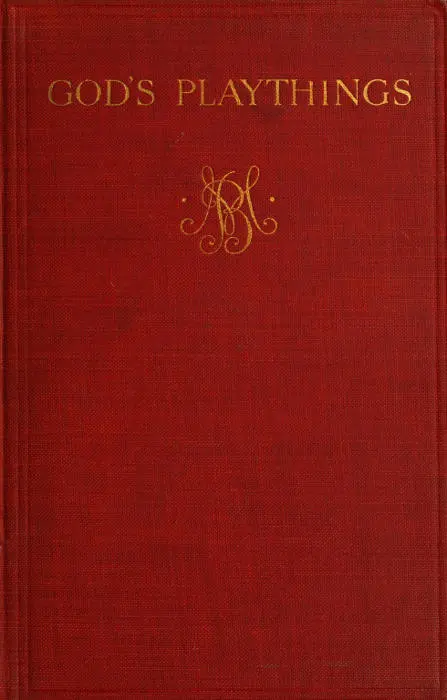
"God's Playthings" by Marjorie Bowen is a historical novel written in the early 20th century. The narrative opens with the dramatic tale of James Scott, Duke of Monmouth, a historical figure involved in a rebellion against King James II of England, exploring themes of ambition, loyalty, and the tragic consequences of political intrigue. The story introduces Duke Monmouth's complex character, characterized by both noble aspirations and deep vulnerabilities, as he navigates the perils of his rebellion and confronts the bitter reality of his fate. The opening of "God's Playthings" immerses readers in a rich historical tapestry, vividly portraying the events surrounding Monmouth's rebellion. It begins with a letter from Monmouth, revealing his desperation and hope for mercy from the King, illustrated against the backdrop of betrayal and shifting loyalties. As the narrative progresses, it delves into Monmouth's internal struggles, depicting his reluctance to engage in treachery despite the urgings of others, ultimately leading to a poignant climax of existential questions about identity and legacy. This early portion effectively sets up a dramatic and emotionally charged story that promises to explore the intersections of personal ambition and tragic downfall.
Introduction adapted from the source catalogue; source summaries may be automatically generated.
Free to read · English · 76,247 words · No account needed
MAKE TIME FOR A GOOD BOOK
On by default. Untick to stop anonymous reading totals. Each page counts after 10 seconds in view. How this works.
Anonymous counting is on unless you have switched it off.
The Duke of Lancaster, who was in command of the troops who had escorted the Prince to Bordeaux and had a hundred matters on his mind, left the chamber.
Jehanne sat silent, forgotten, unnoticed, beside the Prince, who, with his head sunk on his breast, was dreaming of the life that was past and the life he had hoped to live.
Presently candles were brought in, but he made no movement nor did the Princess, stiff and cold on her stool.
The wind, with a gentle persistence, shook the tall window-frame and lifted the arras on the wall; clouds were coming up from beyond the sea and blotting the tawny crimson streaks of the sunset.
Dark settled in the chamber and the candles winked, little points of
light in a great gloom.
Pleasant, cheerful noises of horses and men came from the courtyard where the lading and unlading was proceeding; the sounds of the mules and their drivers could be heard as a long procession of them laden with baggage started for the ships.
At last the Prince spoke.
“This is a homeward wind,” he said.
As he raised his head to speak he saw the door open and the Spanish
doctor enter.
Jehanne turned, and, fearful of bad news, put her finger to her lips.
But Edward got to his feet, caught her aside, and said in the voice of
a strong man–
“What news of my son?”
The doctor answered steadily, without fear or hesitancy.
“The Prince is worse, Seigneur, and it were well that you should come.”
Edward of Wales bowed his head and followed the doctor into the next
apartment.
The candles were lit and the curtains drawn; a smell of herbs, of wax, of incense, was heavy in the air. A priest was kneeling at the foot of the bed; the full Latin words of his whispered prayer came clearly to the Prince’s ears.
The little Edward lay on his back with his head flung upwards.
An awful change had come over him since last his father had looked on him; an expression of pain had also given him an expression of maturity, the unnatural flush had faded, leaving him bluish-white, while under his bright eyes was a purple stain.
The Prince staggered to the bed.
“Limoges, Limoges,” he muttered.
He cast himself on his knees and clutched the coverlet.
“Dear Lord Jesus, what is this coming to me!” he whispered.
Another doctor moved about; Jehanne stopped and spoke to him. He could tell her nothing save that, despite all the most approved remedies, the Prince had within the last hour become rapidly worse and finally lost consciousness.
Your reading position is saved on this browser. Take it to another device with a library code. Reading pages adapt to text, rather than matching a printed edition.
Marjorie Bowen
Marjorie Bowen
Marjorie Bowen
Marjorie Bowen
BEHIND THE BOOK
This eBook is for the use of anyone anywhere in the United States and most other parts of the world at no cost and with almost no restrictions whatsoever. You may copy it, give it away or re-use it under the terms of the Project Gutenberg License included with this eBook or online at www.gutenberg.org. If you are not located in the United States, you will have to check the laws of the country where you are located before using this eBook. Read the source licence.
The original source file, including credits and licence, is retained by this library. Request an original-format copy at no charge. Please include the book title and Project Gutenberg identifier #49504.
KEEP YOUR CURIOSITY GOING
Cécile Tormay

Moritz Busch
Coulson Kernahan
John L. Ransom

Maurice Baring
Frances Wright