THE CLASSIC COLLECTION✦The Countess FannyCLASSIC FREE BOOKS
The Countess Fanny
Marjorie Bowen
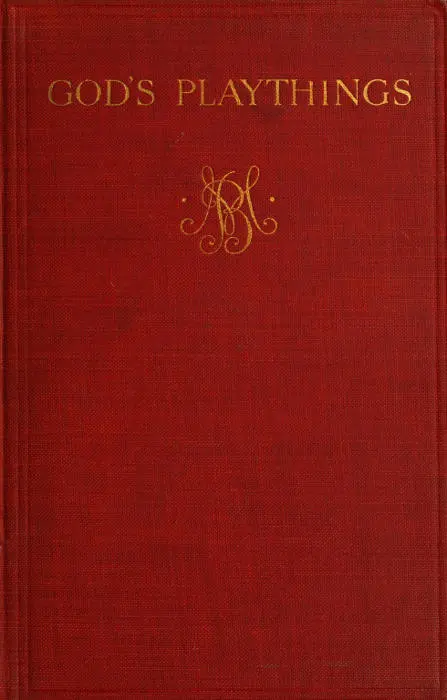
THE CLASSIC COLLECTION · 1913
"God's Playthings" by Marjorie Bowen is a historical novel written in the early 20th century. The narrative opens with the dramatic tale of James Scott, Duke of Monmouth, a historical figure involved in a rebellion against King James II of England, exploring themes of ambition, loyalty, and the tragic consequences of political intrigue. The story introduces Duke Monmouth's complex character, characterized by both noble aspirations and deep vulnerabilities, as he navigates the perils of his rebellion and confronts the bitter reality of his fate. The opening of "God's Playthings" immerses readers in a rich historical tapestry, vividly portraying the events surrounding Monmouth's rebellion. It begins with a letter from Monmouth, revealing his desperation and hope for mercy from the King, illustrated against the backdrop of betrayal and shifting loyalties. As the narrative progresses, it delves into Monmouth's internal struggles, depicting his reluctance to engage in treachery despite the urgings of others, ultimately leading to a poignant climax of existential questions about identity and legacy. This early portion effectively sets up a dramatic and emotionally charged story that promises to explore the intersections of personal ambition and tragic downfall.
Introduction adapted from the source catalogue; source summaries may be automatically generated.
Free to read · English · 76,247 words · No account needed
MAKE TIME FOR A GOOD BOOK
On by default. Untick to stop anonymous reading totals. Each page counts after 10 seconds in view. How this works.
Anonymous counting is on unless you have switched it off.
“Ay, save Acquitaine, Johan,” he murmured, “for the honour of England.”
His eyes turned wistfully to the fading day that died beyond the oriel window. Surely, he thought, I have drunk of the last drop of bitterness. I, Edward of Wales, to return to England a useless man, leaving defeat behind for a younger knight to redeem.
The Duke of Lancaster stood watching him, with many thoughts in his heart, and presently Edward turned to him and spoke, in a voice earnest and feeble.
“Johan, when the King dies I shall be in my grave.”
The Princess broke his speech by a sharp, piteous intake of breath, and caught desperately at his slack hand.
“Oh, Jehanne,” he said, “I have flattered your fears long enough. And now I must speak straightly.”
He paused, for his breath failed him.
“Speak,” answered Johan, “for I am ready to take any charge that you
may give me—”
“My son Edward will be King of England,” whispered the Prince; “and he is a young child. Stand you by him and by his mother in their difficulties.”
“I will,” said the Duke gravely.
“I entreat this of you now,” added Edward, “for it well may be that I shall never see you again. I think,” and the bitterness of his failure echoed in his voice, “that I shall die before we regain Acquitaine.”
“Be of better cheer, brother,” answered the Duke, “for I have great hopes that you will recover in England.”
“Nay, I am past mending,” said the Prince; “and were it not that I have some desire to draw my last breath in English air, I would die here and leave my bones where I have left my knighthood and my chivalry.”
“You scarcely think of me,” said Jehanne of Kent, and her eyes reminded him how much he had loved her once; lately he had seemed to fall away from the close confines of her affection.
He returned her gaze sadly.
“Yea, I think of you,” he answered, “but men’s matters fill my mind. Yet be content. You are a sweet woman, Jehanne.”
He caressed her cheek with languid fingers, and again his eyes sought the window and the pale sky beyond, and his face was moody, as if he saw passing in the windy spaces without all the pageants, battles, triumphs, achievements and glories that had gone to make his life–all the great world that was still full of feats of arms, of ambitions, of splendour, of laughter, whirling, receding, leaving him in this quiet chamber, useless, sick, and defeated.
Your reading position is saved on this browser. Take it to another device with a library code. Reading pages adapt to text, rather than matching a printed edition.
Marjorie Bowen
Marjorie Bowen
Marjorie Bowen
Marjorie Bowen
BEHIND THE BOOK
This eBook is for the use of anyone anywhere in the United States and most other parts of the world at no cost and with almost no restrictions whatsoever. You may copy it, give it away or re-use it under the terms of the Project Gutenberg License included with this eBook or online at www.gutenberg.org. If you are not located in the United States, you will have to check the laws of the country where you are located before using this eBook. Read the source licence.
The original source file, including credits and licence, is retained by this library. Request an original-format copy at no charge. Please include the book title and Project Gutenberg identifier #49504.
KEEP YOUR CURIOSITY GOING
Cécile Tormay

Moritz Busch
Coulson Kernahan
John L. Ransom

Maurice Baring
Frances Wright