THE CLASSIC COLLECTION✦The Countess FannyCLASSIC FREE BOOKS
The Countess Fanny
Marjorie Bowen
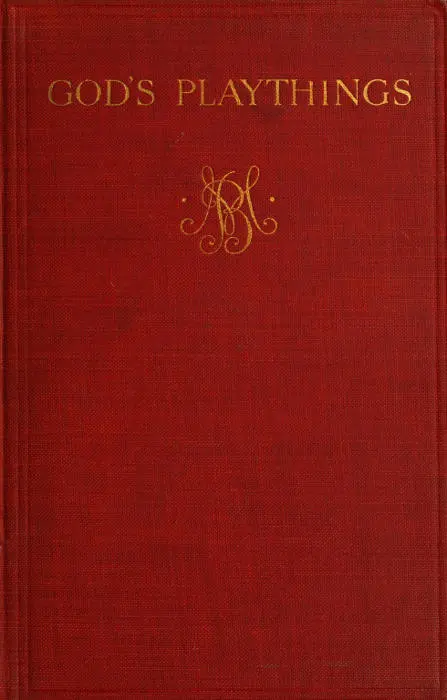
THE CLASSIC COLLECTION · 1913
"God's Playthings" by Marjorie Bowen is a historical novel written in the early 20th century. The narrative opens with the dramatic tale of James Scott, Duke of Monmouth, a historical figure involved in a rebellion against King James II of England, exploring themes of ambition, loyalty, and the tragic consequences of political intrigue. The story introduces Duke Monmouth's complex character, characterized by both noble aspirations and deep vulnerabilities, as he navigates the perils of his rebellion and confronts the bitter reality of his fate. The opening of "God's Playthings" immerses readers in a rich historical tapestry, vividly portraying the events surrounding Monmouth's rebellion. It begins with a letter from Monmouth, revealing his desperation and hope for mercy from the King, illustrated against the backdrop of betrayal and shifting loyalties. As the narrative progresses, it delves into Monmouth's internal struggles, depicting his reluctance to engage in treachery despite the urgings of others, ultimately leading to a poignant climax of existential questions about identity and legacy. This early portion effectively sets up a dramatic and emotionally charged story that promises to explore the intersections of personal ambition and tragic downfall.
Introduction adapted from the source catalogue; source summaries may be automatically generated.
Free to read · English · 76,247 words · No account needed
MAKE TIME FOR A GOOD BOOK
On by default. Untick to stop anonymous reading totals. Each page counts after 10 seconds in view. How this works.
Anonymous counting is on unless you have switched it off.
Jehanne turned desperately to the great bed where her child lay, breathing heavily, with glazed fixed eyes and dry lips.
“Is it the plague?” she asked.
They could not tell her.
“Oh, dear, dear Lord and St. George,” prayed the Prince, “put not this loss on England; punish me not this way!”
The child turned on his side and muttered a few words, all relating to
arms and horses and war; his eyes closed jerkily and then fluttered
open.
Johan of Lancaster entered; he whispered to the doctors, then came lightly to the bed, walking as softly as a woman for all his great stature and bulk.
He glanced at the child, he glanced at his brother, then touched the kneeling priest on the shoulder.
“He will not die,” said the Prince; “in a little while he will wake and
be well again.”
The priest rose and left the room.
A long swell of wind lifted the Eastern tapestry on the floor, fluttered the long curtains and stirred the aromatic scents and the clouds of incense that hung in the air.
Jehanne of Kent stood rigid, staring down at the pillow; her yellow hair had slipped and hung loose in the silver caul.
And her face showed hollow in the fluttering candlelight.
The little Prince turned from side to side, catching his breath in his
throat.
“Seigneur …” he gasped, “let me … mount the white horse … the great
horse.…”
He began to cough, and his small fingers pulled at the pillow; he
stared straight at his father.
“He does not see me,” whispered Edward; “he is blind.”
“Why do you leave me alone?” complained the child; “but I … am … not … afraid–never … afraid.”
The Prince caught his arm passionately, then turned in a slow horror, for he saw Jehanne and his brother sink to their knees. He looked over his shoulder.
In the doorway stood three priests; the centre one held with upraised hands an object swathed in white silk.
The Host.
“In nomine patris, filiis, et spiritus sanctus,” he said, and drew aside the white silk, revealing the Eucharist glittering like a captured star.
“No,” began Edward, “no—”
He turned again to the bed; a light struggle shook the child’s limbs. He twisted his arm out of his father’s grasp and pressed his two hands together, pointed heavenwards.
“Saint–George—” he breathed very faintly, then “England.”
His hands fell apart and his mouth dropped into a circle; a faint quiver ran through his body, and his head sank on to his shoulder.
The Host was borne round the bed, and no one moved.
Then Edward rose, regardless of the Presence of God.
Your reading position is saved on this browser. Take it to another device with a library code. Reading pages adapt to text, rather than matching a printed edition.
Marjorie Bowen
Marjorie Bowen
Marjorie Bowen
Marjorie Bowen
BEHIND THE BOOK
This eBook is for the use of anyone anywhere in the United States and most other parts of the world at no cost and with almost no restrictions whatsoever. You may copy it, give it away or re-use it under the terms of the Project Gutenberg License included with this eBook or online at www.gutenberg.org. If you are not located in the United States, you will have to check the laws of the country where you are located before using this eBook. Read the source licence.
The original source file, including credits and licence, is retained by this library. Request an original-format copy at no charge. Please include the book title and Project Gutenberg identifier #49504.
KEEP YOUR CURIOSITY GOING
Cécile Tormay

Moritz Busch
Coulson Kernahan
John L. Ransom

Maurice Baring
Frances Wright