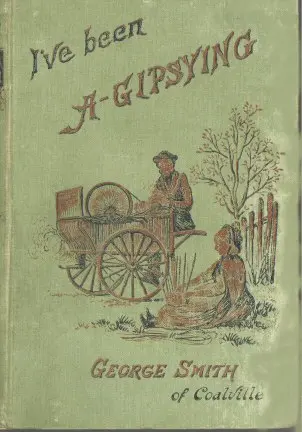
I’ve been a Gipsying or, Rambles among our Gipsies and their children in their tents and vans
George Smith
THE CLASSIC COLLECTION · 1880
"Gipsy Life" by George Smith is an account written in the late 19th century that examines the lives, origins, and social conditions of the Gipsy population in England. The book delves into the challenges faced by Gipsies, particularly women and children, highlighting themes of neglect and societal misunderstanding. The opening reveals the author's dedication to raising awareness about the plight of Gipsies and the need for educational intervention in their lives. Smith outlines the historical treatment of Gipsies across Europe, touching on their origins and the stigma associated with their lifestyle. He paints a vivid picture of the struggles they have endured, from persecution in various countries to their current state in England, emphasizing the importance of understanding their story to foster compassion and potential improvement in their circumstances.
Introduction adapted from the source catalogue; source summaries may be automatically generated.
Free to read · English · 108,927 words · No account needed
MAKE TIME FOR A GOOD BOOK
On by default. Untick to stop anonymous reading totals. Each page counts after 10 seconds in view. How this works.
Anonymous counting is on unless you have switched it off.
"Judging from the conversations I have had with the Gipsies in various parts of the country, not more than half living as men and wives are married. No form or ceremony has been gone through, not even 'jumping the broomstick,' as has been reported of them; and taking the words of a respectable Gipsy woman, 'they go together, take each other's words, and there is an end of it.' I am also assured by Levi Boswell, a real respectable Gipsy, and a Mrs. Eastwood, a Christian woman and a Gipsy, who preaches occasionally, that not half the Gipsies who are living as men and wives are married. When once a Gipsy woman has been ill-used, she becomes fearful, and as one said to me a few days since, 'we are either like devils or like lambs.' In the case of some of the adult Gipsies living on the outskirts of London an improvement has taken place. There is some good among them as with others. A Gipsy in Wiltshire has built himself a house at the cost of 600 pounds. Considerable difficulty is experienced sometimes in finding them out, as many of the women go by two names; but in vain do I look for any improvement among the children. Owing to the act relating to pedlars and hawkers prohibiting the granting of licences for hawking to the youths of both sexes under seventeen, and the Education Acts not being sufficiently strong to lay hold of their dirty, idle, travelling tribes to educate them--except in rare cases--they are allowed to skulk about in ignorance and evil training, without being taught how to get an honest living. No ray of hope enters their breast, their highest ambition is to live and loll about so long as the food comes, no matter by whom or how it comes so that they get it. In many instances they live like pigs, and die like dogs. The real old-fashioned Gipsy has become more lewd and demoralised--if such a thing could be--by allowing his sons and daughters to mix up with the scamps, vagabonds, 'rodneys,' and gaol birds, who now and then take their flight from the 'stone cup' and settle among them as they are camping on the ditch banks; the consequence is our lanes are being infested with a lot of dirty ignorant Gipsies, who, with their tribes of squalid children, have been encouraged by servant girls and farmers--by supplying their wants with eggs, bacon, milk, potatoes, the men helping themselves to game--to locate in the neighbourhood until they have received the tip from the farmer to pass on to his neighbours. Children born under such circumstances, unless taken hold of by the State, will turn out to be a class of most dangerous characters. Very much, up to the present, the wants of the women and children have been supplied through gulling the large-hearted and liberal-minded they have been brought in contact with, and the result has been that but few of the real Gipsies have found their way into gaols. This is a redeeming feature in their character; probably their offences may have been winked at by the farmers and others who do not like the idea of having their stacks fired and property destroyed, and have given the Gipsies a wide berth. Gipsies, as a rule, have very large families, generally between eight and sixteen children are born in their tents. Owing to their exposure to the damp and cold ground they suffer much from chest and throat complaints. Large numbers of the children die young before they are 'broken' in.' And it is a 'breaking in' in a tremendous sense, fraught with fearful consequences. With regard to their education, the following cases, selected from different parts of the country, may be fairly taken as representative of the entire Gipsy community. Boswell, a respectable Gipsy, says he has had nine sons and daughters (six of whom are alive), and nineteen grandchildren, and none of them can read or write; and he also thinks that about half the Gipsy men and women living as husbands and wives are unmarried. Mrs. Simpson, a Gipsy woman and a Christian, says she has six sons and daughters and sixteen grandchildren, and only two can read and write a little. Mrs. Eastwood says she has nine brothers and sisters. Mr. Eastwood, a Christian and a Gipsy, has eight brothers and sisters, many among them have large families, making a total of adults and children of about fifty of all ages, and there is scarcely one among them who can tell a letter or read a sentence; in addition to this number they have between them from 130 to 150 first and second cousins, among whom there are not more than two who can read or write, and that but very little indeed, and Mr. Eastwood thinks this proportion will apply to other Gipsies. Mrs. Trayleer has six brothers and sisters, all Gipsies, and not one can read or write. A Gipsy woman, whose head-quarters are near Ashby-de-la-Zouch, has fifteen brothers and sisters, some of whom have large families. She herself has fifteen sons and daughters alive, some of whom are married. But of the whole of these brothers and sisters, nieces, nephews, grandchildren, &c., numbering not less than 100 of all ages, not more than three or four can read or write, and they who can but very imperfectly. Mrs. Matthews has a family of seven children, nearly all grown-up, and not one out of the whole of these can read or write; thus it will be seen that I shall be under the mark when I state that not five per cent. of the Gipsies, &c., travelling about the country in tents and vans can either read or write; and I have not found one Gipsy but what thinks it would be a good thing if their tents and vans were registered, and the children compelled to go to school--in fact, many of them are anxious for such a thing to be brought about. In the case of the brick-yard and canal-boat children, they were over-worked as well as ignorant. In the case of the Gipsy children, these children and roadside arabs, for the want of education, ambition, animation, and push, are indulging in practices that are fast working their own destruction and those they are brought into contact with, and a great deal of this may lay at the door of flattery, twaddle, petting, and fear.
Your reading position is saved on this browser. Take it to another device with a library code. Reading pages adapt to text, rather than matching a printed edition.
George Smith
George Smith
BEHIND THE BOOK
This eBook is for the use of anyone anywhere in the United States and most other parts of the world at no cost and with almost no restrictions whatsoever. You may copy it, give it away or re-use it under the terms of the Project Gutenberg License included with this eBook or online at www.gutenberg.org. If you are not located in the United States, you will have to check the laws of the country where you are located before using this eBook. Read the source licence.
The original source file, including credits and licence, is retained by this library. Request an original-format copy at no charge. Please include the book title and Project Gutenberg identifier #28548.
KEEP YOUR CURIOSITY GOING
Cécile Tormay

Moritz Busch
John L. Ransom
Frances Wright
Cécile Tormay

Mabel Potter Daggett