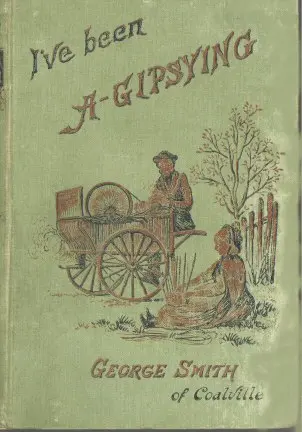
I’ve been a Gipsying or, Rambles among our Gipsies and their children in their tents and vans
George Smith
THE CLASSIC COLLECTION · 1880
"Gipsy Life" by George Smith is an account written in the late 19th century that examines the lives, origins, and social conditions of the Gipsy population in England. The book delves into the challenges faced by Gipsies, particularly women and children, highlighting themes of neglect and societal misunderstanding. The opening reveals the author's dedication to raising awareness about the plight of Gipsies and the need for educational intervention in their lives. Smith outlines the historical treatment of Gipsies across Europe, touching on their origins and the stigma associated with their lifestyle. He paints a vivid picture of the struggles they have endured, from persecution in various countries to their current state in England, emphasizing the importance of understanding their story to foster compassion and potential improvement in their circumstances.
Introduction adapted from the source catalogue; source summaries may be automatically generated.
Free to read · English · 108,927 words · No account needed
MAKE TIME FOR A GOOD BOOK
On by default. Untick to stop anonymous reading totals. Each page counts after 10 seconds in view. How this works.
Anonymous counting is on unless you have switched it off.
"To make up such an aggregate the numerous hordes must have been included who traverse most of the nation with carts and asses for the sale of earthenware, and live out of doors great part of the year, after the manner of the Gipsies. These potters, as they are commonly called, acknowledge that Gipsies have intermingled with them, and their habits are very similar. They take their children along with them on travel, and, like the Gipsies, regret that they are without education." Mr. Hoyland says that he endeavoured to obtain the number of pot-hawking families of this description who visited the earthenware manufactories at Tunstall, Burslem, Longport, Hanley, Stoke-on-Trent, Fenton, Longton, and other places in Staffordshire, but without success.
Borrow, in his time, 1843, put the number as upwards of 10,000. The last census shows that there were under 4,000; but then it should be borne in mind that the Gipsies decidedly objected to their numbers being taken. Their reason for taking this step and putting obstacles in the way of the census-takers has never been stated, except that they looked upon it with a superstitious regard and dislike, the same as they look upon photographers, painters, and artists, as kind of Bengaw, for whom Gipsy models will sit for soonakei, Roopeno, or even a posh-hovi. They told me that during the day the census was taken they made it a point to always be upon the move, and skulking about in the dark. The census returns for the number of canal-boatmen gives under 12,000. The Duke of Richmond stated in the House of Lords, August 8, 1877, that there were between 29,000 and 80,000 canal boatmen. The number I published in the daily papers in 1873, viz., 100,000 men, women, and children is being verified as the Canal Boats Act is being put into operation.
At a pretty good rough estimate I reckon there are at least from 15,000 to 20,000 Gipsies in the United Kingdom. Apart from London, if I may take ten of the Midland counties as a fair average, there are close upon 3,000 Gipsy families living in tents and vans in the by-lanes, and attending fairs, shows, &c.; and providing there are only man, wife, and four children connected with each charmless, cheerless, wretched abodes called domiciles, this would show us 18,000; and judging from my own inquiries and observation, and also from the reliable statements of others who have mixed among them, there are not less than 2,000 on the outskirts of London in various nooks, corners, and patches of open spaces. Thus it will be seen, according to this statement, we shall have 1,000 Gipsies for every 1,750,000 of the inhabitants in our great London; and this proportion will be fully borne out throughout the rest of the country; so taking either the Midland counties or London as an average, we arrive at pretty much the same number--i.e., 15,000 to 20,000 in our midst, and moving about from place to place. Upon Leicester Race Course, at the last races, I counted upwards of ninety tents, vans, and shows; connected with each there would be an average of man, woman, and three children. A considerable number of Gipsies would also be at Nottingham, for the Goose Fair was on about the same time. One gentleman tells me that he has seen as many as 5,000 Gipsies collected together at one time in the North of England.
Your reading position is saved on this browser. Take it to another device with a library code. Reading pages adapt to text, rather than matching a printed edition.
George Smith
George Smith
BEHIND THE BOOK
This eBook is for the use of anyone anywhere in the United States and most other parts of the world at no cost and with almost no restrictions whatsoever. You may copy it, give it away or re-use it under the terms of the Project Gutenberg License included with this eBook or online at www.gutenberg.org. If you are not located in the United States, you will have to check the laws of the country where you are located before using this eBook. Read the source licence.
The original source file, including credits and licence, is retained by this library. Request an original-format copy at no charge. Please include the book title and Project Gutenberg identifier #28548.
KEEP YOUR CURIOSITY GOING
Cécile Tormay

Moritz Busch
John L. Ransom
Frances Wright
Cécile Tormay

Mabel Potter Daggett