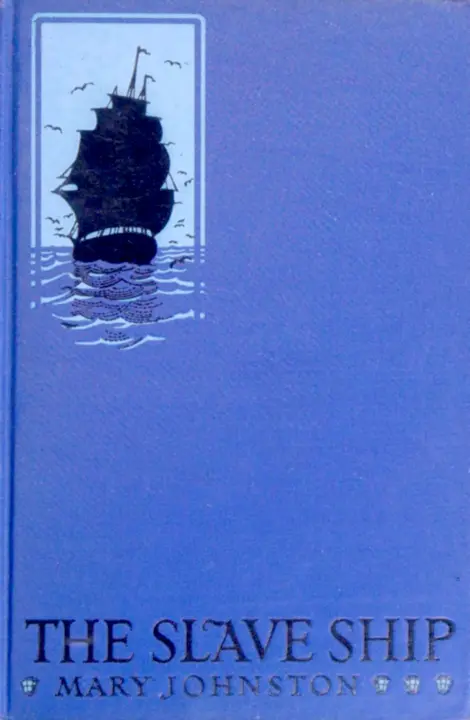
The slave ship
Mary Johnston
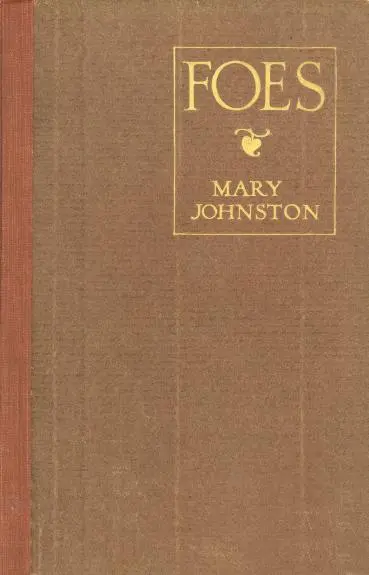
THE CLASSIC COLLECTION · 1918
"Foes" by Mary Johnston is a novel written in the early 20th century. This work explores themes of friendship, loyalty, and the tumultuous world surrounding Scotland in the early 18th century, focusing on the lives and relationships of the Jardine family, particularly the bond between Alexander Jardine and Ian Rullock. The narrative delves into the political tensions stemming from the Jacobite uprisings, set against a rich backdrop of the Scottish landscape. The opening of the novel introduces the character of English Strickland, a tutor at Glenfernie House, as he converses with Mother Binning, a local woman gifted with the second sight. Their discussion reflects the deeply rooted traditions and portents that linger in rural Scottish life. Amidst this setting, Strickland contemplates the enigmatic Alexander Jardine, who possesses a complexity that intrigues both Mother Binning and the tutor himself. The narrative then establishes Alexander's relationships with his family and friends, hinting at the conflicts and emotional depth that will shape the course of their lives as they approach a turning point in Scottish history. Overall, the opening sets the stage for a story of growth, friendship, and the struggle against a backdrop of cultural upheaval.
Introduction adapted from the source catalogue; source summaries may be automatically generated.
Free to read · English · 89,254 words · No account needed
MAKE TIME FOR A GOOD BOOK
On by default. Untick to stop anonymous reading totals. Each page counts after 10 seconds in view. How this works.
Anonymous counting is on unless you have switched it off.
"No. I will go farther, Ian. There is Mackenzie's house, over there."
They rode through the winter dawn to the house at the edge of the port, where lived a quiet man and wife, under obligations to the Jardines. There visited them now the laird of Glenfernie and his secretary, Mr. Strickland.
The latter, it seemed, was not well--kept his room that day. The laird of Glenfernie went about, indeed, but never once went near the waterside.... And yet, at eve, the master of the Seawing, riding in the harbor, took the resolution to sail by cockcrow.
The sun went down with red and gold, in a winter splendor. Dark night followed, but, late, there rose a moon. Alexander and Ian, coming down to the harbor edge at a specified place, found there the waiting boat with two rowers. It hung before them on the just-lit water. "Now, Old Steadfast, farewell!" said Ian.
"I am going a little farther. Step in, man!"
The boat drove across, under the moon, to the Seawing. The two mounted the brig's side and, touching deck, found the captain, known to Ian, who had sailed before upon the Seawing, and known since yesterday to Glenfernie. The captain welcomed them, his only passengers, using not their own names, but others that had been chosen. In the cabin, under the swinging lantern, there followed a few words as to weather, ports, and sailing. The tide served, the Seawing would be forth in an hour. The captain, work calling, left them in the small lighted place.
"The boat is waiting. Now, Old Steadfast--Senor Nobody--"
"Old Saracen, we used to say that we'd go one day to India--"
"Yes--"
"Well, let us go!"
"Us--"
"Why not?"
They stood with the table between them. Alexander's hands moved toward
Ian's. They took hands; there followed a strong, a convulsive
pressure.
"We sin in differing ways and at differing times," said Alexander, "but we all sin. And we all struggle with it and through it and onward! And there must be some kind of star upon our heights. Well, let us work toward it together, Old Saracen!"
They went out of the cabin and upon the deck. The boat that had brought them was gone. They saw it in the moonlight, half-way back to the quay. On the Seawing, sailors were lifting anchor. They stood and watched. The moon was paling; there came the scent of morning; far upon the shore a cock crew. The Seawing's crew were making sail. Out and up went her pinions, filled with a steady and favoring wind. She thrilled; she moved; she left the harbor for a new voyage, fresh wonder of the eternal world.
Your reading position is saved on this browser. Take it to another device with a library code. Reading pages adapt to text, rather than matching a printed edition.
Mary Johnston
Mary Johnston
Mary Johnston
Mary Johnston
BEHIND THE BOOK
This eBook is for the use of anyone anywhere in the United States and most other parts of the world at no cost and with almost no restrictions whatsoever. You may copy it, give it away or re-use it under the terms of the Project Gutenberg License included with this eBook or online at www.gutenberg.org. If you are not located in the United States, you will have to check the laws of the country where you are located before using this eBook. Read the source licence.
The original source file, including credits and licence, is retained by this library. Request an original-format copy at no charge. Please include the book title and Project Gutenberg identifier #16554.
KEEP YOUR CURIOSITY GOING
Cécile Tormay

Moritz Busch
Coulson Kernahan
John L. Ransom

Maurice Baring
Frances Wright