The slave ship
Mary Johnston
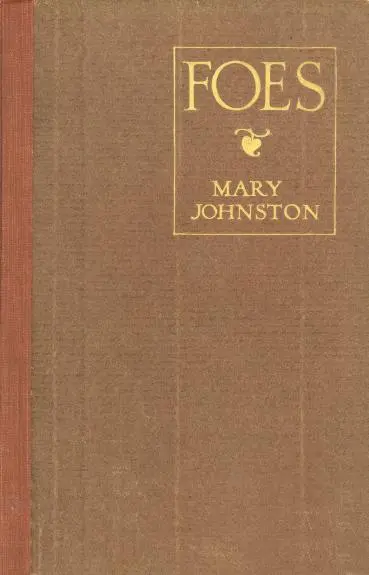
THE CLASSIC COLLECTION · 1918
"Foes" by Mary Johnston is a novel written in the early 20th century. This work explores themes of friendship, loyalty, and the tumultuous world surrounding Scotland in the early 18th century, focusing on the lives and relationships of the Jardine family, particularly the bond between Alexander Jardine and Ian Rullock. The narrative delves into the political tensions stemming from the Jacobite uprisings, set against a rich backdrop of the Scottish landscape. The opening of the novel introduces the character of English Strickland, a tutor at Glenfernie House, as he converses with Mother Binning, a local woman gifted with the second sight. Their discussion reflects the deeply rooted traditions and portents that linger in rural Scottish life. Amidst this setting, Strickland contemplates the enigmatic Alexander Jardine, who possesses a complexity that intrigues both Mother Binning and the tutor himself. The narrative then establishes Alexander's relationships with his family and friends, hinting at the conflicts and emotional depth that will shape the course of their lives as they approach a turning point in Scottish history. Overall, the opening sets the stage for a story of growth, friendship, and the struggle against a backdrop of cultural upheaval.
Introduction adapted from the source catalogue; source summaries may be automatically generated.
Free to read · English · 89,254 words · No account needed
MAKE TIME FOR A GOOD BOOK
On by default. Untick to stop anonymous reading totals. Each page counts after 10 seconds in view. How this works.
Anonymous counting is on unless you have switched it off.
Ian guided the boat to the water steps. Above, over the wall, streamed roses, a great, soundless fall of them, reflected, mass and color, in the lake. Above the roses sprang deep trees, shade behind shade, and here sang nightingales. Facing him sat the Milanese song-bird, the singer Antonia Castinelli. She had the throat of the nightingale and the beauty of the velvety open rose.
"Why land?" she said. "Why climb the steps to the chatter in the
villa?"
"Why indeed?"
"They are not singing! They are talking. There is deep, sweet shadow
around that point."
The boat turned glidingly. Now it was under tall rock, parapeted with
trees.
"Let Giovanni have the boat. Come and sit beside me! You are too far
away for singing together."
Old Giovanni at the helm, boatman upon this lake since youth, used long since to murmuring words, to touching hands, stayed brown and wrinkled and silent and unspeculative as a walnut. Perhaps his mind was sunk in his own stone hut behind vine leaves. The two under the rose-and-white-fringed canopy leaned toward each other.
"Tell me of your strange, foreign land! Have you roses
there--roses--roses? And nightingales that sing out your heart under
the moon?"
"I will tell you of the heather, the lark, and the mavis."
She listened. "Oh, it does not taste as tastes this lake! Give me pain! Tell me of women you have loved.... Oh, hear! The nightingales stop singing."
"Do you ever listen to the silence?"
"Of course ... when a friend dies--or I go to Mass--and sometimes when I am singing very passionately. But this lake--"
She began to sing. The contralto throbbed, painted, told, brought delight and melancholy. He sat with his hand loosened from hers, his eyes upon the lake's blue-green depths. At last she stopped.
"Oh--h!... Let us go back to the talking shore and the chattering villa! Somebody else is singing--somebody or something! I hear silence--I hear it in the silence.... Some things I can sing against, and some things I can't."
They went underneath the wall of roses. Her arm, sleeved as with mist, touched his; her low, wide brow and great liquid eyes were at his shoulder, at his breast. "O foreigner--and yet not at all foreign! Tell me your English words for roses--walls of roses--and music that never ceases in the night--and pleasing, pleasing, pleasing love!"
The boat came to the water steps. The two left it, climbing between flowers. Down to them came a wave of laughter and hand-clapping.
"Celestina recites--but I do not think she does it so well!... That is my window--see, where the roses mount!"
The company, flowing forth, caught them upon the terrace. "Lo, the
truants!"
Your reading position is saved on this browser. Take it to another device with a library code. Reading pages adapt to text, rather than matching a printed edition.
Mary Johnston
Mary Johnston
Mary Johnston
Mary Johnston
BEHIND THE BOOK
This eBook is for the use of anyone anywhere in the United States and most other parts of the world at no cost and with almost no restrictions whatsoever. You may copy it, give it away or re-use it under the terms of the Project Gutenberg License included with this eBook or online at www.gutenberg.org. If you are not located in the United States, you will have to check the laws of the country where you are located before using this eBook. Read the source licence.
The original source file, including credits and licence, is retained by this library. Request an original-format copy at no charge. Please include the book title and Project Gutenberg identifier #16554.
KEEP YOUR CURIOSITY GOING
Cécile Tormay

Moritz Busch
Coulson Kernahan
John L. Ransom

Maurice Baring
Frances Wright