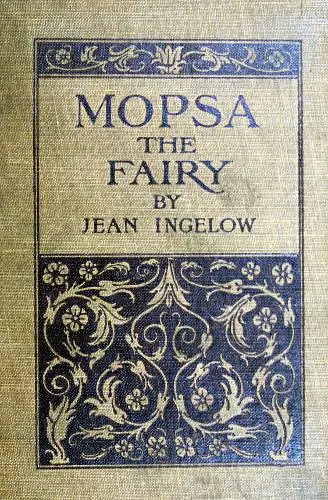
Mopsa the Fairy
Jean Ingelow
THE CLASSIC COLLECTION · 1875
"Fated to Be Free: A Novel" by Jean Ingelow is a fiction work crafted during the late 19th century. This narrative explores themes of family, loss, and the complexities of human relationships through the lens of the elderly Madam Melcombe and her descendants, who grapple with their legacy and connections to one another amidst their histories of estrangement and tragedy. The beginning of "Fated to Be Free" establishes a vividly described setting in a decaying manor and its surrounding garden, which serves as both a tangible and metaphorical representation of Madam Melcombe's life and the sorrows she has endured. The narrative revolves around her, an elderly matriarch who watches over a neglected garden filled with lilies—symbolic of her lost loved ones. As she reminisces about her past and her estranged sons, the story introduces Peter, her great-grandson, who is curious and innocent. His innocent exploration leads to accidental disturbances in the garden, prompting a reflection on the relationships, family dynamics, and secrets that haunt the characters, hinting at deeper themes of forgiveness and reconciliation that may unfold as the narrative progresses.
Introduction adapted from the source catalogue; source summaries may be automatically generated.
Free to read · English · 156,683 words · No account needed
MAKE TIME FOR A GOOD BOOK
On by default. Untick to stop anonymous reading totals. Each page counts after 10 seconds in view. How this works.
Anonymous counting is on unless you have switched it off.
Valentine was too young to interest the grand lady, but when by a combined carelessness of manner with judicious questioning she had discovered that the so-called St. George had a moderate independence, and prospects besides, she felt a longing wish to carry down little Anastasia herself to see her godfather, and was hardly restrained from doing so by that sense of propriety which never forsook her. In the mean time Brandon passed out of view into the room where breakfast was spread and the little Anastasia, so named because her birth had taken place on Easter day, was brought down smiling in her sister Barbara's arms.
Peter's little love, a fair and dimpled creature, was forthwith accommodated with a chair close to her godfather, while the twins withdrew to practise their duets, and more viands were placed on the table.
The children then began to wait on their father and his guest, and during a short conversation which ensued concerning Mrs. Peter Melcombe and her boy, they were quite silent, till a pause took place and the little Anastasia lifted up her small voice and distinguished herself by saying--
"Fader, Peter's dot a dhost in his darden."
"Got a ghost!" exclaimed John Mortimer, with a look of dismay; for
ghosts were the last things he wished his children to hear anything
about.
"Yes," said the youngest boy Hugh, "he says he's going to be rather a
grand gentleman when he's grown up, but he wishes he hadn't got a
ghost."
"Then why doesn't he sell it, Huey?" asked the guest with perfect
gravity.
The little fellow opened his blue eyes wider. "I don't think you know what ghosts are," he remarked.
"Oh yes, I do," answered Brandon. "I've often read about them. Some people think a good deal of them, but I never could see the fun of having them myself, and," he continued, "I never noticed any about your premises, John."
"No," answered John Mortimer, following his lead; "they would be no use for the children to play with."
"Do they scratch, then?" inquired the little Anastasia.
"No, my beauty bright, but I'm told they only wake up when it's too dark
for children to play."
"Peter's ghost doesn't," observed Master Bertram. "He came in the
morning."
"Did he steal anything?" inquired Brandon, still desirous, it seemed, to throw dirt at the great idea.
"Oh no, he didn't steal," said the other little boy, "that's not what
they're for."
"What did he say then?"
"He gave a deep sigh, but he didn't say nothink."
Your reading position is saved on this browser. Take it to another device with a library code. Reading pages adapt to text, rather than matching a printed edition.
Jean Ingelow
BEHIND THE BOOK
This eBook is for the use of anyone anywhere in the United States and most other parts of the world at no cost and with almost no restrictions whatsoever. You may copy it, give it away or re-use it under the terms of the Project Gutenberg License included with this eBook or online at www.gutenberg.org. If you are not located in the United States, you will have to check the laws of the country where you are located before using this eBook. Read the source licence.
The original source file, including credits and licence, is retained by this library. Request an original-format copy at no charge. Please include the book title and Project Gutenberg identifier #12303.
KEEP YOUR CURIOSITY GOING
Coulson Kernahan

Maurice Baring
Frances Wright
Cécile Tormay

Frederic Jesup Stimson

W. H. P. (William Henry Pope) Jarvis