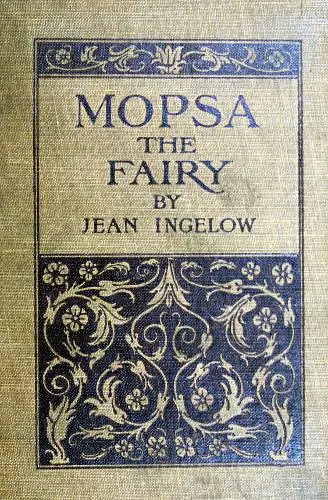
Mopsa the Fairy
Jean Ingelow
THE CLASSIC COLLECTION · 1875
"Fated to Be Free: A Novel" by Jean Ingelow is a fiction work crafted during the late 19th century. This narrative explores themes of family, loss, and the complexities of human relationships through the lens of the elderly Madam Melcombe and her descendants, who grapple with their legacy and connections to one another amidst their histories of estrangement and tragedy. The beginning of "Fated to Be Free" establishes a vividly described setting in a decaying manor and its surrounding garden, which serves as both a tangible and metaphorical representation of Madam Melcombe's life and the sorrows she has endured. The narrative revolves around her, an elderly matriarch who watches over a neglected garden filled with lilies—symbolic of her lost loved ones. As she reminisces about her past and her estranged sons, the story introduces Peter, her great-grandson, who is curious and innocent. His innocent exploration leads to accidental disturbances in the garden, prompting a reflection on the relationships, family dynamics, and secrets that haunt the characters, hinting at deeper themes of forgiveness and reconciliation that may unfold as the narrative progresses.
Introduction adapted from the source catalogue; source summaries may be automatically generated.
Free to read · English · 156,683 words · No account needed
MAKE TIME FOR A GOOD BOOK
On by default. Untick to stop anonymous reading totals. Each page counts after 10 seconds in view. How this works.
Anonymous counting is on unless you have switched it off.
"There ain't such a gardener going--not for his weight in gold. But I'm off in the spring. I've done a'most all but break it to my wife. It's Joseph that's helping me, and for hindrance I've got a Methodist chapel and a boarded floor. There's boarded floors to her kitchen, and back kitchen, as Mr. Mortimer put in for her, because she was so rheumatic, they air what she chiefly vally's the place for. But at some of them small West India islands there's a fine opening, Joey says, for a man with a headpiece as can cultivate, and knows what crops require, and I ought to go. I'm only sixty-one or thereabouts. You'll not say anything about it, sir," he continued, as the twins, who were in the garden, came towards Valentine.
They brought him in triumph to the schoolroom, which was decorated, and full of the wedding presents the children had made for their father and the dear mamma.
"And you'll remember," said Bertram, "how you promised us--promised us with all your might, that we should come to Melcombe."
"Yes, all of us," proceeded Anastasia; "he said the little ones too."
"So you should have done, you poor darlings, but for that accident,"
said Valentine.
"And we were to see the pears and apples gathered, and have such fun. Do you know that you're a sort of uncle now to us?"
"What sort? The right sort?"
"Yes, and now when shall we come?"
"I am afraid I shall be away all the winter."
"In the spring, then, and father and the dear mamma."
"It's a long time till the spring," said Valentine, with a sigh; "but if
I am at Melcombe then-"
"You'll have us?"
"Yes."
"Then let it be in the Easter holidays," said Johnnie, "that I may come
too."
"All right," said Valentine, and he took leave of them, and departed in one of their father's carriages for the Junction, muttering as he looked back at the house, "No, you'll never see Melcombe, youngsters. I shall be at the other end of the earth, perhaps, by that time."
"Oh, what a long time to wait!" quoth the younger Mortimers; "five months and a half to Easter--twenty-three weeks--twenty-three times seven--what a lot of days! Now, if we were going to sea, as the Brandon baby is, we shouldn't mind waiting. What a pity that such a treat should come to a little stupid thing that does nothing but sputter and crow instead of to us! Such a waste of pleasure." They had never heard of "the irony of fate," but in their youthful manner they felt it then.
Your reading position is saved on this browser. Take it to another device with a library code. Reading pages adapt to text, rather than matching a printed edition.
Jean Ingelow
BEHIND THE BOOK
This eBook is for the use of anyone anywhere in the United States and most other parts of the world at no cost and with almost no restrictions whatsoever. You may copy it, give it away or re-use it under the terms of the Project Gutenberg License included with this eBook or online at www.gutenberg.org. If you are not located in the United States, you will have to check the laws of the country where you are located before using this eBook. Read the source licence.
The original source file, including credits and licence, is retained by this library. Request an original-format copy at no charge. Please include the book title and Project Gutenberg identifier #12303.
KEEP YOUR CURIOSITY GOING
Coulson Kernahan

Maurice Baring
Frances Wright
Cécile Tormay

Frederic Jesup Stimson

W. H. P. (William Henry Pope) Jarvis