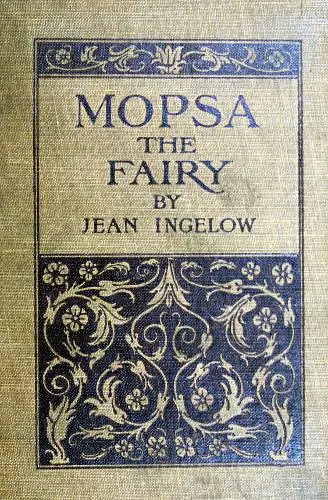
Mopsa the Fairy
Jean Ingelow
THE CLASSIC COLLECTION · 1875
"Fated to Be Free: A Novel" by Jean Ingelow is a fiction work crafted during the late 19th century. This narrative explores themes of family, loss, and the complexities of human relationships through the lens of the elderly Madam Melcombe and her descendants, who grapple with their legacy and connections to one another amidst their histories of estrangement and tragedy. The beginning of "Fated to Be Free" establishes a vividly described setting in a decaying manor and its surrounding garden, which serves as both a tangible and metaphorical representation of Madam Melcombe's life and the sorrows she has endured. The narrative revolves around her, an elderly matriarch who watches over a neglected garden filled with lilies—symbolic of her lost loved ones. As she reminisces about her past and her estranged sons, the story introduces Peter, her great-grandson, who is curious and innocent. His innocent exploration leads to accidental disturbances in the garden, prompting a reflection on the relationships, family dynamics, and secrets that haunt the characters, hinting at deeper themes of forgiveness and reconciliation that may unfold as the narrative progresses.
Introduction adapted from the source catalogue; source summaries may be automatically generated.
Free to read · English · 156,683 words · No account needed
MAKE TIME FOR A GOOD BOOK
On by default. Untick to stop anonymous reading totals. Each page counts after 10 seconds in view. How this works.
Anonymous counting is on unless you have switched it off.
Valentine accordingly went in the course of a few days to find old Becky Maddison. The cottage was not far from the village. Only the daughter was below, and when Valentine had told his name and errand, she went up-stairs, perhaps to prepare her mother, to whom she presently conducted him.
Valentine found her a poor bedridden creature, weak, frail, and querulous. She was in a clean and moderately comfortable bed, and when she saw him her puckered face and faded eyes began to look more intelligent and attentive, and she presently remarked on his likeness to his father.
A chair was set for him, and sitting down, he showed a sovereign in his palm, and said, "I want to hear the ghost story; tell it me as it really was, and you shall have this."
A shabby book was lying on the bed.
"Her can tell it no better'n it's told here," said the daughter.
Valentine took up the book. It was the same that he knew; the blue light and the shroud appeared in it. He put the money into her hand. "No," he said; "you shall have the money beforehand. Now, then, say what you really saw."
Old Becky clutched the gold, and said, in a weak, whimpering tone, "'Tain't often I tell it--ain't told it sin' Christmas marnin', old Madam couldn't abide to hear on't."
"Old Madam's gone," said Valentine seriously.
"Ay, her be--her wer a saint, and sings in heaven now."
"And I want to hear it."
Thereupon the old woman roused herself a little, and with the voice and manner of one repeating a lesson, told Valentine word for word the trumpery tale in the book; how she had seen Mr. Melcombe early in the morning, as she went up to the house on washing-day, to help the servants. For "Madam," a widow already, had leave to live there till he should return. He was walking in his shroud among the cherry-trees, and he looked seriously at her. She passed, but turned instantly, and he had disappeared; he must have gone right through the crack of the door.
Valentine was vexed, and yet relieved. Such a ridiculous tale could only be an invention; and yet, if she would have told it in different words, or have added anything, it might have led to some discovery--it might, at least, have shown how it came to pass that such a story had obtained credit.
"That was it, was it?" he said, feigning content. "I should like to ask you another question; perhaps your daughter will not mind going down."
With evident reluctance the daughter withdrew. Valentine shut the door, and came back to his place.
Your reading position is saved on this browser. Take it to another device with a library code. Reading pages adapt to text, rather than matching a printed edition.
Jean Ingelow
BEHIND THE BOOK
This eBook is for the use of anyone anywhere in the United States and most other parts of the world at no cost and with almost no restrictions whatsoever. You may copy it, give it away or re-use it under the terms of the Project Gutenberg License included with this eBook or online at www.gutenberg.org. If you are not located in the United States, you will have to check the laws of the country where you are located before using this eBook. Read the source licence.
The original source file, including credits and licence, is retained by this library. Request an original-format copy at no charge. Please include the book title and Project Gutenberg identifier #12303.
KEEP YOUR CURIOSITY GOING
Coulson Kernahan

Maurice Baring
Frances Wright
Cécile Tormay

Frederic Jesup Stimson

W. H. P. (William Henry Pope) Jarvis