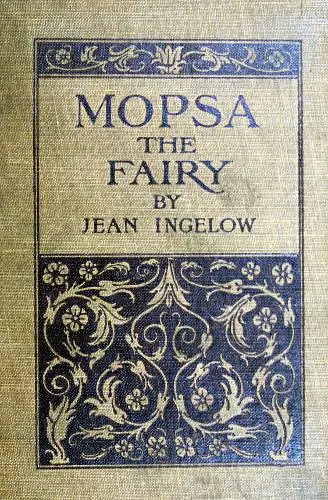
Mopsa the Fairy
Jean Ingelow
THE CLASSIC COLLECTION · 1875
"Fated to Be Free: A Novel" by Jean Ingelow is a fiction work crafted during the late 19th century. This narrative explores themes of family, loss, and the complexities of human relationships through the lens of the elderly Madam Melcombe and her descendants, who grapple with their legacy and connections to one another amidst their histories of estrangement and tragedy. The beginning of "Fated to Be Free" establishes a vividly described setting in a decaying manor and its surrounding garden, which serves as both a tangible and metaphorical representation of Madam Melcombe's life and the sorrows she has endured. The narrative revolves around her, an elderly matriarch who watches over a neglected garden filled with lilies—symbolic of her lost loved ones. As she reminisces about her past and her estranged sons, the story introduces Peter, her great-grandson, who is curious and innocent. His innocent exploration leads to accidental disturbances in the garden, prompting a reflection on the relationships, family dynamics, and secrets that haunt the characters, hinting at deeper themes of forgiveness and reconciliation that may unfold as the narrative progresses.
Introduction adapted from the source catalogue; source summaries may be automatically generated.
Free to read · English · 156,683 words · No account needed
MAKE TIME FOR A GOOD BOOK
On by default. Untick to stop anonymous reading totals. Each page counts after 10 seconds in view. How this works.
Anonymous counting is on unless you have switched it off.
Emily, the only person seated on a chair, John's throne in fact, was far back in the room, and could not be seen from below. A few minutes passed away, while Crayshaw began to breathe like, other people, and a certain scratching noise was heard below, upon which significant looks entreated her to be silent. She thought she would let things take their course, and sat still for a minute, when a casement was flung open below, and a shrill voice cried, "Mr. Swan, I say, here's Mr. Brandon in the stable yard, and another gentleman, and they want very particular to know where Master Johnnie is."
"I can't say I know, cookie," answered Swan.
"And," continued the same shrill voice, "if you can't tell 'em that, they'd like to know where Matthew is?"
Matthew was the coachman, and Swan's rival.
"Just as if I knew! why, he's so full of fads he won't trust anybody, and nothing ever suits him. You may tell them, if you like," he answered, not intending her to take him at his word, "that I expect he's gone to dig his own grave, for fear when he's dead they shouldn't do it to his mind."
The cook laughed and slammed the casement.
Presently, coming round to the front garden, wheels were heard grating on the gravel, and Brandon's voice shouted, "Swan, Swan, I say, is young Crayshaw here?"
"No, sir," Swan shouted in reply; "not as I know of."
Two voices were heard to parley at a distance, great excitement prevailed up in Parliament, excepting in the mind of Anastasia, whose notion of her own part in this ceremony of hiding was that she must keep her little feet very even and close together beside Johnnie's great ones; so she took no notice, though hasty footsteps were heard, and a voice spoke underneath, "Whereabout can young Mortimer be? we must find him."
"I don't know, sir," repeated Swan, still raking peaceably.
"He cannot be very far off, Swanny," said Brandon, "we saw him up the poplar-tree not a quarter of an hour ago."
"Ay, sir, I shouldn't wonder," said Swan carelessly. "Bless you, whether their folks air rich or poor, they never think at that age what it costs to clothe 'em. I never found with my boys that they'd done climbing for crows' eggs till such time as they bought their own breeches. After that trees were nought but lumber, and crows were carrion."
"But we really must find these boys, if we can," exclaimed Brandon; "and it seems as if they had all the family with them, the place is so quiet. Where do you think they can have gone?"
Your reading position is saved on this browser. Take it to another device with a library code. Reading pages adapt to text, rather than matching a printed edition.
Jean Ingelow
BEHIND THE BOOK
This eBook is for the use of anyone anywhere in the United States and most other parts of the world at no cost and with almost no restrictions whatsoever. You may copy it, give it away or re-use it under the terms of the Project Gutenberg License included with this eBook or online at www.gutenberg.org. If you are not located in the United States, you will have to check the laws of the country where you are located before using this eBook. Read the source licence.
The original source file, including credits and licence, is retained by this library. Request an original-format copy at no charge. Please include the book title and Project Gutenberg identifier #12303.
KEEP YOUR CURIOSITY GOING
Coulson Kernahan

Maurice Baring
Frances Wright
Cécile Tormay

Frederic Jesup Stimson

W. H. P. (William Henry Pope) Jarvis