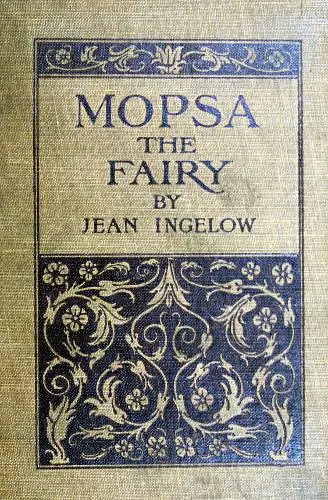
Mopsa the Fairy
Jean Ingelow
THE CLASSIC COLLECTION · 1875
"Fated to Be Free: A Novel" by Jean Ingelow is a fiction work crafted during the late 19th century. This narrative explores themes of family, loss, and the complexities of human relationships through the lens of the elderly Madam Melcombe and her descendants, who grapple with their legacy and connections to one another amidst their histories of estrangement and tragedy. The beginning of "Fated to Be Free" establishes a vividly described setting in a decaying manor and its surrounding garden, which serves as both a tangible and metaphorical representation of Madam Melcombe's life and the sorrows she has endured. The narrative revolves around her, an elderly matriarch who watches over a neglected garden filled with lilies—symbolic of her lost loved ones. As she reminisces about her past and her estranged sons, the story introduces Peter, her great-grandson, who is curious and innocent. His innocent exploration leads to accidental disturbances in the garden, prompting a reflection on the relationships, family dynamics, and secrets that haunt the characters, hinting at deeper themes of forgiveness and reconciliation that may unfold as the narrative progresses.
Introduction adapted from the source catalogue; source summaries may be automatically generated.
Free to read · English · 156,683 words · No account needed
MAKE TIME FOR A GOOD BOOK
On by default. Untick to stop anonymous reading totals. Each page counts after 10 seconds in view. How this works.
Anonymous counting is on unless you have switched it off.
Before her guests retired, Emily having lingered up-stairs with the baby, Dorothea found herself for a few minutes alone with Justina, who was very tired, but felt that her task was not quite finished. So, as she took up her bonnet and advanced to the looking-glass to put it on, she said, carelessly, "I wonder whether this colour will stand Italian sunshine."
Dorothea's fair young face was at once full of interest. Justina saw curiosity, too, but none was expressed; she only said, with the least little touch of pique, "And you never told me that you were wishing so much to go away."
Justina turned, and from her superior height stooped to kiss Dorothea, as if by way of apology, whereupon she added, "I had hoped, indeed, I felt sure, that you liked this place and this neighbourhood."
"What are you alluding to, dear," said Justina, though Dorothea had
alluded to nothing.
But Dorothea remaining silent, Justina had to go on.
"I think (if that is what you mean) that no one who cares for me could wish me to undertake a very difficult task--such a very difficult task as that, and one which perhaps I am not at all fit for."
On this Dorothea betrayed a certain embarrassment, rather a painful blush tinged her soft cheek. "I would not have taken the liberty to hint at such a thing," she answered.
"She would not have liked it," thought Justina, with not unnatural surprise; for Dorothea had shown a fondness for her.
"But of course I know there has been an idea in the neighbourhood that
you----"
"That I what?" asked Justina.
"Why that you might--you might undertake it."
"Oh, nonsense, dear! nonsense, all talk," said Justina; "don't believe a word of it." Her tone seemed to mean just the contrary, and Dorothea looked doubtful.
"There have been some attentions, certainly," continued Justina, turning before the glass as if to observe whether her scarf was folded to her mind. "Of course every one must have observed that! But really, dear, such a thing"--she put up her large steady hand, and fastened her veil with due care--"such a thing as that would never do. Who could have put it into your head to think of it?"
"She does not care for him in the least, then," thought Dorothea; "and it seems that he has cared for her. I don't think he does now, for he seemed rather pleased to sketch out that tour which will take her away from him. I like her, but even if it was base to her, I should still be glad she was not going to marry John Mortimer."
Your reading position is saved on this browser. Take it to another device with a library code. Reading pages adapt to text, rather than matching a printed edition.
Jean Ingelow
BEHIND THE BOOK
This eBook is for the use of anyone anywhere in the United States and most other parts of the world at no cost and with almost no restrictions whatsoever. You may copy it, give it away or re-use it under the terms of the Project Gutenberg License included with this eBook or online at www.gutenberg.org. If you are not located in the United States, you will have to check the laws of the country where you are located before using this eBook. Read the source licence.
The original source file, including credits and licence, is retained by this library. Request an original-format copy at no charge. Please include the book title and Project Gutenberg identifier #12303.
KEEP YOUR CURIOSITY GOING
Coulson Kernahan

Maurice Baring
Frances Wright
Cécile Tormay

Frederic Jesup Stimson

W. H. P. (William Henry Pope) Jarvis