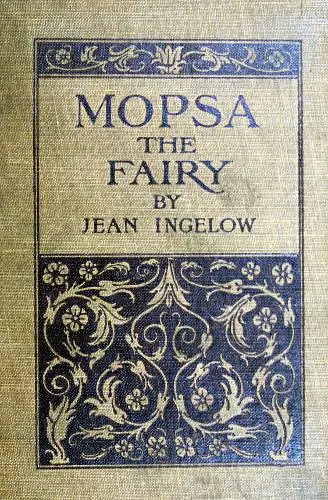
Mopsa the Fairy
Jean Ingelow
THE CLASSIC COLLECTION · 1875
"Fated to Be Free: A Novel" by Jean Ingelow is a fiction work crafted during the late 19th century. This narrative explores themes of family, loss, and the complexities of human relationships through the lens of the elderly Madam Melcombe and her descendants, who grapple with their legacy and connections to one another amidst their histories of estrangement and tragedy. The beginning of "Fated to Be Free" establishes a vividly described setting in a decaying manor and its surrounding garden, which serves as both a tangible and metaphorical representation of Madam Melcombe's life and the sorrows she has endured. The narrative revolves around her, an elderly matriarch who watches over a neglected garden filled with lilies—symbolic of her lost loved ones. As she reminisces about her past and her estranged sons, the story introduces Peter, her great-grandson, who is curious and innocent. His innocent exploration leads to accidental disturbances in the garden, prompting a reflection on the relationships, family dynamics, and secrets that haunt the characters, hinting at deeper themes of forgiveness and reconciliation that may unfold as the narrative progresses.
Introduction adapted from the source catalogue; source summaries may be automatically generated.
Free to read · English · 156,683 words · No account needed
MAKE TIME FOR A GOOD BOOK
On by default. Untick to stop anonymous reading totals. Each page counts after 10 seconds in view. How this works.
Anonymous counting is on unless you have switched it off.
Valentine was excessively startled; the voice seemed higher and thinner than usual, but the conversation had begun so sensibly, and the wrinkled hand kept such firm hold still of the parcel, that it surprised him to feel, as he now did, that his dear old uncle was wandering, and he answered nothing.
"Not to the priests," continued Augustus, and as a pause followed, Valentine felt impelled to reply.
"No," he said, "they belonged to his family, no doubt, if they had
chosen to pick them up."
"Ah, that is what I suppose. If his father, poor wretch, or perhaps his miserable mother, had gone into the temple that day, it would have been a strange sight, surely, to see her gather them up."
"Yes," said Valentine faintly. The shadow of something too remote to make its substance visible appeared to fall over him then, causing him a vague wonder and awe, and revulsion of feeling. He knew not whether this old man was taking leave of sober daylight reason, or whether some fresh sense of the worthlessness of earthly wealth, more especially ill-gotten wealth, had come to him from a sudden remembrance of this silver--or----
He tried gently to lead his thoughts away from what seemed to be troubling him, for his head turned restlessly on the pillow.
"You have no need to think of that," he said kindly and quietly, "for as you have just been saying, John will inherit nothing but well-earned property."
"John does not know of this," said Augustus. "I have drawn it out for years by degrees, as he supposed, for household expenses. It is all in Bank of England notes. Every month that I lived it would have become more and more."
Uncommonly circumstantial this!
"It contains seventeen hundred pounds; take it in your hand, and hear
me."
"Yes, uncle."
"You cannot live on a very small income. You have evidently very little notion of the value of money. You and John may not agree. It may not suit him to have you with him; on the other hand--on the other hand--what was I saying?"
"That it might not suit John to have me with him."
"Yes, yes; but, on the other hand (where is it gone), on the other hand, it might excite his curiosity, his surprise, if I left you more in my will. Now what am I doing this for? What is it? Daniel's son? Yes."
"Dear uncle, try to collect your thoughts; there is something you want me to do with this money, try to tell me what it is."
"Have you got it in your hand?"
"Yes, I have."
"Keep it then, and use it for your own purposes."
Your reading position is saved on this browser. Take it to another device with a library code. Reading pages adapt to text, rather than matching a printed edition.
Jean Ingelow
BEHIND THE BOOK
This eBook is for the use of anyone anywhere in the United States and most other parts of the world at no cost and with almost no restrictions whatsoever. You may copy it, give it away or re-use it under the terms of the Project Gutenberg License included with this eBook or online at www.gutenberg.org. If you are not located in the United States, you will have to check the laws of the country where you are located before using this eBook. Read the source licence.
The original source file, including credits and licence, is retained by this library. Request an original-format copy at no charge. Please include the book title and Project Gutenberg identifier #12303.
KEEP YOUR CURIOSITY GOING
Coulson Kernahan

Maurice Baring
Frances Wright
Cécile Tormay

Frederic Jesup Stimson

W. H. P. (William Henry Pope) Jarvis