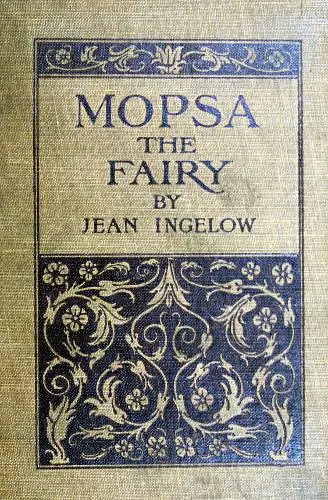
Mopsa the Fairy
Jean Ingelow
THE CLASSIC COLLECTION · 1875
"Fated to Be Free: A Novel" by Jean Ingelow is a fiction work crafted during the late 19th century. This narrative explores themes of family, loss, and the complexities of human relationships through the lens of the elderly Madam Melcombe and her descendants, who grapple with their legacy and connections to one another amidst their histories of estrangement and tragedy. The beginning of "Fated to Be Free" establishes a vividly described setting in a decaying manor and its surrounding garden, which serves as both a tangible and metaphorical representation of Madam Melcombe's life and the sorrows she has endured. The narrative revolves around her, an elderly matriarch who watches over a neglected garden filled with lilies—symbolic of her lost loved ones. As she reminisces about her past and her estranged sons, the story introduces Peter, her great-grandson, who is curious and innocent. His innocent exploration leads to accidental disturbances in the garden, prompting a reflection on the relationships, family dynamics, and secrets that haunt the characters, hinting at deeper themes of forgiveness and reconciliation that may unfold as the narrative progresses.
Introduction adapted from the source catalogue; source summaries may be automatically generated.
Free to read · English · 156,683 words · No account needed
MAKE TIME FOR A GOOD BOOK
On by default. Untick to stop anonymous reading totals. Each page counts after 10 seconds in view. How this works.
Anonymous counting is on unless you have switched it off.
The last time, in fact, that Johnnie and Crayshaw had been together, they had deprived themselves of their natural rest in order to carry out these changes; and the first time Miss Crampton gave a music lesson after their departure, she opened the book at one of their improved versions, which ran as follows:--
"Wink to me only with thy nose,
And I will sing through mine."
Miss Crampton hated boyish vulgarity; she turned the page, but matters were no better. The two youths had next been at work on a song in which a muff of a man, who offers nothing particular in return, requests 'Nancy' to gang wi' him, leaving her home, her dinner, her brooches, her best gowns, &c., behind, to walk through snow-drifts, blasts, and other perils by his side, and afterwards strew flowers on his clay. Desirous as it seemed to show that the young person was not so misguided as her silence has hitherto left the world to think, they had added a verse, which ran as follows:--
"'Ah, wilt thou thus, for his loved sake,
All manner of hardships dare to know?'
The fair one smiled whenas he spake,
And promptly answered, 'No, sir; no,'"
"Cray," said John Mortimer, observing the boy's wan appearance, "how could you think of sitting up so late?"
"Why, the thupper wath on purpoth for him," exclaimed Johnnie. "We gave it in hith honour, ath a mark of thympathy."
"Because he was burnt out," said Gladys. "Papa, did you know? his tutor's house was burnt down, and the boys had to escape in the night."
"But it wath a great lark," observed Johnnie, "and he knowth he thought
tho."
"Yes," said Crayshaw, folding his hands with farcical mock meekness, "but I saved hardly anything--nothing whatever, in fact, but my Yankee accent, and that only by taking it between my teeth."
"There was not enough of it to be worth saving, my dear boy," said
Brandon.
Crayshaw's face for once assumed a genuine expression, one of alarm. He was distinguished at school for the splendid Yankee dialect he could put on, as Johnnie was for his mastery of a powerful Devonshire lingo; but if scarcely a hint of his birthplace remained in his daily speech, and he had not noticed any change, there was surely danger lest this interesting accomplishment should be declining also.
"I am always imitating the talk I hear in the cottages," he remarked; "I
may have lost it so."
Your reading position is saved on this browser. Take it to another device with a library code. Reading pages adapt to text, rather than matching a printed edition.
Jean Ingelow
BEHIND THE BOOK
This eBook is for the use of anyone anywhere in the United States and most other parts of the world at no cost and with almost no restrictions whatsoever. You may copy it, give it away or re-use it under the terms of the Project Gutenberg License included with this eBook or online at www.gutenberg.org. If you are not located in the United States, you will have to check the laws of the country where you are located before using this eBook. Read the source licence.
The original source file, including credits and licence, is retained by this library. Request an original-format copy at no charge. Please include the book title and Project Gutenberg identifier #12303.
KEEP YOUR CURIOSITY GOING
Coulson Kernahan

Maurice Baring
Frances Wright
Cécile Tormay

Frederic Jesup Stimson

W. H. P. (William Henry Pope) Jarvis