
Adolescence
Stephen Paget
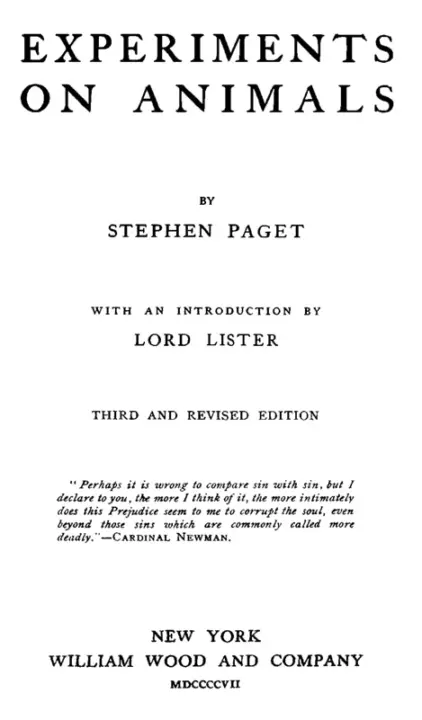
THE CLASSIC COLLECTION · 1907
"Experiments on Animals" by Stephen Paget is a scientific publication written in the early 20th century. This work serves as a detailed account of the role that experiments on animals have played in advancing medical knowledge, particularly in physiology and pathology. Paget draws on his extensive experience and research conducted as the Secretary of the Association for the Advancement of Medicine by Research to illustrate the ethical, scientific, and legislative aspects surrounding vivisection and animal experimentation. The opening of the book sets a scholarly tone as Paget outlines the motivations behind his writing and the importance of empirical evidence in medical research. He reflects on the challenges and controversies associated with animal experimentation, particularly in the context of the Act of 1876 regulating such practices in Britain. The first chapter delves into historical anecdotes, starting with Galen's contributions to physiology through animal dissections, emphasizing the pivotal role of experimental methodology in uncovering fundamental truths about the bodily functions of various species. Overall, the beginning establishes a foundation of the significance and impact of animal studies in the evolution of medical science.
Introduction adapted from the source catalogue; source summaries may be automatically generated.
Free to read · English · 104,427 words · No account needed
MAKE TIME FOR A GOOD BOOK
On by default. Untick to stop anonymous reading totals. Each page counts after 10 seconds in view. How this works.
Anonymous counting is on unless you have switched it off.
"The sum total of all the reports is given in the following tables:--
Sheep.
+------+-----------+--------+----------+------------------------+ | | | | | Mortality. | | | | | Animals +-------+-------+--------+ | | Total | |Vaccinated|After |After |During | | | Number of | Number |according |First |Second |the rest| | | Animals | of |to Reports|Vacci- |Vacci- |of the | |Years.|Vaccinated.|Reports.|received. |nation.|nation.| Year. | +------+-----------+--------+----------+-------+-------+--------+ | 1882 | 270,040 | 112 | 243,199 | 756 | 847 | 1,037 | | 1883 | 268,505 | 103 | 193,119 | 436 | 272 | 784 | | 1884 | 316,553 | 109 | 231,693 | 770 | 444 | 1,033 | | 1885 | 342,040 | 144 | 280,107 | 884 | 735 | 990 | | 1886 | 313,288 | 88 | 202,064 | 652 | 303 | 514 | | 1887 | 293,572 | 107 | 187,811 | 718 | 737 | 968 | | 1888 | 269,574 | 50 | 101,834 | 149 | 181 | 300 | | 1889 | 239,974 | 43 | 88,483 | 238 | 285 | 501 | | 1890 | 223,611 | 69 | 69,865 | 331 | 261 | 244 | | 1891 | 218,629 | 65 | 53,640 | 181 | 102 | 77 | | 1892 | 259,696 | 70 | 63,125 | 319 | 183 | 126 | | 1893 | 281,333 | 30 | 73,939 | 234 | 56 | 224 | +------+-----------+--------+----------+-------+-------+--------+ | Total|3,296,815 | 990 |1,788,879 | 5,668 |4,406 | 6,798 | +------+-----------+--------+----------+-------+-------+--------+
+------+-------+-----+-------+
| | | | |
| | | |Average|
| | |Total| loss |
| | Total.| loss|before |
| | | per |Vacci- |
|Years.| | 100.|nation.|
+------+-------+-----+-------+
| 1882 | 2,640 | 1.08| 10% |
| 1883 | 1,492 | 0.77| " |
| 1884 | 2,247 | 0.97| " |
| 1885 | 2,609 | 0.93| " |
| 1886 | 1,469 | 0.72| " |
| 1887 | 2,423 | 1.29| " |
| 1888 | 630 | 0.62| " |
| 1889 | 1,024 | 1.16| " |
| 1890 | 836 | 1.20| " |
| 1891 | 360 | 0.67| " |
| 1892 | 628 | 0.99| " |
| 1893 | 514 | 0.69| " |
+------+-------+-----+-------+
| Total|16,872 | 0.94| 10% |
+------+-------+-----+-------+
Cattle.
+------+-----------+--------+----------+------------------------+ | | | | | Mortality. | | | | | Animals +-------+-------+--------+ | | Total | |Vaccinated| After | After |During | | | Number of | Number |according | First | Second|the rest| | | Animals | of |to Reports|Vacci- |Vacci- |of the | |Years.|Vaccinated.|Reports.|received. |nation.|nation.| Year. | +------+-----------+--------+----------+-------+-------+--------+ | 1882 | 35,654 | 127 | 22,916 | 22 | 12 | 48 | | 1883 | 26,453 | 130 | 20,501 | 17 | 1 | 46 | | 1884 | 33,900 | 139 | 22,616 | 20 | 13 | 52 | | 1885 | 34,000 | 192 | 21,073 | 32 | 8 | 67 | | 1886 | 39,154 | 135 | 22,113 | 18 | 7 | 39 | | 1887 | 48,484 | 148 | 28,083 | 23 | 18 | 68 | | 1888 | 34,464 | 61 | 10,920 | 8 | 4 | 35 | | 1889 | 32,251 | 68 | 11,610 | 14 | 7 | 31 | | 1890 | 33,965 | 71 | 11,057 | 5 | 4 | 14 | | 1891 | 40,736 | 68 | 10,476 | 6 | 4 | 4 | | 1892 | 41,609 | 71 | 9,757 | 8 | 3 | 15 | | 1893 | 38,154 | 45 | 9,840 | 4 | 1 | 13 | +------+-----------+--------+----------+-------+-------+--------+ |Total | 438,824 | 1,255 | 200,962 | 177 | 82 | 432 | +------+-----------+--------+----------+-------+-------+--------+
+------+-------+-----+-------+
| | | | |
| | | |Average|
| | |Total| loss |
| | Total.| loss|before |
| | | per |Vacci- |
|Years.| | 100.|nation.|
+------+-------+-----+-------+
| 1882 | 82 | 0.35| 5% |
| 1883 | 64 | 0.31| " |
| 1884 | 85 | 0.37| " |
| 1885 | 107 | 0.50| " |
| 1886 | 64 | 0.29| " |
| 1887 | 109 | 0.39| " |
| 1888 | 47 | 0.43| " |
| 1889 | 52 | 0.45| " |
| 1890 | 23 | 0.21| " |
| 1891 | 14 | 0.13| " |
| 1892 | 26 | 0.26| " |
| 1893 | 18 | 0.18| " |
+------+-------+-----+-------+
|Total | 691 | 0.34| 5% |
+------+-------+-----+-------+
"Comparing the figures in the fourth column with those in the second, we see that a certain number of veterinary surgeons neglect to send their reports at the end of the year. The number of reports that come to us even tends to get less each year. The fact is, that many veterinary surgeons who do vaccinations every year content themselves with writing, 'The results are always very good; it is useless to send you reports that are always the same.'
"We have every reason to believe, as a matter of fact, that those who send no reports are satisfied; for if anything goes wrong with the herds, they do not fail to let us know it at once by special letters.
"Anyhow, thanks chiefly to new veterinary surgeons who do send reports, we see that in the twelve years, up to 1st January of this year, we have had exact returns as to 1,788,879 sheep and 200,962 cattle--about half of all those that were vaccinated.
"The mortality among sheep and cattle is slightly higher after the first vaccination than after the second. This fact seems to us easy to explain. The animals reported dead include both those that died as the result of the vaccinations, and those that, being already infected at the time, died of the actual disease. But, at the time of second vaccination, the animals are already more or less protected: hence a lower mortality from the actual disease, and a lower sum total.
Your reading position is saved on this browser. Take it to another device with a library code. Reading pages adapt to text, rather than matching a printed edition.
Stephen Paget
BEHIND THE BOOK
This eBook is for the use of anyone anywhere in the United States and most other parts of the world at no cost and with almost no restrictions whatsoever. You may copy it, give it away or re-use it under the terms of the Project Gutenberg License included with this eBook or online at www.gutenberg.org. If you are not located in the United States, you will have to check the laws of the country where you are located before using this eBook. Read the source licence.
The original source file, including credits and licence, is retained by this library. Request an original-format copy at no charge. Please include the book title and Project Gutenberg identifier #42660.
KEEP YOUR CURIOSITY GOING
Cécile Tormay

Moritz Busch
John L. Ransom
Frances Wright
Cécile Tormay

Mabel Potter Daggett