THE CLASSIC COLLECTION✦An outlaw’s diary: the CommuneCLASSIC FREE BOOKS
An outlaw’s diary: the Commune
Cécile Tormay
THE CLASSIC COLLECTION · 1886
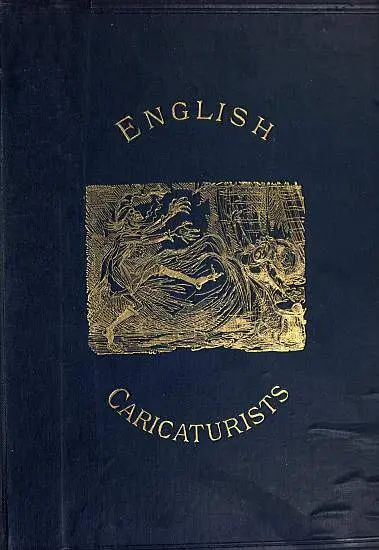
"English Caricaturists and Graphic Humourists of the Nineteenth Century" by Graham Everitt is a historical account written in the late 19th century. The work explores the evolution and significance of English caricature and graphic satire from the time of Napoleon until the death of noted cartoonist John Leech in 1864. It provides a detailed examination of how caricaturists interpreted and illustrated the social and political climate of their times, with prominent figures like Gillray, Rowlandson, and Cruikshank featured prominently. The opening of the book introduces the subject of caricature, defining it as an exaggerated portrayal that conveys popular opinion and sentiments of the era. Everitt discusses the shift in style and spirit of English caricatures, noting how earlier works were characterized by coarseness typical of the last century, while later caricaturists like John Doyle and his successors refined and transformed the art into a more sophisticated form. He asserts the relevance of these artists in understanding the political narratives of their time, particularly regarding figures like Napoleon and the socio-political changes happening throughout the 19th century.
Introduction adapted from the source catalogue; source summaries may be automatically generated.
Free to read · English · 156,632 words · No account needed
MAKE TIME FOR A GOOD BOOK
On by default. Untick to stop anonymous reading totals. Each page counts after 10 seconds in view. How this works.
Anonymous counting is on unless you have switched it off.
Subjects for the pencil of a clever graphic satirist were not wanting sixty years ago. France in those days set the fashion both in male and female attire, and the strangest eccentricities had marked the emancipation of that country from the thraldom of the Terror. There were the incroyables, a set of young dandies who affected royalist sympathies, and paraded the streets of Paris when young Napoleon was yet a general in the service of the Directory. They wore short-waisted coats with tails of preposterous length, cocked hats of ponderous dimensions, green cravats, powdered hair plaited and turned up with a comb, while on each side of the face hung down two long curls called dogs' ears (oreilles de chien). These charming fellows carried twisted sticks of enormous size, as weapons of offence and defence, and spoke in a peculiarly affected manner.[51] Some fourteen or fifteen years later on, when we had driven Joseph Bonaparte and his brother's legions out of Spain, the fashions had not improved. The biographer of Victor Hugo gives us the picture of one Gile, a Parisian dandy of that period, whose coat of olive brown was cut in the shape of a fish's tail, and dotted all over with metal buttons even to the shoulders. Young men who went to moderate lengths in fashion were content to wear the waists of their coats in the middle of their backs, but the waist of this Gile intruded on the nape of his neck. His hat was stuck on the right side of his head, bringing into prominent notice on the left a thick tuft of hair frizzed out with curling irons. His trousers were ornamented with stripes which looked like bars of gold lace; they were pinched in at the knees and wide at the bottom, giving his feet the appearance of elephant's hoofs. Our own costume had been strange enough, in all conscience; but when Napoleon's continental system had been broken up after Leipzig, and a free market had been once more opened out between this country and foreign nations, fashions more strange and eccentric, if possible, found their way into England. Thackeray, when writing his "Vanity Fair," the scenes of which are laid prior and subsequent to the battle of Waterloo, was fain to confess that he had intended to depict his characters in their proper costumes; "but when he remembered the appearance of people in those days, he had not the heart to disfigure his heroes and heroines by costumes so hideous," and thenceforth he habited these men and women of 1815 in the costume of the men and women of 1848. George Cruikshank's "Monstrosities" are familiar to all acquainted with his works; and his brother Robert and his contemporaries were equally fond of ridiculing the preposterous fashions of their time. We find in the year 1818 a pictorial satire by Robert, which shows us a pair of Dandies at Tea, habited in the short-waisted, long-tailed coats, tight breeches, terrific stocks, shirt collars, and top boots of the period. "My dear fellow, Mr. Sim," one of them, asks, "is your tea agreeable?" to which the other answers, "Charming, my dear Lollena; where do you buy it?" They are seated in an attic, which, like that of the cobbler, serves "for parlour and bedroom and all," and the washing of the tenant hangs suspended on a line above the heads of the interesting pair. We find another the same year, entitled, Dandies having a Treat, wherein we are shown a couple of eccentricities in a confectioner's shop; one of them, who eyes himself with much complacency in the glass, has his back to us, and is habited, a la Gile, in a very tight coat, whose tail commences just below its collar and narrows to a very fine point when it reaches its extremity; short wide trousers terminate at the knees, at which points they are met by a pair of Wellington boots. He entreats his equally strangely dressed companion to pay no attention to the uncomplimentary remarks of certain rude people who stand at the door and seem strongly inclined to subject them to the discipline of the pump. The pretty girl in attendance expresses to herself a hope that "the creatures will leave the shop," as she fears the exasperated people will do some mischief. Another caricature of the same year shows us A Dandy Shoemaker in a Fright, or the Effects of Tight-lacing. In stooping to measure a lady's foot, the fellow's stays have given way, and he evidently fears he shall tumble to pieces. In another subject, Robert shows us a couple of dandies diving into a countryman's pockets, in the neighbourhood of St. James's Palace; others are entitled respectively, A Dandy put to his Last Chemisette, or Preparing for a Bond Street Lounge; A Dandy Cock in Stays; and The Hen-pecked Dandy. Besides those already mentioned, I find four or five other coarse caricatures of Robert's, published by Fores in 1818.
Your reading position is saved on this browser. Take it to another device with a library code. Reading pages adapt to text, rather than matching a printed edition.
BEHIND THE BOOK
This eBook is for the use of anyone anywhere in the United States and most other parts of the world at no cost and with almost no restrictions whatsoever. You may copy it, give it away or re-use it under the terms of the Project Gutenberg License included with this eBook or online at www.gutenberg.org. If you are not located in the United States, you will have to check the laws of the country where you are located before using this eBook. Read the source licence.
The original source file, including credits and licence, is retained by this library. Request an original-format copy at no charge. Please include the book title and Project Gutenberg identifier #31195.
KEEP YOUR CURIOSITY GOING
Cécile Tormay

Moritz Busch
John L. Ransom
Frances Wright
Cécile Tormay

Mabel Potter Daggett