THE CLASSIC COLLECTION✦An outlaw’s diary: the CommuneCLASSIC FREE BOOKS
An outlaw’s diary: the Commune
Cécile Tormay
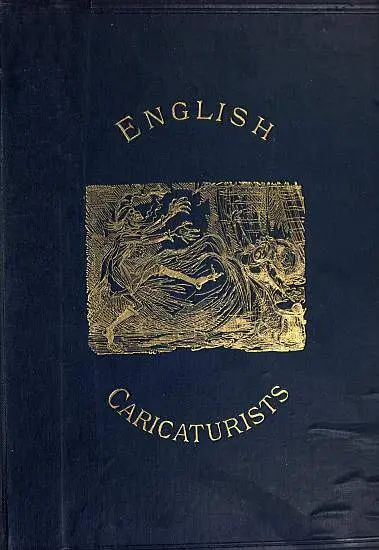
THE CLASSIC COLLECTION · 1886
"English Caricaturists and Graphic Humourists of the Nineteenth Century" by Graham Everitt is a historical account written in the late 19th century. The work explores the evolution and significance of English caricature and graphic satire from the time of Napoleon until the death of noted cartoonist John Leech in 1864. It provides a detailed examination of how caricaturists interpreted and illustrated the social and political climate of their times, with prominent figures like Gillray, Rowlandson, and Cruikshank featured prominently. The opening of the book introduces the subject of caricature, defining it as an exaggerated portrayal that conveys popular opinion and sentiments of the era. Everitt discusses the shift in style and spirit of English caricatures, noting how earlier works were characterized by coarseness typical of the last century, while later caricaturists like John Doyle and his successors refined and transformed the art into a more sophisticated form. He asserts the relevance of these artists in understanding the political narratives of their time, particularly regarding figures like Napoleon and the socio-political changes happening throughout the 19th century.
Introduction adapted from the source catalogue; source summaries may be automatically generated.
Free to read · English · 156,632 words · No account needed
MAKE TIME FOR A GOOD BOOK
On by default. Untick to stop anonymous reading totals. Each page counts after 10 seconds in view. How this works.
Anonymous counting is on unless you have switched it off.
When we first completed this chapter, and while the artist was yet living, we deemed it better to say as little as possible in reference to the conscientious motives which induced him to throw up his lucrative position on Punch, and with it the whole of his splendid prospects in comic art; and this course we had decided to follow after Richard Doyle had been removed from us by death. As, however, the Catholic organ has entered fully into the subject, not only is every cause for further reticence removed, but by being placed in a position to understand causes and motives, we are enabled to do justice to the memory of this most generous and unselfish of men.
The Catholics have cause to feel satisfied with the results of what the benighted Protestants of England are apt to term the "Papal Aggression." The conduct of the latter in relation to this portentous event is thus described by "The Month":--"In 1850 the Catholic Hierarchy was established in England, and the Protestant public raved and stormed and talked bigoted nonsense without end respecting this new invasion. Parliament passed the futile and obsolete Ecclesiastical Titles Bill, and Punch took up the popular cry. Cardinal Wiseman was represented as 'tree'd' by the Papal bull, and comic verses and personal ridicule was lavished on the Pope, the new hierarchy, and Catholics generally.
"Doyle remonstrated, but received answer that, as he had been allowed to turn Exeter Hall and its doings into ridicule, it was only fair that his own opinions should have their turn. But those who used this argument little knew, and could scarcely be expected to know, the difference between the devotion of supernatural faith and the bigotry of a self-chosen creed. Doyle was anything but narrow or over-scrupulous. It was not any of the cartoons which was the immediate occasion of the step that he took, nor was it (as some of the notices of him have intimated) any mere personal attachment to Cardinal Wiseman. 'I don't mind,' he said, 'as long as you keep to the political and personal side of the matter, but doctrines you must not attack.' Douglas Jerrold and Thackeray were not likely to appreciate this reversal of the general sentiment, which resents personal attack above all else. 'Look at the Times,' they argued; 'its language has been most violent, but the Catholic writers on its staff do not for that reason resign. They understand, and the world at large understands, that the individual contributor is not responsible for the opinions expressed by other contributors in articles with which he has nothing to do.' 'That is very well in the Times,' was Doyle's answer, 'but not in Punch. For the Times is a monarchy [we believe these were his very words], whereas Punch is a republic.' So, when a week or so later an article, attributed to Jerrold himself, jeeringly advised the Pope to 'feed his flock on the wafers of the Vatican,' it was too much for Doyle. Dignified protest was not sufficient now. To be any longer identified with a paper which could use such language was intolerable to the faithful soul. To ply his skilful fingers and busy inventive brain in behalf of those who scoffed at the Blessed Sacrament of the Altar was out of the question. His connection with Punch must cease. But is he bound in conscience to throw away a good income and congenial work, because there were expressed opinions different from his own in a paper in which, republic though it was, solidarity was scarcely possible? Who would expect that in a comic journal each and all of the contributors should agree with each and every sentiment expressed? Never mind; whatever Richard Doyle might have been strictly bound to do, generosity at least urged him to make the sacrifice--the sacrifice of his career, of his future success it may be. At least he could show that Catholic belief was no empty superstition, no set of mere traditional observances, which sat lightly on the man of culture, even if in his heart he accepted them at all. So he wrote to resign his connection with Punch, stating the reasons plainly and simply. This was in 1850, after he had been contributing for more than six years. Now he must simply start afresh, in consequence of what his Protestant friends regarded as an ecclesiastical crotchet. He must turn aside from the path of worldly success; he must give up all for conscience' sake. But as the Daily Telegraph remarks, in an article respecting him that does it honour, 'He made a wise and prudent choice. The loss was ours, not his; and, apart from the claims of his genius to admiration, such conduct at the critical moment of a career will never cease to command respect.'"
Your reading position is saved on this browser. Take it to another device with a library code. Reading pages adapt to text, rather than matching a printed edition.
BEHIND THE BOOK
This eBook is for the use of anyone anywhere in the United States and most other parts of the world at no cost and with almost no restrictions whatsoever. You may copy it, give it away or re-use it under the terms of the Project Gutenberg License included with this eBook or online at www.gutenberg.org. If you are not located in the United States, you will have to check the laws of the country where you are located before using this eBook. Read the source licence.
The original source file, including credits and licence, is retained by this library. Request an original-format copy at no charge. Please include the book title and Project Gutenberg identifier #31195.
KEEP YOUR CURIOSITY GOING
Cécile Tormay

Moritz Busch
John L. Ransom
Frances Wright
Cécile Tormay

Mabel Potter Daggett