THE CLASSIC COLLECTION✦An outlaw’s diary: the CommuneCLASSIC FREE BOOKS
An outlaw’s diary: the Commune
Cécile Tormay
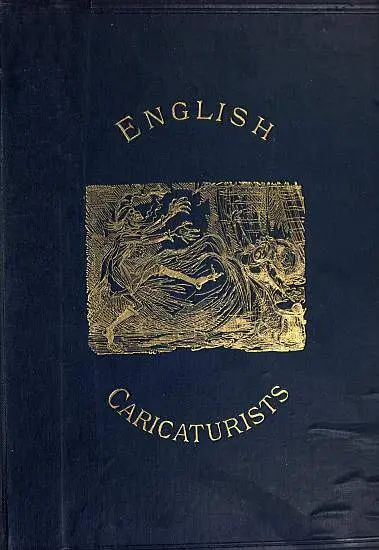
THE CLASSIC COLLECTION · 1886
"English Caricaturists and Graphic Humourists of the Nineteenth Century" by Graham Everitt is a historical account written in the late 19th century. The work explores the evolution and significance of English caricature and graphic satire from the time of Napoleon until the death of noted cartoonist John Leech in 1864. It provides a detailed examination of how caricaturists interpreted and illustrated the social and political climate of their times, with prominent figures like Gillray, Rowlandson, and Cruikshank featured prominently. The opening of the book introduces the subject of caricature, defining it as an exaggerated portrayal that conveys popular opinion and sentiments of the era. Everitt discusses the shift in style and spirit of English caricatures, noting how earlier works were characterized by coarseness typical of the last century, while later caricaturists like John Doyle and his successors refined and transformed the art into a more sophisticated form. He asserts the relevance of these artists in understanding the political narratives of their time, particularly regarding figures like Napoleon and the socio-political changes happening throughout the 19th century.
Introduction adapted from the source catalogue; source summaries may be automatically generated.
Free to read · English · 156,632 words · No account needed
MAKE TIME FOR A GOOD BOOK
On by default. Untick to stop anonymous reading totals. Each page counts after 10 seconds in view. How this works.
Anonymous counting is on unless you have switched it off.
On the 12th of November, 1864, there appeared in the pages of the periodical he had so well served, whose pages he has permanently enriched with some of the choicest specimens of graphic satire, and with whose fortunes he had been associated from the commencement, the following touching notice from the pen of his friend, the late Shirley Brooks:--
JOHN LEECH,
OBIIT OCTOBER XXIX, MDCCCLXIV,
AEtat 46.
"The simplest words are best where all words are vain. Ten days ago a great artist, in the noon of life, and with his glorious mental faculties in full power, but with the shade of physical infirmity darkening upon him, took his accustomed place among friends who have this day held his pall. Some of them had been fellow-workers with him for a quarter of a century, others for fewer years; but to know him well was to love him dearly, and all in whose name these lines are written mourn as for a brother. His monument is in the volumes of which this is one sad leaf, and in a hundred works which at this hour few will remember more easily than those who have just left his grave. While society, whose every phase he has illustrated with a truth, a grace, and a tenderness heretofore unknown to satiric art, gladly and proudly takes charge of his fame, they, whose pride in the genius of a great associate was equalled by their affection for an attached friend, would leave on record that they have known no kindlier, more refined, or more generous nature than that of him who has been thus early called to his rest.
[156] I estimate the number of his cartoons as nearly as possible as
follows:--
1842 3 1850 37 1858 30
1843 11 1851 42 1859 21
1844 42 1852 35 1860 15
1845 43 1853 32 1861 10
1846 35 1854 34 1862 4
1847 35 1855 41 1863 3
1848 38 1856 33 1864 4
1849 37 1857 33
[157] Shirley Brooks in Illustrated London News of 19th November,
1864.
[158] Charles Mackay's "Forty Years' Recollections."
[159] "Thackeray the Humourist and the Man of Letters," p. 12.
[160] MS. Diary of the late Shirley Brooks, 1st January, 1864.
[161] Died on the 18th of December, 1864, exactly within a year from the date of her son's death.
[162] Shirley Brooks in Illustrated London News of 19th November,
1864.
[163] "I suggested the cut, Moses being dressed for the Fair, Johnny Russell for the Conference." MS. Diary of the late Shirley Brooks.
[164] The first time I find mention of his name is on the 22nd of March, 1864, when the late Shirley Brooks met him at a party at Mr. Ernest Hart's, 69, Wimpole Street. Some years afterwards, he adds in a note, "Met him next at Whitby." I first meet with his name at a Punch council, 7th November, 1864: "Dumaurier first time."
[165] Mr. Yates in Morning Star.
[166] MS. Diary of Shirley Brooks: 29th October, 1864.
[167] Illustrated London News, 19th November, 1864.
Your reading position is saved on this browser. Take it to another device with a library code. Reading pages adapt to text, rather than matching a printed edition.
BEHIND THE BOOK
This eBook is for the use of anyone anywhere in the United States and most other parts of the world at no cost and with almost no restrictions whatsoever. You may copy it, give it away or re-use it under the terms of the Project Gutenberg License included with this eBook or online at www.gutenberg.org. If you are not located in the United States, you will have to check the laws of the country where you are located before using this eBook. Read the source licence.
The original source file, including credits and licence, is retained by this library. Request an original-format copy at no charge. Please include the book title and Project Gutenberg identifier #31195.
KEEP YOUR CURIOSITY GOING
Cécile Tormay

Moritz Busch
John L. Ransom
Frances Wright
Cécile Tormay

Mabel Potter Daggett