THE CLASSIC COLLECTION✦An outlaw’s diary: the CommuneCLASSIC FREE BOOKS
An outlaw’s diary: the Commune
Cécile Tormay
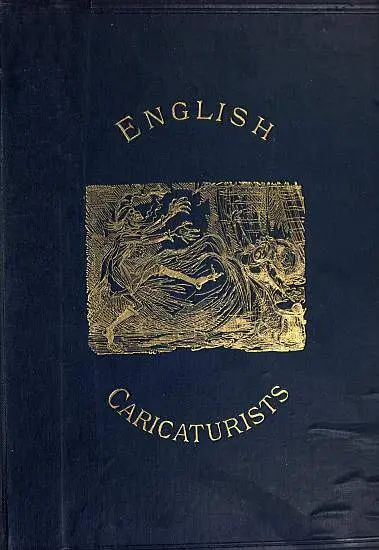
THE CLASSIC COLLECTION · 1886
"English Caricaturists and Graphic Humourists of the Nineteenth Century" by Graham Everitt is a historical account written in the late 19th century. The work explores the evolution and significance of English caricature and graphic satire from the time of Napoleon until the death of noted cartoonist John Leech in 1864. It provides a detailed examination of how caricaturists interpreted and illustrated the social and political climate of their times, with prominent figures like Gillray, Rowlandson, and Cruikshank featured prominently. The opening of the book introduces the subject of caricature, defining it as an exaggerated portrayal that conveys popular opinion and sentiments of the era. Everitt discusses the shift in style and spirit of English caricatures, noting how earlier works were characterized by coarseness typical of the last century, while later caricaturists like John Doyle and his successors refined and transformed the art into a more sophisticated form. He asserts the relevance of these artists in understanding the political narratives of their time, particularly regarding figures like Napoleon and the socio-political changes happening throughout the 19th century.
Introduction adapted from the source catalogue; source summaries may be automatically generated.
Free to read · English · 156,632 words · No account needed
MAKE TIME FOR A GOOD BOOK
On by default. Untick to stop anonymous reading totals. Each page counts after 10 seconds in view. How this works.
Anonymous counting is on unless you have switched it off.
Just complaints were made in the papers of 1857 of the arrangements, or rather want of arrangements, at the Royal levees. The space was circumscribed and the crush frightful, and ladies returned from the ceremony with torn dresses and dishevelled hair, just as if they had been engaged in some feminine battle-royal. To accustom them to this uncomfortable but apparently inevitable ordeal, John Leech, in one of the very best of his sketches (vol. xxxii.), suggested a Training School for Ladies about to Appear at Court, where we see charming women in court dresses leaping over forms, crowding beneath barriers, and going through a vigorous course of saltatory exercises, to prepare them for what they might expect at the ceremony; the floor is strewn with broken fans, gloves, feathers, watches, and jewellery; while one fat old lady, who, in attempting to scramble beneath the barrier has become a permanent fixture, presents a truly comical appearance.
The war was at an end; the "Eastern Question," as it was called in the political jargon of that day, had been settled for the next twenty years, and John Bull had now leisure to sit down to count the cost, and consider the value of the French alliance, and the quality of the assistance he had derived from French generalship and the French army. The result of John's calculation was eminently unsatisfactory to himself, for he felt that while he had done all the hard work and nearly all the fighting, the French, as might have been expected, had arrogated to themselves all the praise. John in his secret heart was angry; he felt he had been drawn into a contest from which he personally derived little advantage, and from which he emerged nominally triumphant at a ruinous waste of men and money; the Frenchman, on his part, was doubtful of the reality of the gloire he claimed for himself, and distinctly conscious, moreover, that the English soldiers looked coldly on the French army and its achievements.[152] The result was a feeling of secret dissatisfaction on both sides, which found, however, no actual expression until an unexpected circumstance afforded opportunity for its manifestation. The war had been succeeded by a period of inaction, a state of things always dreaded by Louis, who was now harassed by plots and conspiracies, and a certain foreigner connected, or supposed to be connected, with one of these had sought and found an asylum on our shores. Certain valorous French colonels, desirous of displaying their loyalty at a cheap cost, presented an address to his Majesty, which contained the following intemperate passage:--"Let the miserable assassins--the subaltern agents of such crimes--receive the chastisement due to their abominable attempts; but also, let the infamous haunt where machinations so infernal are planned be destroyed for ever.... Give us the order, sire, and we shall pursue them even to their places of security." French military composition, even in the time of the first Napoleon, was never of the highest order of merit, and the third Napoleon, whose policy it was to distract the attention of his people from reflecting on the questionable means by which he had attained his position, never lost an opportunity of earning popularity with any class of his subjects, particularly with the army. He suffered this quintessence of bombastic absurdity to appear in the pages of the official Moniteur, whence it was duly copied by the English newspapers, and afforded us the most intense amusement. Punch answered this valorous appeal with Leech's celebrated cartoon (in vol. xxxiv.) of Cock-a-doodle-do! wherein the French cock, habited in the uniform of a French colonel, crows most lustily on his own dunghill. This remarkable caricature possesses a singular historical interest, as it exactly expresses the feeling which pervaded England for some time after the close of the Crimean war. The hostile spirit towards Frenchmen which formed a part of John Leech's nature, once aroused was not easily allayed, and in the same volume he gives us specimens of Some Foreign Produce that Mr. Bull can very well Spare, in which he angrily includes French conspirators, vile French women, organ grinders (the artist's peculiar abomination), and other foreign refuse of an objectionable character. Further on, he follows up the subject in A Discussion Forum (!) as Imagined by our Volatile Friends, which represents a party of English conspirators from a French point of view. They wear the peaked hats, long cravats, long hair, boots, and inexpressibles peculiar to the Reign of Terror, and carry knives, revolvers, axes, and other weapons of destruction; a speaker occupies the rostrum, and below him sits the registrar with a bowl of blood, in which sanguinary fluid the proceedings are supposed to be recorded. The opposite picture, A Discussion Forum (!) as it is in Reality, shows us a number of foolish, ignorant, harmless youths, smoking pipes, drinking brandy and water, and discussing politics (so far as they are capable of understanding them) in a tavern club-room. Returning once more to his attacks on what he justly deemed the Romanizing tendency of the practices of certain members of the English Church, he gives us the cartoon of Religion a la Mode, in which a handsome woman is about to "confess" to a truculent and knavish looking ritualist. In the distance appears John Bull with his horsewhip, "No, no, Mr. Jack Priest," says he; "after all I have gone through, I am not such a fool as to stand any of this disgusting nonsense." Some sensation was created this year by a private fete which was given by a member of the aristocracy at Cremorne Gardens. It occasioned considerable talk at the time, and as Ritualism was then in the ascendant amongst certain female leaders of fashion, Leech gives us (in vol. xxxv.) a powerful picture, entitled Aristocratic Amusements, in which John Thomas asks his mistress (a magnificent specimen of the artist's handsome women) as he puts up the steps of her carriage, whither she would wish to be driven,--"Confession or Cremorne, my lady?"
Your reading position is saved on this browser. Take it to another device with a library code. Reading pages adapt to text, rather than matching a printed edition.
BEHIND THE BOOK
This eBook is for the use of anyone anywhere in the United States and most other parts of the world at no cost and with almost no restrictions whatsoever. You may copy it, give it away or re-use it under the terms of the Project Gutenberg License included with this eBook or online at www.gutenberg.org. If you are not located in the United States, you will have to check the laws of the country where you are located before using this eBook. Read the source licence.
The original source file, including credits and licence, is retained by this library. Request an original-format copy at no charge. Please include the book title and Project Gutenberg identifier #31195.
KEEP YOUR CURIOSITY GOING
Cécile Tormay

Moritz Busch
John L. Ransom
Frances Wright
Cécile Tormay

Mabel Potter Daggett