THE CLASSIC COLLECTION✦An outlaw’s diary: the CommuneCLASSIC FREE BOOKS
An outlaw’s diary: the Commune
Cécile Tormay
THE CLASSIC COLLECTION · 1886
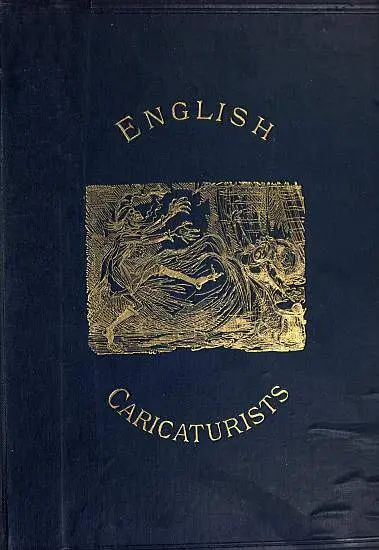
"English Caricaturists and Graphic Humourists of the Nineteenth Century" by Graham Everitt is a historical account written in the late 19th century. The work explores the evolution and significance of English caricature and graphic satire from the time of Napoleon until the death of noted cartoonist John Leech in 1864. It provides a detailed examination of how caricaturists interpreted and illustrated the social and political climate of their times, with prominent figures like Gillray, Rowlandson, and Cruikshank featured prominently. The opening of the book introduces the subject of caricature, defining it as an exaggerated portrayal that conveys popular opinion and sentiments of the era. Everitt discusses the shift in style and spirit of English caricatures, noting how earlier works were characterized by coarseness typical of the last century, while later caricaturists like John Doyle and his successors refined and transformed the art into a more sophisticated form. He asserts the relevance of these artists in understanding the political narratives of their time, particularly regarding figures like Napoleon and the socio-political changes happening throughout the 19th century.
Introduction adapted from the source catalogue; source summaries may be automatically generated.
Free to read · English · 156,632 words · No account needed
MAKE TIME FOR A GOOD BOOK
On by default. Untick to stop anonymous reading totals. Each page counts after 10 seconds in view. How this works.
Anonymous counting is on unless you have switched it off.
The long peace which followed the national and European struggle with Napoleon had produced a curious effect upon ourselves. While Russia took advantage of the lull to recruit her colossal forces, and Prussia to perfect the military system which took us so much by surprise half a century afterwards, we, on the other hand, wearied with our long and arduous struggle, had fallen asleep, and dreamed pleasantly that the "Millennium" was at hand. With this idea apparently in our minds, we inscribed on the walls of the Great Exhibition of 1851, the Scriptural text which tells us that "swords shall be beaten into ploughshares and spears into pruning hooks, neither shall they learn war any more." A significant commentary on the text was found in the fact that many of the exhibits at the "World's Fair" consisted of cannon, rifles, and other lethal instruments of improved method and construction, intended for the wholesale destruction of the human race. We read the Scriptural text, and viewed these exhibits as relics of a barbarism which had existed six and thirty years before, oblivious of the circumstance that an incompetent general had "wiped out" a British army in Afghanistan, and that we had crushed the empire of Runjeet Singh on the banks of the Sutlej not so many years before. The closing of the Exhibition is commemorated by a cartoon, in which Leech shows us the famous Amazon putting on her bonnet and shawl, chatting the while with Hiram Power's Greek Slave, who, habited in "bloomer" costume, prepares likewise to take her departure. Allusion to the bribery and corruption prevalent at a notorious borough of that day is made in a sketch which depicts the Horror of that Respectable Saint, St. Alban's, at Hearing the Confession of a St. Alban's Elector.
Remarkable results were destined to follow the year of unrest--1848. Louis Philippe had been replaced in France by Louis Napoleon, who seems to have been elevated to the Presidency of the Republic because he was considered to be so absolutely harmless, the principle followed being analogous to that observed at the election of a Pope, which has resulted more than once in an unpleasant surprise for the cardinal electors. Those who had formed a low estimate of his abilities, found that Louis was no longer the "half-saved" youth of Boulogne and Strasburg; that he had learnt some stern lessons in the hard school of adversity; that he had developed, moreover, a firm and decided will of his own. We thought it a hazardous experiment on the part of French Republicans, for Louis held a craze on the subject of his uncle's "ideas," and the craze had sufficient "method" to induce us to believe that he was the last man who would have been selected to fill the presidential chair. As a refugee in England, we had given him small credit for sagacity; and as an emperor and a man, history has already said of him that he was cunning, unreliable, and thoroughly unscrupulous. Although a comparison between the two men is impossible, there was at least this similarity between the two Napoleons, that both were indebted for their elevation to the imperial purple to a revolution; here, however, all resemblance ceased. The first Napoleon relied upon himself alone, while Louis was advised by counsellors and adventurers wiser and more unscrupulous than himself, and who were prepared to back his fortunes with a view of advancing their own. At the close of 1851, Europe was electrified by the unexpected and dastardly blow delivered by these men, and by means of a "great crime," the history of which has been so graphically related by Victor Hugo, Louis Napoleon, Prince President of the Republic, found himself master of the destinies of France. The event is referred to by John Leech in the cartoon of France is Tranquil!!! which she cannot well fail to be, seeing that we find her bound hand and foot; a chain-shot fastened to her foot, and a sentry menacing her with his bayonet. The next volume shows us the Prince President in the act of being measured by his military tailor, while he offers money to his cast-off mistress Liberte, her mother (France) looking indignantly on. Immediately behind, a priest (in allusion to the support which the Papal party were receiving from this "eldest son of the Church") helps himself from a plate of money which stands by the President's side; the floor is littered with miscellaneous articles,--bayonets, knapsacks, imperial and other crowns, crosses of the legion of honour, the code Napoleon,--and, in reference to Louis's craze on the subject of his uncle and his "ideas," one of Napoleon's old boots. On a stool stands a bust of the first Napoleon, and on a chair to the right a roll of "Imperial purple."
Your reading position is saved on this browser. Take it to another device with a library code. Reading pages adapt to text, rather than matching a printed edition.
BEHIND THE BOOK
This eBook is for the use of anyone anywhere in the United States and most other parts of the world at no cost and with almost no restrictions whatsoever. You may copy it, give it away or re-use it under the terms of the Project Gutenberg License included with this eBook or online at www.gutenberg.org. If you are not located in the United States, you will have to check the laws of the country where you are located before using this eBook. Read the source licence.
The original source file, including credits and licence, is retained by this library. Request an original-format copy at no charge. Please include the book title and Project Gutenberg identifier #31195.
KEEP YOUR CURIOSITY GOING
Cécile Tormay

Moritz Busch
John L. Ransom
Frances Wright
Cécile Tormay

Mabel Potter Daggett