THE CLASSIC COLLECTION✦An outlaw’s diary: the CommuneCLASSIC FREE BOOKS
An outlaw’s diary: the Commune
Cécile Tormay
THE CLASSIC COLLECTION · 1886
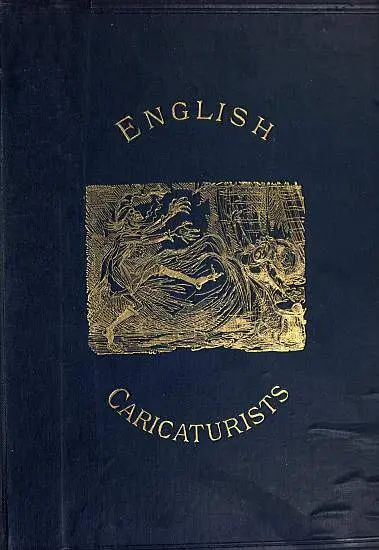
"English Caricaturists and Graphic Humourists of the Nineteenth Century" by Graham Everitt is a historical account written in the late 19th century. The work explores the evolution and significance of English caricature and graphic satire from the time of Napoleon until the death of noted cartoonist John Leech in 1864. It provides a detailed examination of how caricaturists interpreted and illustrated the social and political climate of their times, with prominent figures like Gillray, Rowlandson, and Cruikshank featured prominently. The opening of the book introduces the subject of caricature, defining it as an exaggerated portrayal that conveys popular opinion and sentiments of the era. Everitt discusses the shift in style and spirit of English caricatures, noting how earlier works were characterized by coarseness typical of the last century, while later caricaturists like John Doyle and his successors refined and transformed the art into a more sophisticated form. He asserts the relevance of these artists in understanding the political narratives of their time, particularly regarding figures like Napoleon and the socio-political changes happening throughout the 19th century.
Introduction adapted from the source catalogue; source summaries may be automatically generated.
Free to read · English · 156,632 words · No account needed
MAKE TIME FOR A GOOD BOOK
On by default. Untick to stop anonymous reading totals. Each page counts after 10 seconds in view. How this works.
Anonymous counting is on unless you have switched it off.
The reputation of the "Political Sketches" was, however, ephemeral, and considering their popularity and the eagerness with which they were bought up at the time, it is surprising how completely they have passed into oblivion. The name of HB, or of John Doyle, is now not only "caviare to the general," but it is amazing how little until lately he was known even to men not altogether ignorant on the subject of satirical art. A gentleman to whom I am indebted for some valuable information, tells me that some three or four years since "a large number of original sketches (not the engravings) were catalogued and announced for sale at Christies'. I went," he says, "possibly to buy several, but (and it is curious as showing the decadent interest in the pictures) no sale took place, because I was told there was no one to buy. I think," my informant adds, "that I was the only person, or nearly the only person, in the room." Distinguished people, however, had been to look at the drawings, and among them the late Lord Beaconsfield.
The success of the artist produced, of course, a number of imitators. Their productions were of various degrees of merit; but like most imitations they generally accentuated the faults without reproducing the excellencies of the model. Some of them are entitled "Political Hits," "Royal Ramblings," "The Belgian Trip," "Parisian Trip," and so on; some are signed "Philo H. B.," "H. H.," "B. H.," while others have neither initials or signature. They comprise some eighty or a hundred plates at least, many of which were probably suppressed, whilst others no doubt served the useful purposes of the greengrocer, the bookbinder, or the trunk-maker; and if, as we are told--
"Imperial Caesar, dead and turned to clay,
Might stop a hole to keep the wind away;"
there can be nothing after all very dishonourable or very surprising in their ultimate destination.
The artist died in 1868.
[113] Annual Register, 1836, p. 237.
[114] 1836, p. 244. Mr. Baldwin (one of the proprietors of the Standard newspaper) stated that "if the bill passed in its present shape, it would deteriorate his property fifty per cent., and would operate in the same way with all property of that description."--Ibid., p. 247.
[115] Greville's "Memoirs," pp. 3, 71.
[116] In which Lord Brougham took a special interest.
[117] Greville's "Memoirs," ii., p. 148.
[118] For the silly and spiteful observations made in this speech, see "Annual Register," 1825, p. 43.
[119] Greville's "Memoirs," iii. p. 85.
[120] Inverness Courier, Sept. 3rd (quoted in "Annual Register,"
1854, p. 129).
[121] From a nervous habit he had contracted of twitching his nose Lord Brougham was known to his contemporaries by the nickname of "Jemmy Twitcher."
Your reading position is saved on this browser. Take it to another device with a library code. Reading pages adapt to text, rather than matching a printed edition.
BEHIND THE BOOK
This eBook is for the use of anyone anywhere in the United States and most other parts of the world at no cost and with almost no restrictions whatsoever. You may copy it, give it away or re-use it under the terms of the Project Gutenberg License included with this eBook or online at www.gutenberg.org. If you are not located in the United States, you will have to check the laws of the country where you are located before using this eBook. Read the source licence.
The original source file, including credits and licence, is retained by this library. Request an original-format copy at no charge. Please include the book title and Project Gutenberg identifier #31195.
KEEP YOUR CURIOSITY GOING
Cécile Tormay

Moritz Busch
John L. Ransom
Frances Wright
Cécile Tormay

Mabel Potter Daggett