THE CLASSIC COLLECTION✦An outlaw’s diary: the CommuneCLASSIC FREE BOOKS
An outlaw’s diary: the Commune
Cécile Tormay
THE CLASSIC COLLECTION · 1886
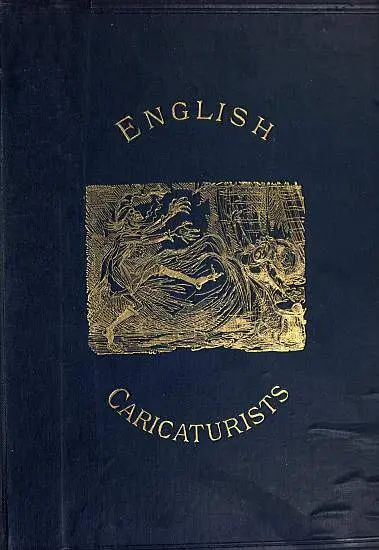
"English Caricaturists and Graphic Humourists of the Nineteenth Century" by Graham Everitt is a historical account written in the late 19th century. The work explores the evolution and significance of English caricature and graphic satire from the time of Napoleon until the death of noted cartoonist John Leech in 1864. It provides a detailed examination of how caricaturists interpreted and illustrated the social and political climate of their times, with prominent figures like Gillray, Rowlandson, and Cruikshank featured prominently. The opening of the book introduces the subject of caricature, defining it as an exaggerated portrayal that conveys popular opinion and sentiments of the era. Everitt discusses the shift in style and spirit of English caricatures, noting how earlier works were characterized by coarseness typical of the last century, while later caricaturists like John Doyle and his successors refined and transformed the art into a more sophisticated form. He asserts the relevance of these artists in understanding the political narratives of their time, particularly regarding figures like Napoleon and the socio-political changes happening throughout the 19th century.
Introduction adapted from the source catalogue; source summaries may be automatically generated.
Free to read · English · 156,632 words · No account needed
MAKE TIME FOR A GOOD BOOK
On by default. Untick to stop anonymous reading totals. Each page counts after 10 seconds in view. How this works.
Anonymous counting is on unless you have switched it off.
Irish agitators of the nineteenth century are all more or less "tarred with the same brush," but the conditions under which an Irish agitator of 1883-4 must be content to figure in that character are, it must be remembered, widely different from those which influenced the agitators of 1833. The Irish "Home Rulers" have sown the wind and have reaped the whirlwind which carries them along in its progress, and we doubt whether if they wished to stop the hideous Frankenstein they have created, it would allow them to do so. The Home Rulers, however, are not in any way to be pitied. Not content with Land League terrorism, they sought to force their measures upon John Bull himself by an unheard-of system of parliamentary obstruction, which has inevitably recoiled upon themselves. O'Connell was far too sharp-sighted--far too intelligent and clever a man to make so grave a mistake as this. By the sheer force of his genius he exercised for many years of his life a most powerful influence on English politics. He figures in one of John Doyle's sketches in the character ascribed to him probably by most of his contemporaries. In the sketch referred to, the Governor of Barataria is represented by the typical Irish peasant; O'Connell appears in the character of the Doctor; and Lord John Russell as the attendant and amused servitor. Pat's eagerness to enjoy the good things he has been led to expect, and his mortification at their being removed out of reach and out of sight are ridiculously rendered.
We must not be misunderstood; although O'Connell had far greater personal influence over the Irish than his successors, he was for all that in political matters eminently unscrupulous.[124] At the general election of 1835, the avowed principles on which he stood forth as a candidate were: repeal of the union,--universal suffrage, vote by ballot,--triennial parliaments,--and the abolition of tithes. "I am," he said, "decidedly for the vote by ballot. Whoever votes by ballot votes as he pleases, and no one need know how he votes." Yet, in spite of these avowed principles, he controlled the election of Irish candidates after the following fashion:--The Knight of Kerry started as a candidate for his native county, but dared to avow his intention to take an independent course. He had spent all his life in resisting Orangemen, and yet O'Connell said, "Every one who dares to vote for the Orange knight of Kerry shall have a death's head and cross-bones painted on his door." The voters at the Irish elections were collected in the chapels by the priests, and led forth to the poll under threats of being refused all the rites and visited with all the punishments of their Church. Under these influences, the Knight of Kerry, supported by nearly all the property, intelligence, and respectability of the county, was defeated. Of a candidate for New Ross who had refused to enlist under his banner, O'Connell said, "Whoever shall support him his shop shall be deserted, no man shall pass his threshold; put up his name as a traitor to Ireland; let no man speak to him; let the children laugh him to scorn." His example was followed of course by his lieutenants. It says something for Irish independence that these unscrupulous "dodges" were not always successful; and O'Connell himself, and his colleague, Mr. Ruthven, secured their own seats by comparatively small majorities. At the previous election O'Connell had obtained a majority of 1,549, and Mr. Ruthven of 1,490 above the highest Conservative candidate: at the election in 1835, O'Connell's majority had fallen to 217, and Mr. Ruthven's to 169. The "Irish agitator" was manifestly no favourite with HB, who depicted him as the comet of 1835. Comets being supposed by the vulgar to portend disaster, it is represented as leaving Ireland in a flame, and passing over St. George's Channel to exercise a malign influence on peaceful England. The head of course is that of O'Connell, while the tail is studded with the countenances of the Irish members who made up his "following." In a previous sketch he had figured as the Wolf to Lord John Russell's "Little Red Riding Hood," in allusion to a statement made by the opposition journals that the Government had made a league with the restless agitator with the view of securing his support in the House of Commons. We have heard something very like this lately, in relation to what is now known as the "Kilmainham Treaty."
Your reading position is saved on this browser. Take it to another device with a library code. Reading pages adapt to text, rather than matching a printed edition.
BEHIND THE BOOK
This eBook is for the use of anyone anywhere in the United States and most other parts of the world at no cost and with almost no restrictions whatsoever. You may copy it, give it away or re-use it under the terms of the Project Gutenberg License included with this eBook or online at www.gutenberg.org. If you are not located in the United States, you will have to check the laws of the country where you are located before using this eBook. Read the source licence.
The original source file, including credits and licence, is retained by this library. Request an original-format copy at no charge. Please include the book title and Project Gutenberg identifier #31195.
KEEP YOUR CURIOSITY GOING
Cécile Tormay

Moritz Busch
John L. Ransom
Frances Wright
Cécile Tormay

Mabel Potter Daggett