THE CLASSIC COLLECTION✦An outlaw’s diary: the CommuneCLASSIC FREE BOOKS
An outlaw’s diary: the Commune
Cécile Tormay
THE CLASSIC COLLECTION · 1886
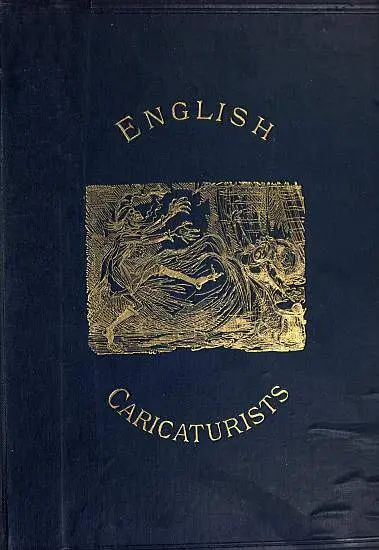
"English Caricaturists and Graphic Humourists of the Nineteenth Century" by Graham Everitt is a historical account written in the late 19th century. The work explores the evolution and significance of English caricature and graphic satire from the time of Napoleon until the death of noted cartoonist John Leech in 1864. It provides a detailed examination of how caricaturists interpreted and illustrated the social and political climate of their times, with prominent figures like Gillray, Rowlandson, and Cruikshank featured prominently. The opening of the book introduces the subject of caricature, defining it as an exaggerated portrayal that conveys popular opinion and sentiments of the era. Everitt discusses the shift in style and spirit of English caricatures, noting how earlier works were characterized by coarseness typical of the last century, while later caricaturists like John Doyle and his successors refined and transformed the art into a more sophisticated form. He asserts the relevance of these artists in understanding the political narratives of their time, particularly regarding figures like Napoleon and the socio-political changes happening throughout the 19th century.
Introduction adapted from the source catalogue; source summaries may be automatically generated.
Free to read · English · 156,632 words · No account needed
MAKE TIME FOR A GOOD BOOK
On by default. Untick to stop anonymous reading totals. Each page counts after 10 seconds in view. How this works.
Anonymous counting is on unless you have switched it off.
Another member of the royal family who frequently figures in the "sketches" is the Duke of Sussex. He was a man of large frame, and as remarkable for the blackness of his whiskers as the Duke of Cumberland was conspicuous for the bleached appearance of these hirsute adornments. At a meeting of the council of the London University, he is reported to have said that for the promotion of anatomical science he should have no personal objection to dedicate his own body after death to the College of Surgeons for the purposes of dissection. This hint was enough of course for HB, and his royal highness accordingly figures in a contemporary satire as A great Subject "Dedicated to the Royal College of Surgeons."
Another prominent personage of HB's time, and a singular instance of the change which frequently takes place in the political convictions of public men, was Sir Francis Burdett. Commencing his career as an ardent radical and reformer intolerant of abuses, he finished it and astonished his former supporters by being returned for Westminster in the Conservative interest. The political conduct of this once celebrated man is of so unusual a character that a short recapitulation of his career seems necessary, in order that the reader may understand the satires we are about to describe. Notwithstanding his expressed views in support of absolute purity of election, his own election for Middlesex in 1802-4, is said--what with the expenses and subsequent litigation--to have cost him upwards of one hundred thousand pounds. On the 5th of May, 1807, he was challenged by and fought a duel with Mr. James Paull, on Wimbledon Common, the cause of quarrel being Sir Francis's refusal to act as chairman at a gathering of Paull's supporters at the Crown and Anchor Tavern, Westminster, in April. The duel terminated in both the principals being seriously wounded. The same year he was returned to Parliament to serve as member for Westminster, which constituency he continued to represent for nearly thirty years. Perhaps the greatest event of his life was his committal to the Tower under the Speaker's warrant for a libellous letter published in Cobbett's Political Register, of 24th March, 1810, in which he questioned the power of the House to imprison delinquents. He at first resisted the execution of the warrant, and being a favourite with the mob, a street contest ensued between the military and the people, in which some lives were lost. In 1818, we find him moving for annual parliaments and universal suffrage, when the House divided with the result of 100 to 2, the minority being composed of the mover and seconder--that is to say, himself and Lord Cochrane. In 1820, he was found guilty at Leicester of a libel on Government in a letter to his constituents reflecting on the Manchester outrage of the preceding year; a new trial was moved for by himself, but this was refused, and he was sentenced the following February to three months' imprisonment, and to pay a fine of L2,000. In March, 1825, his resolutions for the relief of the Irish Catholics were carried by a majority of 247 to 234; but in later life his restless spirit gradually calmed down, and after the appointment of the Melbourne Ministry in 1835, he surprised and disgusted his party by going into opposition, principally (as he alleged) on account of the court which they paid to O'Connell and his followers in their agitation against the Irish Established Church. For some time previous to the sketch we are about to describe he had absented himself from the House, and otherwise shown his distaste for the persons and principles of the leading men of the party to which he had formerly belonged. The busy-bodies who professed to be the exponents of public opinion in Westminster, pressed him for an explicit statement of his views, and eventually called upon him to resign, and he took them directly at their word. The person brought forward to oppose him was John Temple Leader, then member for Bridgwater, a name which suggested to the artist the pictorial pun of Following the Leader, the "followers" being Lord Melbourne, Lord John Russell, Lord Palmerston, Mr. O'Connell, Sir J. Hobhouse, Mr. Hume, and Sir William Molesworth. Notwithstanding the exertions of the ministers and their friends to secure the election of Mr. Leader, that gentleman was not only beaten by a very considerable majority, but lost as a natural consequence his seat for Bridgwater, a fact which suggested to the artist another able sketch, The Dog and the Shadow. The election itself forms the subject of A Race for the Westminster Stakes, in which the aged thoroughbred (Sir Francis), ridden by Lord Castlereagh, beats the young horse Leader, jockey Mr. Roebuck. Among the backers of the losing horse, Daniel O'Connell and Joseph Hume may be easily detected by the lugubrious expression of their faces. The sketch of A Fine Old English Gentleman was suggested by a remark made by the Times during the progress of the contest, in which it described Sir Francis as "a fine specimen of the old English gentleman." In the left-hand corner of this sketch the artist has placed a picture of the Tower of London, by way of reminder of the days when the baronet was regarded not so much in the light of "a fine old English Gentleman" as a radical of the most advanced type, and as a martyr in the cause of public liberty.
Your reading position is saved on this browser. Take it to another device with a library code. Reading pages adapt to text, rather than matching a printed edition.
BEHIND THE BOOK
This eBook is for the use of anyone anywhere in the United States and most other parts of the world at no cost and with almost no restrictions whatsoever. You may copy it, give it away or re-use it under the terms of the Project Gutenberg License included with this eBook or online at www.gutenberg.org. If you are not located in the United States, you will have to check the laws of the country where you are located before using this eBook. Read the source licence.
The original source file, including credits and licence, is retained by this library. Request an original-format copy at no charge. Please include the book title and Project Gutenberg identifier #31195.
KEEP YOUR CURIOSITY GOING
Cécile Tormay

Moritz Busch
John L. Ransom
Frances Wright
Cécile Tormay

Mabel Potter Daggett