THE CLASSIC COLLECTION✦An outlaw’s diary: the CommuneCLASSIC FREE BOOKS
An outlaw’s diary: the Commune
Cécile Tormay
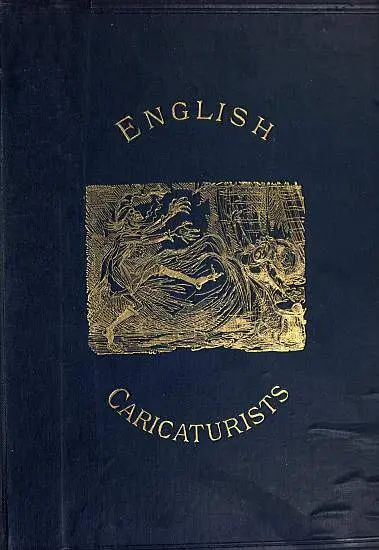
THE CLASSIC COLLECTION · 1886
"English Caricaturists and Graphic Humourists of the Nineteenth Century" by Graham Everitt is a historical account written in the late 19th century. The work explores the evolution and significance of English caricature and graphic satire from the time of Napoleon until the death of noted cartoonist John Leech in 1864. It provides a detailed examination of how caricaturists interpreted and illustrated the social and political climate of their times, with prominent figures like Gillray, Rowlandson, and Cruikshank featured prominently. The opening of the book introduces the subject of caricature, defining it as an exaggerated portrayal that conveys popular opinion and sentiments of the era. Everitt discusses the shift in style and spirit of English caricatures, noting how earlier works were characterized by coarseness typical of the last century, while later caricaturists like John Doyle and his successors refined and transformed the art into a more sophisticated form. He asserts the relevance of these artists in understanding the political narratives of their time, particularly regarding figures like Napoleon and the socio-political changes happening throughout the 19th century.
Introduction adapted from the source catalogue; source summaries may be automatically generated.
Free to read · English · 156,632 words · No account needed
MAKE TIME FOR A GOOD BOOK
On by default. Untick to stop anonymous reading totals. Each page counts after 10 seconds in view. How this works.
Anonymous counting is on unless you have switched it off.
In estimating his merits, the genius of George Cruikshank may not inaptly be compared to a diamond. One facet often emits more brilliant coruscations than any other; and if we may be permitted to compare his powers of realizing the grave, the comical, the supernatural, and the terrible to the facets of a diamond, we think the one which would be found to emit the most brilliant flashes of light would be the last. Thackeray, one of the most friendly and most competent of his critics, would seem to have considered that much of his power was shown in depicting subjects of this kind. "What a fine eye," he tells us, in his famous article which has supplied the backbone--the muscles--the very integuments of so many others,--"what a fine eye the artist has, what a skilful hand, and what a sympathy for the wild and dreadful!"
From an early period of his career as an etcher and designer, George had waged a deadly war with gin,--that potent, insidious, and evil spirit of London; the most priceless services he rendered to the cause of temperance being unquestionably given long before he had any notion of joining the ranks of the total abstainers. Like the Triumph of Cupid, the well-known Gin Juggernaut of the "Sketch Book" requires nothing more than a passing allusion. An example less known but quite as admirable will be found in the "Scraps and Sketches." It is called The Gin Shop,[92] and shows us the interior of a London gin palace. In place of the usual barrels, around the walls are ranged coffins, labelled respectively: "Deady's Cordial;" "Blue Ruin;" "Gin and Bitters;" the largest (a huge one) being marked "Old Tom." Death, habited as a watchman, has baited a huge gin trap, wherein stand five persons (two of them children, besides a baby in arms), all imbibing the deadly liquid. The wretched woman with the infant has actually placed her foot on the spring, and so great is the artist's power of realization, that we momentarily expect to see the horrible thing close with a snap! A skeleton, whose fleshless skull is masked with a pleasant female countenance, officiates as barmaid, and behind her yawns a pit, on the further side of which a circle of evil spirits curvet around a huge still. Just such a weird scene as would strike a sympathetic chord in the artist's fancy was found for him in Scott's novel of "Red Gauntlet." The episode selected for illustration is the frightful adventure of Hutcheon and Dougal MacCallum. "When midnight came, and the house was quiet as the grave, the silver whistle sounded as sharp and shrill as if Sir Robert was blowing it, and up got the two old serving-men and tottered into the room where the dead man lay. Hutcheon saw enough at the first glance; for there were torches in the room, which showed him the foul fiend in his ain shape, sitting on the laird's coffin! Ower he couped, as if he had been dead. He could not tell how long he lay in a trance at the door; but when he gathered himself, he cried on his neighbour, and getting nae answer, raised the house, when Dougal was found lying dead within twa steps of the bed where his master's coffin was placed. As for the whistle, it was lost ance and aye, but mony a time it was heard at the top of the house on the bartizan and among the auld chimneys and turrets, where the howlets have their nests." The coffin of the dead laird lies in state on a table covered with black cloth, richly ornamented with his armorial bearings; at the foot of the bier stands his black plumed helmet; while atop of the coffin crouches the grinning ape with the laird's whistle in his paw; on the ground, as they have been tossed about by the mischievous beast, lie his rapier, gauntlet, and other military trappings. The furniture, the fittings, the sombre hangings, the gloomy ancestral portraits, all are in keeping with the weird scene and its surroundings. The Death of Sikes, and Fagin in the Condemned Cell (especially the latter) have been described any number of times, and the circumstances, moreover, under which the latter design was conceived, told invariably wrong. In the Murder of Sir Rowland Trenchard ["Jack Sheppard"], we have a Rembrandtish etching, quite equalling in power and intensity that of Fagin in the Condemned Cell. The gloomy depths of the well hole are illumined only by the pine torch of the frightened Jew, as Wild hammers with his bludgeon on the fingers of the doomed wretch who, maimed and faint from loss of blood, clings with desperate tenacity to the bannister, from which his relaxing grip will presently plunge him into the black abyss below.
Your reading position is saved on this browser. Take it to another device with a library code. Reading pages adapt to text, rather than matching a printed edition.
BEHIND THE BOOK
This eBook is for the use of anyone anywhere in the United States and most other parts of the world at no cost and with almost no restrictions whatsoever. You may copy it, give it away or re-use it under the terms of the Project Gutenberg License included with this eBook or online at www.gutenberg.org. If you are not located in the United States, you will have to check the laws of the country where you are located before using this eBook. Read the source licence.
The original source file, including credits and licence, is retained by this library. Request an original-format copy at no charge. Please include the book title and Project Gutenberg identifier #31195.
KEEP YOUR CURIOSITY GOING
Cécile Tormay

Moritz Busch
John L. Ransom
Frances Wright
Cécile Tormay

Mabel Potter Daggett