THE CLASSIC COLLECTION✦An outlaw’s diary: the CommuneCLASSIC FREE BOOKS
An outlaw’s diary: the Commune
Cécile Tormay
THE CLASSIC COLLECTION · 1886
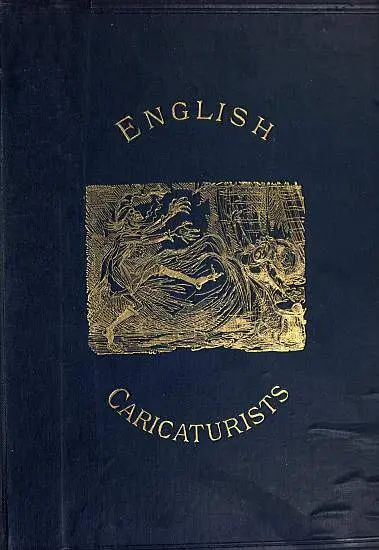
"English Caricaturists and Graphic Humourists of the Nineteenth Century" by Graham Everitt is a historical account written in the late 19th century. The work explores the evolution and significance of English caricature and graphic satire from the time of Napoleon until the death of noted cartoonist John Leech in 1864. It provides a detailed examination of how caricaturists interpreted and illustrated the social and political climate of their times, with prominent figures like Gillray, Rowlandson, and Cruikshank featured prominently. The opening of the book introduces the subject of caricature, defining it as an exaggerated portrayal that conveys popular opinion and sentiments of the era. Everitt discusses the shift in style and spirit of English caricatures, noting how earlier works were characterized by coarseness typical of the last century, while later caricaturists like John Doyle and his successors refined and transformed the art into a more sophisticated form. He asserts the relevance of these artists in understanding the political narratives of their time, particularly regarding figures like Napoleon and the socio-political changes happening throughout the 19th century.
Introduction adapted from the source catalogue; source summaries may be automatically generated.
Free to read · English · 156,632 words · No account needed
MAKE TIME FOR A GOOD BOOK
On by default. Untick to stop anonymous reading totals. Each page counts after 10 seconds in view. How this works.
Anonymous counting is on unless you have switched it off.
"Greenwich Hospital" gives us one of the very best drawings which Cruikshank ever designed. The scene of the Point of Honour is laid on board the Triumph, at Spithead, at the time of the famous mutiny. A detachment of marines with shouldered arms are drawn up on the quarter deck, their drummer is beating to quarters, while all hands are assembled to witness a degrading and demoralizing spectacle,--a sailor, with his shoulders bare and his hands tied to the triangles, about to receive punishment for disobedience to orders. Conspicuous amongst the figures are two little middies, habited in the strange naval uniform of sixty years ago. The illustration to The Braintrees, at page 90 of the "Three Courses and a Dessert" is a marvellous specimen, not only of the graphic power of the artist, but a triumph of the wood-engraver's craft. In The Gin Shop ("Sketches by Boz"), the artist selected a subject which invariably enlisted his sympathy and called into action the full power of his graphic satire. Mark the flaming gas, the huge spirit vats, the gaudily painted pillars and mouldings; above all, the strange people: the young man with his hat on one side who chaffs the young ladies behind the bar, the gin-drinking female by his side, the gin-loving cripple, the small boy who brings the family bottle to be filled with gin, whose head barely reaches the counter, the gin-drinking charwoman to the left, and the quarrelsome gin-drinking Irish customers at the back. Everything in this picture reeks of gin; the only persons not imbibing it are the proprietor and his dowdy barmaids, whom I have no manner of doubt the artist intended to look captivating.
"What a fine touching picture of melancholy desolation," remarks Thackeray, "is that of 'Sikes and the dog.' The poor cur is not too well drawn, the landscape is stiff and formal; but in this case the faults, if faults they be, of execution rather add to than diminish the effect of the picture: it has a strange, wild, dreary, broken-hearted look; we fancy we see the landscape as it must have appeared to Sikes, when ghastly and with bloodshot eyes he looked at it." The etching of Jonathan Wild Discovering Darrell in the Loft ["Jack Sheppard"] reminds one, in its treatment, of Rembrandt, for the work of Cruikshank, be it observed, distinctly shows in its results that he studied both Hogarth and Rembrandt. The effect the artist has produced is wonderful; the ray of light thrown through the gloom upon the figure of Darrell as he stands against the wall, sword in hand, is capitally managed, "while the intricacies of the tile-work, and the mysterious twinkling of light among the beams are excellently felt and rendered."[87] Simon Renard and Winwike on the Roof of the White Tower ["Tower of London"] is another admirable drawing. The scene is laid on the platform of one of the antique guns which frown from the embrasures of the river face of the fortress. The head of Renard is not well drawn. The character of the ambassador gives one the idea of a Spanish Iago, a clever, calculating knave, whom we should credit with the possession of a broad and lofty forehead, indicative of deep and concentrated thought; in the etching, however, before us, he has none at all, a deficiency compensated by puffy cheeks and a preposterous beak. These imperfections, which in another artist would mar the drawing, serve only to throw its excellencies into prominent notice. The lights and shadows are most effectively rendered, and the setting sun throws a broad light upon the features of the warder, who has laid aside his arquebus while conversing with the wily Spaniard. Of the many who have noticed the well-known etching of Born a Genius and Born a Dwarf ["Comic Almanack, 1847"], not one (so far at least as we know) has ever mentioned its origin. The subject was prompted by one of the last entries in the diary of poor Benjamin Robert Haydon, who died by his own hand on the 22nd of June, 1846, his corpse being found at the foot of his colossal picture of Alfred the Great and the First British Jury. The entry runs as follows:--"Tom Thumb had 12,000 people last week, B. R. Haydon 133-1/2 (the 1/2 a little girl). Exquisite taste of the English people!" In the etching which shows us Randulph and Hilda Dancing in the Rotunda at Ranelagh ["Miser's Daughter"], he brings us face to face with our great-grandfathers and great-grandmothers; wherever he got his authority from, the huge circular hall with galleries and arches running round it, illuminated by a thousand lamps, and the curious orchestra with the old-fashioned sounding-board above, are no freak of the artist's imagination. The etching possesses a wondrous charm of reality. We find ourselves assisting, as it were, at one of the masquerades described in "Sir Charles Grandison"; many of the company are in fancy dresses, and we find it difficult to realize, in these broad-cloth days, that the gentlemen in the velvet coats, with gold-bound embroidered waistcoats, silk stockings, silver gilt rapiers, and laced hats, dancing minuets with Chinamen, harlequins, scaramouches, templars, and other fancifully-dressed persons, are simply wearing the every-day costume of men of fashion of the day.
Your reading position is saved on this browser. Take it to another device with a library code. Reading pages adapt to text, rather than matching a printed edition.
BEHIND THE BOOK
This eBook is for the use of anyone anywhere in the United States and most other parts of the world at no cost and with almost no restrictions whatsoever. You may copy it, give it away or re-use it under the terms of the Project Gutenberg License included with this eBook or online at www.gutenberg.org. If you are not located in the United States, you will have to check the laws of the country where you are located before using this eBook. Read the source licence.
The original source file, including credits and licence, is retained by this library. Request an original-format copy at no charge. Please include the book title and Project Gutenberg identifier #31195.
KEEP YOUR CURIOSITY GOING
Cécile Tormay

Moritz Busch
John L. Ransom
Frances Wright
Cécile Tormay

Mabel Potter Daggett