THE CLASSIC COLLECTION✦An outlaw’s diary: the CommuneCLASSIC FREE BOOKS
An outlaw’s diary: the Commune
Cécile Tormay
THE CLASSIC COLLECTION · 1886
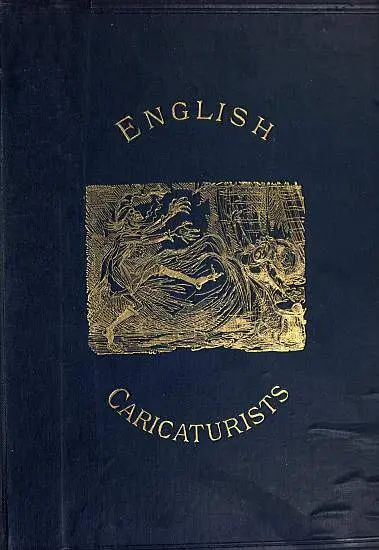
"English Caricaturists and Graphic Humourists of the Nineteenth Century" by Graham Everitt is a historical account written in the late 19th century. The work explores the evolution and significance of English caricature and graphic satire from the time of Napoleon until the death of noted cartoonist John Leech in 1864. It provides a detailed examination of how caricaturists interpreted and illustrated the social and political climate of their times, with prominent figures like Gillray, Rowlandson, and Cruikshank featured prominently. The opening of the book introduces the subject of caricature, defining it as an exaggerated portrayal that conveys popular opinion and sentiments of the era. Everitt discusses the shift in style and spirit of English caricatures, noting how earlier works were characterized by coarseness typical of the last century, while later caricaturists like John Doyle and his successors refined and transformed the art into a more sophisticated form. He asserts the relevance of these artists in understanding the political narratives of their time, particularly regarding figures like Napoleon and the socio-political changes happening throughout the 19th century.
Introduction adapted from the source catalogue; source summaries may be automatically generated.
Free to read · English · 156,632 words · No account needed
MAKE TIME FOR A GOOD BOOK
On by default. Untick to stop anonymous reading totals. Each page counts after 10 seconds in view. How this works.
Anonymous counting is on unless you have switched it off.
By this time, however, the excitement which had attended the original work had evaporated; by this time, too, the public had learnt to discriminate between the pencils of the brothers Cruikshank; and the "Finish," as compared with the original "Life," fell comparatively flat. It made however some sort of sensation in its day, but has become not only a scarce book, but one that is little sought after. The genius and reputation of George and the pen of Thackeray have kept alive the popularity of the "Life,"[59] while the "Finish"--left to the unaided but clever hand of Robert--has like himself been almost forgotten.
And yet it scarcely merits this fate. It contains thirty-six etchings by Robert Cruikshank, some of them of singular merit. Among them may be mentioned, The Duchess of Dogood; Splendid Jim; Logic Visiting his Old Acquaintance on Board the Fleet; Corinthian Kate in the Last Stage of Consumption, Disease, and Inebriety; and if not the production of a genius, the hand of an artist of singular merit, ability, and power is manifest in the etchings entitled, The Hounds at a Standstill; Logic's Upper Storey; and The End of Corinthian Kate.
Although modestly claiming for himself the merits of this book, Pierce Egan stands in relation to it in the position of a showman, and nothing more. He is not even entitled to the credit of being the originator,--for the originator and suggestor was Robert Cruikshank, who informs us of the fact (after his own characteristic fashion) by way of footnote to his frontispiece to the "Finish."[60] But Egan is undoubtedly a clever showman; if he displays rather more vulgarity than we altogether like, we must not forget the audience to whom he addresses himself, and for whom indeed his show is specially intended. We cannot admit that the popularity of this book was entirely due to the merit of the artists whose canvas he elucidates and (after his own fashion) explains. In common fairness some credit should be conceeded to Egan himself. Of literary talents he had not a particle; and if he lacked taste and refinement, it may at least be urged in his behalf that the age was not one of refinement, and that sixty years ago we had scarcely emancipated ourselves from the barbarism and vulgarity some remnants of which had descended to us from the time of George the Second. The bent of his taste and the scope of his abilities may be guessed from the fact that his "account of the trial of John Thurtell, the murderer," passed into at least thirteen editions. A man of this stamp could scarcely be expected to recognise the true value of the work with which he had the honour to be associated; he never looked beyond his patrons of the day, and as a natural consequence posterity has troubled itself little about him. You will search the biographical dictionaries in vain for any account of him;[61] and this oblivion he scarcely deserves, for not only was he one of the most popular men of sixty years ago, but he would scarcely have attained that position without a fair share of merit. He was not deficient in energy, and his talent is shown by the fact that he understood and (in a measure) led the taste of his day, taking advantage of his knowledge to raise himself to a position unattainable had such taste been of a more elevated and refined character. His descriptive powers (such as they were) were sufficient to procure him the post of recorder of the "Doings of the Ring" on the staff of the Weekly Dispatch, which post he occupied at the time he officiated as literary showman to "Tom and Jerry." He had however tried many trades,--had been in turn a compositor, bookseller, sporting writer, newspaper reporter, and even secretary to an Irish theatrical manager. The success of "Life in London," which he arrogated to himself, raised up a crop of enemies as well as friends, and he soon afterwards received his conge from the proprietors of the Dispatch. Pierce Egan, however, was not a man to be daunted by any such discouragement; he was found equal to the occasion, meeting his employers' coup d'etat by starting a sporting paper of his own, to which he gave the name of his successful book,--Pierce Egan's Life in London, and Sporting Guide. This counter movement proved the germ of a great enterprise. Probably his venture was no very great success; it ran only for three years from its commencement on the 1st of February, 1824. On the 28th of October, 1827, Egan's Life in London was sold by auction to a Mr. Bell, and thenceforth assumed its well known and now time honoured title of Bell's Life in London.
Your reading position is saved on this browser. Take it to another device with a library code. Reading pages adapt to text, rather than matching a printed edition.
BEHIND THE BOOK
This eBook is for the use of anyone anywhere in the United States and most other parts of the world at no cost and with almost no restrictions whatsoever. You may copy it, give it away or re-use it under the terms of the Project Gutenberg License included with this eBook or online at www.gutenberg.org. If you are not located in the United States, you will have to check the laws of the country where you are located before using this eBook. Read the source licence.
The original source file, including credits and licence, is retained by this library. Request an original-format copy at no charge. Please include the book title and Project Gutenberg identifier #31195.
KEEP YOUR CURIOSITY GOING
Cécile Tormay

Moritz Busch
John L. Ransom
Frances Wright
Cécile Tormay

Mabel Potter Daggett