THE CLASSIC COLLECTION✦A Book of Strife in the Form of The Diary of an Old SoulCLASSIC FREE BOOKS
A Book of Strife in the Form of The Diary of an Old Soul
George MacDonald
THE CLASSIC COLLECTION · 1868
"England's Antiphon" by George MacDonald is a theological and literary exploration written in the late 19th century. The central focus of the work is to trace the evolution of religious poetry in England, emphasizing its deep connection with the nation's religious and cultural history through various periods, particularly how this poetry reflects the spiritual condition of the people. MacDonald aims to foster a greater understanding and appreciation among readers for the works of poets who contributed to this poetic tradition over the centuries. The opening of "England's Antiphon" sets the stage for an in-depth examination of English religious poetry, starting with a preface where MacDonald outlines his intentions and methodologies. He contemplates the origins of poetry and its inherent link to worship, asserting that the deepest truths of faith resonate within lyrical forms. He introduces the concept of the "antiphon," or responsive singing in communal worship, as a guiding principle for his selections of poetry. As he moves into the analysis of sacred lyrics from the 13th century, he reflects on societal upheavals, the spiritual struggles of the Church, and the quiet growth of the people's faith amid turmoil. This introductory portion hints at a rich tapestry of poetry that seeks to illuminate the path of religious thought through the ages while inviting readers to engage emotionally with the lyrical expressions of past generations.
Introduction adapted from the source catalogue; source summaries may be automatically generated.
Free to read · English · 80,987 words · No account needed
MAKE TIME FOR A GOOD BOOK
On by default. Untick to stop anonymous reading totals. Each page counts after 10 seconds in view. How this works.
Anonymous counting is on unless you have switched it off.
Here is a portion of one which I hope may be helpful to some of my
readers.
What ails my heart, that in my breast
It thus unquiet lies;
And that it now of needful rest
Deprives my tiréd eyes?
Let not vain hopes, griefs, doubts, or fears,
Distemper so my mind;
But cast on God thy thoughtful cares,
And comfort thou shalt find.
In vain that soul attempteth ought,
And spends her thoughts in vain,
Who by or in herself hath sought
Desiréd peace to gain.
On thee, O Lord, on thee therefore,
My musings now I place;
Thy free remission I implore,
And thy refreshing grace.
Forgive thou me, that when my mind
Oppressed began to be,
I sought elsewhere my peace to find,
Before I came to thee.
And, gracious God, vouchsafe to grant,
Unworthy though I am,
The needful rest which now I want,
That I may praise thy name.
Before examining the volume, one would say that no man could write so many hymns without frequent and signal failure. But the marvel here is, that the hymns are all so very far from bad. He can never have written in other than a gentle mood. There must have been a fine harmony in his nature, that kept him, as it were. This peacefulness makes him interesting in spite of his comparative flatness. I must restrain remark, however, and give five out of twelve stanzas of another of his hymns.
Sweet baby, sleep; what ails my dear?
What ails my darling thus to cry?
Be still, my child, and lend thine ear
To hear me sing thy lullaby.
My pretty lamb, forbear to weep;
Be still, my dear; sweet baby, sleep.
Whilst thus thy lullaby I sing,
For thee great blessings ripening be;
Thine eldest brother is a king,
And hath a kingdom bought for thee.
Sweet baby, then forbear to weep;
Be still, my babe; sweet baby, sleep.
A little infant once was he,
And strength in weakness then was laid
Upon his virgin mother's knee,
That power to thee might be conveyed.
Sweet baby, then forbear to weep;
Be still, my babe; sweet baby, sleep.
Within a manger lodged thy Lord,
Where oxen lay, and asses fed;
Warm rooms we do to thee afford,
An easy cradle or a bed.
Sweet baby, then forbear to weep;
Be still, my babe; sweet baby, sleep.
Thou hast, yet more to perfect this,
A promise and an earnest got,
Of gaining everlasting bliss,
Though thou, my babe, perceiv'st it not.
Sweet baby, then forbear to weep;
Be still, my babe; sweet baby, sleep.
Your reading position is saved on this browser. Take it to another device with a library code. Reading pages adapt to text, rather than matching a printed edition.
George MacDonald
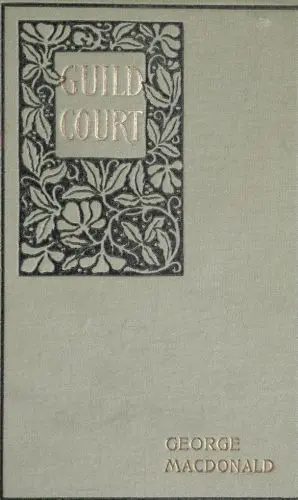
George MacDonald
George MacDonald
George MacDonald
BEHIND THE BOOK
This eBook is for the use of anyone anywhere in the United States and most other parts of the world at no cost and with almost no restrictions whatsoever. You may copy it, give it away or re-use it under the terms of the Project Gutenberg License included with this eBook or online at www.gutenberg.org. If you are not located in the United States, you will have to check the laws of the country where you are located before using this eBook. Read the source licence.
The original source file, including credits and licence, is retained by this library. Request an original-format copy at no charge. Please include the book title and Project Gutenberg identifier #10375.
KEEP YOUR CURIOSITY GOING

David Patterson (Spirit) Hatch

David Patterson (Spirit) Hatch

David Patterson (Spirit) Hatch
Cécile Tormay

Moritz Busch
John L. Ransom