THE CLASSIC COLLECTION✦A Book of Strife in the Form of The Diary of an Old SoulCLASSIC FREE BOOKS
A Book of Strife in the Form of The Diary of an Old Soul
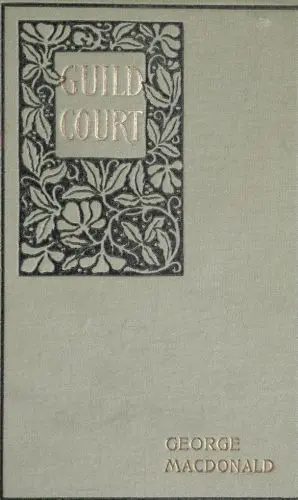
George MacDonald
THE CLASSIC COLLECTION · 1868
"England's Antiphon" by George MacDonald is a theological and literary exploration written in the late 19th century. The central focus of the work is to trace the evolution of religious poetry in England, emphasizing its deep connection with the nation's religious and cultural history through various periods, particularly how this poetry reflects the spiritual condition of the people. MacDonald aims to foster a greater understanding and appreciation among readers for the works of poets who contributed to this poetic tradition over the centuries. The opening of "England's Antiphon" sets the stage for an in-depth examination of English religious poetry, starting with a preface where MacDonald outlines his intentions and methodologies. He contemplates the origins of poetry and its inherent link to worship, asserting that the deepest truths of faith resonate within lyrical forms. He introduces the concept of the "antiphon," or responsive singing in communal worship, as a guiding principle for his selections of poetry. As he moves into the analysis of sacred lyrics from the 13th century, he reflects on societal upheavals, the spiritual struggles of the Church, and the quiet growth of the people's faith amid turmoil. This introductory portion hints at a rich tapestry of poetry that seeks to illuminate the path of religious thought through the ages while inviting readers to engage emotionally with the lyrical expressions of past generations.
Introduction adapted from the source catalogue; source summaries may be automatically generated.
Free to read · English · 80,987 words · No account needed
MAKE TIME FOR A GOOD BOOK
On by default. Untick to stop anonymous reading totals. Each page counts after 10 seconds in view. How this works.
Anonymous counting is on unless you have switched it off.
From the nature of their adopted mode, we cannot look for much poetry of a devotional kind from the dramatists. That mode admitting of no utterance personal to the author, and requiring the scope of a play to bring out the intended truth, it is no wonder that, even in the dramas of Shakspere, profound as is the teaching they contain, we should find nothing immediately suitable to our purpose; while neither has he left anything in other form approaching in kind what we seek. Ben Jonson, however, born in 1574, who may be regarded as the sole representative of learning in the class, has left, amongst a large number of small pieces, three Poems of Devotion, whose merit may not indeed be great, but whose feeling is, I think, genuine. Whatever were his faults, and they were not few, hypocrisy was not one of them. His nature was fierce and honest. He might boast, but he could not pretend. His oscillation between the reformed and the Romish church can hardly have had other cause than a vacillating conviction. It could not have served any prudential end that we can see, to turn catholic in the reign of Elizabeth, while in prison for killing in a duel a player who had challenged him.
O holy, blessed, glorious Trinity
Of persons, still one God in Unity,
The faithful man's believed mystery,
Help, help to lift
Myself up to thee, harrowed, torn, and bruised
By sin and Satan, and my flesh misused.
As my heart lies--in pieces, all confused--
O take my gift.
All-gracious God, the sinner's sacrifice,
A broken heart, thou wert not wont despise,
But, 'bove the fat of rams or bulls, to prize
An offering meet
For thy acceptance: Oh, behold me right,
And take compassion on my grievous plight!
What odour can be, than a heart contrite,
To thee more sweet?
Eternal Father, God, who didst create
This All of nothing, gav'st it form and fate,
And breath'st into it life and light, with state
To worship thee!
Eternal God the Son, who not deniedst
To take our nature, becam'st man, and diedst,
To pay our debts, upon thy cross, and criedst
All's done in me!
Eternal Spirit, God from both proceeding,
Father and Son--the Comforter, in breeding
Pure thoughts in man, with fiery zeal them feeding
For acts of grace!
Increase those acts, O glorious Trinity
Of persons, still one God in Unity,
Till I attain the longed-for mystery
Of seeing your face,
Beholding one in three, and three in one,
A Trinity, to shine in Union--
The gladdest light, dark man can think upon--
O grant it me,
Your reading position is saved on this browser. Take it to another device with a library code. Reading pages adapt to text, rather than matching a printed edition.
George MacDonald
George MacDonald
George MacDonald
George MacDonald
BEHIND THE BOOK
This eBook is for the use of anyone anywhere in the United States and most other parts of the world at no cost and with almost no restrictions whatsoever. You may copy it, give it away or re-use it under the terms of the Project Gutenberg License included with this eBook or online at www.gutenberg.org. If you are not located in the United States, you will have to check the laws of the country where you are located before using this eBook. Read the source licence.
The original source file, including credits and licence, is retained by this library. Request an original-format copy at no charge. Please include the book title and Project Gutenberg identifier #10375.
KEEP YOUR CURIOSITY GOING

David Patterson (Spirit) Hatch

David Patterson (Spirit) Hatch

David Patterson (Spirit) Hatch
Cécile Tormay

Moritz Busch
John L. Ransom