THE CLASSIC COLLECTION✦A Book of Strife in the Form of The Diary of an Old SoulCLASSIC FREE BOOKS
A Book of Strife in the Form of The Diary of an Old Soul
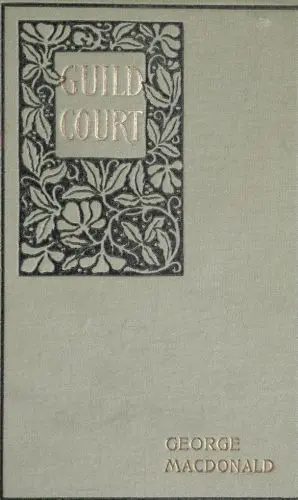
George MacDonald
THE CLASSIC COLLECTION · 1868
"England's Antiphon" by George MacDonald is a theological and literary exploration written in the late 19th century. The central focus of the work is to trace the evolution of religious poetry in England, emphasizing its deep connection with the nation's religious and cultural history through various periods, particularly how this poetry reflects the spiritual condition of the people. MacDonald aims to foster a greater understanding and appreciation among readers for the works of poets who contributed to this poetic tradition over the centuries. The opening of "England's Antiphon" sets the stage for an in-depth examination of English religious poetry, starting with a preface where MacDonald outlines his intentions and methodologies. He contemplates the origins of poetry and its inherent link to worship, asserting that the deepest truths of faith resonate within lyrical forms. He introduces the concept of the "antiphon," or responsive singing in communal worship, as a guiding principle for his selections of poetry. As he moves into the analysis of sacred lyrics from the 13th century, he reflects on societal upheavals, the spiritual struggles of the Church, and the quiet growth of the people's faith amid turmoil. This introductory portion hints at a rich tapestry of poetry that seeks to illuminate the path of religious thought through the ages while inviting readers to engage emotionally with the lyrical expressions of past generations.
Introduction adapted from the source catalogue; source summaries may be automatically generated.
Free to read · English · 80,987 words · No account needed
MAKE TIME FOR A GOOD BOOK
On by default. Untick to stop anonymous reading totals. Each page counts after 10 seconds in view. How this works.
Anonymous counting is on unless you have switched it off.
Except it be Milton's, there is not any prose fuller of grand poetic embodiments than Lord Bacon's. Yet he always writes contemptuously of poetry, having in his eye no doubt the commonplace kinds of it, which will always occupy more bulk, and hence be more obtrusive, than that which is true in its nature and rare in its workmanship. Towards the latter end of his life, however, being in ill health at the time, he translated seven of the Psalms of David into verse, dedicating them to George Herbert. The best of them is Psalm civ.--just the one upon which we might suppose, from his love to the laws of Nature, he would dwell with the greatest sympathy. Partly from the wish to hear his voice amongst the rest of our singers, partly for the merits of the version itself, which has some remarkable lines, I have resolved to include it here. It is the first specimen I have given in the heroic couplet.
Father and King of Powers both high and low,
Whose sounding fame all creatures serve to blow;
My soul shall with the rest strike up thy praise,
And carol of thy works, and wondrous ways.
But who can blaze thy beauties, Lord, aright?
They turn the brittle beams of mortal sight.
Upon thy head thou wear'st a glorious crown,
All set with virtues, polished with renown:
Thence round about a silver veil doth fall
Of crystal light, mother of colours all.
The compass, heaven, smooth without grain or fold,
All set with spangs of glittering stars untold,
And striped with golden beams of power unpent,
Is raiséd up for a removing tent
Vaulted and archéd are his chamber beams
Upon the seas, the waters, and the streams;
The clouds as chariots swift do scour the sky;
The stormy winds upon their wings do fly
His angels spirits are, that wait his will;
As flames of fire his anger they fulfil.
In the beginning, with a mighty hand,
He made the earth by counterpoise to stand,
Never to move, but to be fixed still;
Yet hath no pillars but his sacred will.
This earth, as with a veil, once covered was;
The waters overflowéd all the mass;
But upon his rebuke away they fled,
And then the hills began to show their head;
The vales their hollow bosoms opened plain,
The streams ran trembling down the vales again;
And that the earth no more might drowned be,
He set the sea his bounds of liberty;
And though his waves resound and beat the shore,
Yet it is bridled by his holy lore.
Then did the rivers seek their proper places,
And found their heads, their issues, and their races;
The springs do feed the rivers all the way,
And so the tribute to the sea repay:
Running along through many a pleasant field,
Much fruitfulness unto the earth they yield;
That know the beasts and cattle feeding by,
Which for to slake their thirst do thither hie.
Nay, desert grounds the streams do not forsake,
But through the unknown ways their journey take;
The asses wild that hide in wilderness,
Do thither come, their thirst for to refresh.
The shady trees along their banks do spring,
In which the birds do build, and sit, and sing,
Stroking the gentle air with pleasant notes,
Plaining or chirping through their warbling throats.
The higher grounds, where waters cannot rise,
By rain and dews are watered from the skies,
Causing the earth put forth the grass for beasts,
And garden-herbs, served at the greatest feasts,
And bread that is all viands' firmament,
And gives a firm and solid nourishment;
And wine man's spirits for to recreate,
And oil his face for to exhilarate.
The sappy cedars, tall like stately towers,
High flying birds do harbour in their bowers;
The holy storks that are the travellers,
Choose for to dwell and build within the firs;
The climbing goats hang on steep mountains' side;
The digging conies in the rocks do bide.
The moon, so constant in inconstancy,
Doth rule the monthly seasons orderly;
The sun, eye of the world, doth know his race,
And when to show, and when to hide his face.
Thou makest darkness, that it may be night,
Whenas the savage beasts that fly the light,
As conscious of man's hatred, leave their den,
And range abroad, secured from sight of men.
Then do the forests ring of lions roaring,
That ask their meat of God, their strength restoring;
But when the day appears, they back do fly,
And in their dens again do lurking lie;
Then man goes forth to labour in the field,
Whereby his grounds more rich increase may yield.
O Lord, thy providence sufficeth all;
Thy goodness not restrained but general
Over thy creatures, the whole earth doth flow
With thy great largeness poured forth here below.
Nor is it earth alone exalts thy name,
But seas and streams likewise do spread the same.
The rolling seas unto the lot do fall
Of beasts innumerable, great and small;
There do the stately ships plough up the floods;
The greater navies look like walking woods;
The fishes there far voyages do make,
To divers shores their journey they do take;
There hast thou set the great leviathan,
That makes the seas to seethe like boiling pan:
All these do ask of thee their meat to live,
Which in due season thou to them dost give:
Ope thou thy hand, and then they have good fare;
Shut thou thy hand, and then they troubled are.
All life and spirit from thy breath proceed,
Thy word doth all things generate and feed:
If thou withdraw'st it, then they cease to be,
And straight return to dust and vanity;
But when thy breath thou dost send forth again,
Then all things do renew, and spring amain,
So that the earth but lately desolate
Doth now return unto the former state.
The glorious majesty of God above
Shall ever reign, in mercy and in love;
God shall rejoice all his fair works to see,
For, as they come from him, all perfect be.
The earth shall quake, if aught his wrath provoke;
Let him but touch the mountains, they shall smoke.
As long as life doth last, I hymns will sing,
With cheerful voice, to the Eternal King;
As long as I have being, I will praise
The works of God, and all his wondrous ways.
I know that he my words will not despise:
Thanksgiving is to him a sacrifice.
But as for sinners, they shall be destroyed
From off the earth--their places shall be void.
Let all his works praise him with one accord!
Oh praise the Lord, my soul! Praise ye the Lord!
Your reading position is saved on this browser. Take it to another device with a library code. Reading pages adapt to text, rather than matching a printed edition.
George MacDonald
George MacDonald
George MacDonald
George MacDonald
BEHIND THE BOOK
This eBook is for the use of anyone anywhere in the United States and most other parts of the world at no cost and with almost no restrictions whatsoever. You may copy it, give it away or re-use it under the terms of the Project Gutenberg License included with this eBook or online at www.gutenberg.org. If you are not located in the United States, you will have to check the laws of the country where you are located before using this eBook. Read the source licence.
The original source file, including credits and licence, is retained by this library. Request an original-format copy at no charge. Please include the book title and Project Gutenberg identifier #10375.
KEEP YOUR CURIOSITY GOING

David Patterson (Spirit) Hatch

David Patterson (Spirit) Hatch

David Patterson (Spirit) Hatch
Cécile Tormay

Moritz Busch
John L. Ransom