THE CLASSIC COLLECTION✦An outlaw’s diary: the CommuneCLASSIC FREE BOOKS
An outlaw’s diary: the Commune
Cécile Tormay
THE CLASSIC COLLECTION · 1910
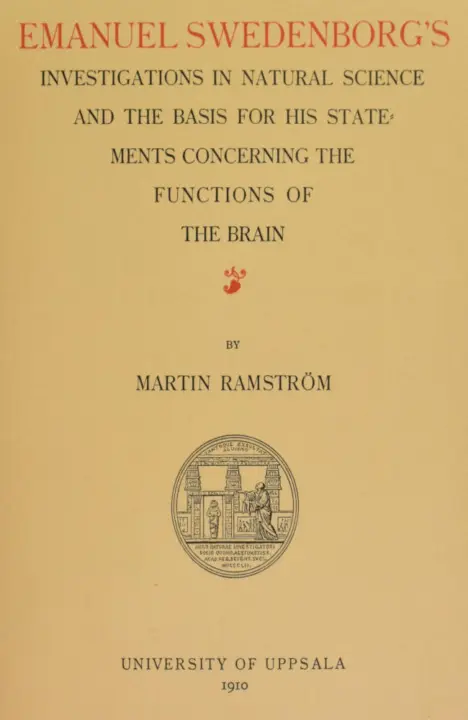
"Emanuel Swedenborg's Investigations in Natural Science and the Basis for His Statements Concerning the Functions of the Brain" by Martin Ramström is a scientific publication written in the early 20th century. This work delves into the extensive contributions of Emanuel Swedenborg, exploring his investigations across various fields of natural science, particularly focusing on his groundbreaking insights into anatomy and the functions of the brain. The text highlights Swedenborg's multifaceted approach to science, emphasizing both his theoretical advancements and practical applications. The opening of this scholarly work sets the stage for a comprehensive examination of Swedenborg's scientific legacy, noting his growing interest in natural sciences beyond his well-known theological writings. It outlines the admiration for Swedenborg's wide-ranging investigations, mentioning various accolades from contemporaries in fields such as anatomy, geology, and cosmology. Furthermore, it introduces topics that will be unpacked in greater depth, such as Swedenborg's pioneering ideas on the connections between brain functions and sensory experiences, hinting at his theories on localization within the brain, which were ahead of his time.
Introduction adapted from the source catalogue; source summaries may be automatically generated.
Free to read · English · 18,098 words · No account needed
MAKE TIME FOR A GOOD BOOK
On by default. Untick to stop anonymous reading totals. Each page counts after 10 seconds in view. How this works.
Anonymous counting is on unless you have switched it off.
[59] See R. DESCARTES: ›Tractatus de homine›, Lugd. Bat. 1662, pp. 77, 81, 82; 32, 67 etc.: 72, 79 etc.
[60] See H. BOERHAAVE: ›Institutiones medicae›, Lugd. Bat. 1720, p. 253: ›Sensorium commune est pars cerebri, — — —, adeoque, ut apparet, medulla cerebri in capite;› and BOERHAAVE: ›Praelectiones academicae, (published by HALLER), Göttingen, 1743, p. 451: ›Haec ergo sedes animae non est in pineali glandula, uti CARTESIUS voluit,—neque est in medulla spinali, neque est in cerebello, verum in fornicata medulla circumstante cavitatem ventriculorum cerebri.›
[61] See CASP. et THOM. BARTHOLIN: ›Instit. anatom.›, 1641, p. 265: ›Putamus enim in Cerebro proprie dicto, vel cortice servari spiritum animalem pro sensu, in medulla vero tota tam quoad caput quam quoad caudam, reservari spiritum pro motu.›
[62] See THOMAS WILLIS: ›Cerebri Anatome., 1667, pp. 76, 77: ›Etenim existimare fas est, spiritus animales — — in corticali cerebri substantia procreari› — — — ›hæ partes medullares spirituum animalium exercitio et dispensationi — — — inserviunt;› and J.J. WINSLOW: ›Exposition anatomique — — —›, 1732, IV., p. 210: ›WILLIS nous donne un système tout-à-fait particulier. Il loge le sens commun dans le corpus striatum ou corps rougé, l’imagination dans le corps callosum, et la mémoire dans l’écorce ou dans la substance grisâtre qui envelloppe la blanche.›
[63] See M. MALPIGHI: ›Opera Omnia›, 1686-87, Tom. II., p. 85: ›Suspicari possumus minimis hisce glandulis ex delato sanguine separari, recolligique particulas illas a natura ad promendum instrumentaliter sensuum destinatas, quibus per nervorum tubulis delatis continuatae partes inbibantur et turgeant.›
[64] See MALPIGHI: ›Opera Omnia›, 1686-87, Tom. II., De Cerebri cortice, pp. 78 et seqq. ›In — — cerebro corticem affusum minimarum glandularum proventum et congeriem esse deprehendi: hæ in cerebri gyris et protractis veluti intestinales, ad quæ desinunt albæ nervorum radices, vel inde, si mavis, oriuntur — — —›; and SWEDENBORG: Œc. R. A. II., Nos. 76-82, 112, 114 etc.
[65] See BOERHAAVE: ›Institutiones medicae›, 1720, No. 266: ›folliculi illi minimi glandulosi emittunt tenues fibras, albas, compactas quibus adenutis fit callosum, medullosumque corpus› — — —; No. 274: ›fibras has canaliculos tenuissimos pervios esse, qui in se excipiant humorem corporis humani omnium quidem subtilissimum, qui fabrica mirifica corticis praeparatus, secretus atque vi in has fistulas impulsus est, ex omni quidem parte hujus in medullam oblongatam collectus; see also No. 263; No. 284: ›fibrillas nerveas humorem medullae — — ad omne punctum totius corporis distinctissimis viis deferre.› — —
[66] ›Nisi mutua sit connexio et perpetua communicatio substantiae medullaris qua fibrillas et manipulos intra thecam vertebralem et cranium, undecunque ducitur ad corticem cerebri. — — —› (Œc. R. A. II., No. 193; See also No. 115).
[67] See above CASP. and THOM. BARTHOLIN: ›Inst. Anat.›, 1645, p. 265.
[68] See H. BOERHAAVE: ›Inst. Med.›, 1720, N. 574. or 274.
[69] See above A. V. HALLER: ›Elem. Physiol.›, 1762, IV., p. 392.
[70] Œc. R. A. loco cit. and II., 88. See also A. PACCHIONI: ›Opera›, Ed. quarta, Romæ, 1741, p. 112.
[71] See BOERHAAVE: ›Instit. med.›, 1720, No. 570, 574. The edition used by SWEDENBORG was printed 1727.
Your reading position is saved on this browser. Take it to another device with a library code. Reading pages adapt to text, rather than matching a printed edition.
BEHIND THE BOOK
This eBook is for the use of anyone anywhere in the United States and most other parts of the world at no cost and with almost no restrictions whatsoever. You may copy it, give it away or re-use it under the terms of the Project Gutenberg License included with this eBook or online at www.gutenberg.org. If you are not located in the United States, you will have to check the laws of the country where you are located before using this eBook. Read the source licence.
The original source file, including credits and licence, is retained by this library. Request an original-format copy at no charge. Please include the book title and Project Gutenberg identifier #63033.
KEEP YOUR CURIOSITY GOING
Cécile Tormay

Moritz Busch
John L. Ransom
Frances Wright
Cécile Tormay

Mabel Potter Daggett