THE CLASSIC COLLECTION✦An outlaw’s diary: the CommuneCLASSIC FREE BOOKS
An outlaw’s diary: the Commune
Cécile Tormay
THE CLASSIC COLLECTION · 1910
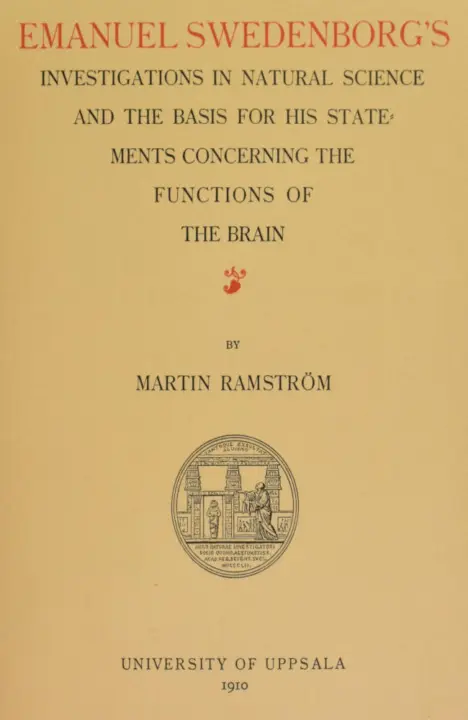
"Emanuel Swedenborg's Investigations in Natural Science and the Basis for His Statements Concerning the Functions of the Brain" by Martin Ramström is a scientific publication written in the early 20th century. This work delves into the extensive contributions of Emanuel Swedenborg, exploring his investigations across various fields of natural science, particularly focusing on his groundbreaking insights into anatomy and the functions of the brain. The text highlights Swedenborg's multifaceted approach to science, emphasizing both his theoretical advancements and practical applications. The opening of this scholarly work sets the stage for a comprehensive examination of Swedenborg's scientific legacy, noting his growing interest in natural sciences beyond his well-known theological writings. It outlines the admiration for Swedenborg's wide-ranging investigations, mentioning various accolades from contemporaries in fields such as anatomy, geology, and cosmology. Furthermore, it introduces topics that will be unpacked in greater depth, such as Swedenborg's pioneering ideas on the connections between brain functions and sensory experiences, hinting at his theories on localization within the brain, which were ahead of his time.
Introduction adapted from the source catalogue; source summaries may be automatically generated.
Free to read · English · 18,098 words · No account needed
MAKE TIME FOR A GOOD BOOK
On by default. Untick to stop anonymous reading totals. Each page counts after 10 seconds in view. How this works.
Anonymous counting is on unless you have switched it off.
[48] See also Œc. R. A. II., No. 348: ›Ex his jam praemissis usque ad fidem intellectus demonstrari potest, quod Fluidum Spirituosum humanum immunissimum sit ab omni injuria contingentium in regione sublunari; nec exstinguibile, sed immortale, tametsi non per se, post casum sui Corporis. Quod exsolutum a vinculis et laqueis terrestrium in omnem sui Corporis formam coaliturum sit et victurum vitam omni imaginatione puriorem. Tum quod nulla sit actiuncula ex consulto, et nulla vocula ex consensu, in vita ejus corporea, edita, quae non affulgente luce sapientiae, inhaerenter designatae, tunc ante ejus conscientiae judicium, distincte compariturae sint›.
[49] Œc. R. A. II., No. 303: ›usque eodem recidit, sive memoratum fluidum dicimus Spiritum aut Animam, sive ejus facultatem sibi repraesentandi universum et intuendi fines, nam unum non concipi potest, quia non datur sine altero.›
[50] J. J. GARTH WILKINSON has published Part I. in an English translation in 1843, and Parts II. and III. in 1844, London.
[50 b] ›Regnum Animale›, Pars quarta: ›De Sensibus›, publ. by IM. TAFEL, London, 1848; transl. into English by ENOCH S. PRICE in ›New Philosophy›; ›R. A.›, Pars septima: ›De Anima›, publ. by IM. TAFEL, Tübingen and London, 1849; transl. into English by FRANK SEWALL, New York, 1887 and 1900.
[51] The words enclosed in parentheses have been added by the author of this paper to make the meaning more clear, and are unmistakeably inferred from the connection.
[52] As Professor G. RETZIUS also says in his ›Croonian lecture›, delivered in London, 1908: ›The theses cited [especially those concerning the localization of the motor centres in the cerebral cortex] are drawn up with such precision by SWEDENBORG that they cannot possibly be based on divination only, but must rest upon a real grasp of natural phenomena as well as on actual experiments and dissecting work›.
[53] See ›Œconomia Regni Animalis›, I., Nos. 559 et seqq.; also 571 and 572, and R. VIEUSSENS: ›Neurographia universalis›, Lugduni, 1685, pp. 123, 124, etc.
[54] See ›Œconomia Regni Animalis›, I., Nos. 559 et seqq., as also R. VIEUSSENS: ›Neurographia universalis›, Lugduni, 1685, pp. 123, 124, et seqq.
[55] See BOERHAAVE: ›Institutiones medicae›, Lugduni Batavor. 1720, No. 415: ›Ergo musculi voluntarii nervos habent ultimo oriundos a cerebro. Illi vero, qui spontaneis, vitalibusque motibus serviunt, a cerebello nervos accipiunt.›
[56] See TH. WILLIS: ›Cerebri Anatome›, Amsterdam, 1667, pp. 73-74: ›Cerebrum motuum et conceptuum omnium origo et fons. Sensus et motus, item passiones et instinctus mere naturales, licet a Cerebro quadantenus dependent, tamen proprie in Medulla oblongata et Cerebello aut perficiunter aut ab iis procedunt.
[57] See Œc. R. A. III., No. 404, etc.: ›Medulla oblongata — — — sensorium et motorium commune tam Cerebri quam Cerebelli, sed secundarium et instrumentale superius. Medulla spinalis similiter — — — sensorium et motorium commune, sed secundarium et instrumentale inferius.›
[58] Œc. R. A., III., No. 133: ›Substantia — — — corticalis est ipsum Cerebrum seu Sensorium — — — commune›; No. 404, etc.
Your reading position is saved on this browser. Take it to another device with a library code. Reading pages adapt to text, rather than matching a printed edition.
BEHIND THE BOOK
This eBook is for the use of anyone anywhere in the United States and most other parts of the world at no cost and with almost no restrictions whatsoever. You may copy it, give it away or re-use it under the terms of the Project Gutenberg License included with this eBook or online at www.gutenberg.org. If you are not located in the United States, you will have to check the laws of the country where you are located before using this eBook. Read the source licence.
The original source file, including credits and licence, is retained by this library. Request an original-format copy at no charge. Please include the book title and Project Gutenberg identifier #63033.
KEEP YOUR CURIOSITY GOING
Cécile Tormay

Moritz Busch
John L. Ransom
Frances Wright
Cécile Tormay

Mabel Potter Daggett