
The William Henry Letters
Abby Morton Diaz
THE CLASSIC COLLECTION · 1918
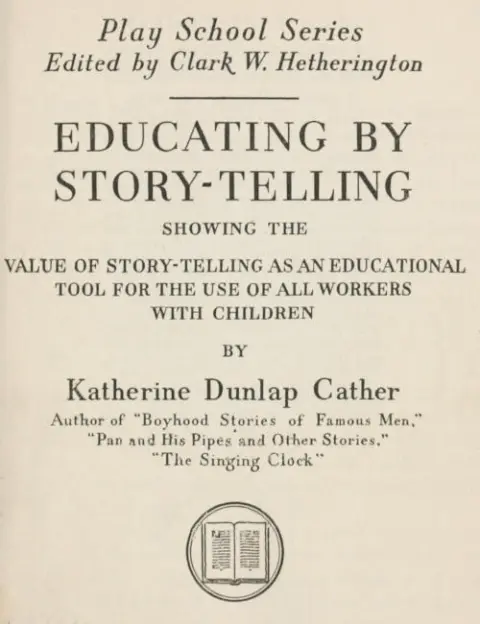
"Educating by Story-Telling" by Katherine Dunlap Cather is an educational guide written in the early 20th century. This book advocates for the use of storytelling as a powerful educational tool for those working with children, emphasizing its role in enhancing learning experiences and moral development. The author presents the value of storytelling not just as entertainment, but as a means to enrich children’s lives and education across various subjects, promoting a deeper understanding of literature and life principles. The opening of the work establishes the author's extensive experience with children and outlines the intention behind the book, which seeks to provide a structured approach to effective storytelling in educational settings. The author discusses how storytelling can be a vessel for cultural heritage and moral values, illuminating children's imaginations and interests. Cather proposes that an understanding of children's developmental stages and interests is crucial for selecting stories that will resonate with them, encouraging educators to adeptly match narratives to the psychological needs of their students. Overall, the beginning sets a foundation for the exploration of storytelling’s transformative potential in both the classroom and home environments.
Introduction adapted from the source catalogue; source summaries may be automatically generated.
Free to read · English · 121,766 words · No account needed
MAKE TIME FOR A GOOD BOOK
On by default. Untick to stop anonymous reading totals. Each page counts after 10 seconds in view. How this works.
Anonymous counting is on unless you have switched it off.
Story-telling,
purpose and aim of, 1-11;
interests in rhythmic period, 12-18;
interests in imaginative period, 20-30;
interests in heroic period, 32-41;
interests in romantic period, 42-50;
building the story, 52-57;
telling the story, 58-68;
and appreciation of literature, 69-82;
to awaken an appreciation of music, 83-93;
and appreciation of art, 95-106;
and dramatization, 107-117;
Bible stories, 118-131;
teaching of ethics, 132-140;
to intensify interest in history, 143-167;
to intensify interest in geography, 168-177;
and nature study, 178-190;
in teaching domestic science and manual training, 192-197;
general statement as to value of, 198-201.
Story-writing, course in, recommended for the professional
story-teller, 52.
Straparola, publisher of first collection of fairy tales, 26.
Supernatural beliefs,
primitive man’s, as revealed in fairy tales, 25-27;
effect of physical features of different regions upon, and so upon
fairy tales, 27.
Surprise element in stories, 55-57.
Suspense,
element of, 6, 55;
increase in, by use of pauses, 64-65.
Swedish legend, “The Emperor’s Vision,” 306.
“Sweet and Low,” suggested method of interesting children in, 73-74.
Swiss legends retold, 274, 311.
Syrian legend, “The Shepherd Who Turned Back,” 311.
Talking machines, use of, for introducing children to music, 86, 89.
Tell, William, stories of, suitable for children in heroic period, 39.
Thuringian folk tales,
gathered and preserved by the Grimms, 27;
retold, 204, 209, 212, 218, 226, 227.
Totemistic theory, Lang’s, 3, 25.
“Ugly Duckling,”
unsuitable for children who have never been in country, 15;
surprise element in climax of, 56.
Van Dyck, Anthony, familiarizing little children with paintings by,
101.
Van Dyke, Henry,
on avoidance of moralizing in story-telling, 67;
works of, a help to the Bible story-teller, 123.
Vedas, theory of origin of fairy stories in the, 25.
“Venice, The Pigeons of,” story of, 263.
Vincent, Jacques, fascination of stories by, 50.
Vocational training, use of story-telling in, 192-197.
Welsh folk tale, “The Greedy Cobbler,” 251.
“Why Grizzly Bear Goes on All Fours,” Shasta legend, 299.
“Why the Japanese Love the Stork,” Japanese legend, 296.
“Wilhelmina’s Wooden Shoes,” story of, 283.
“Wonderful Builders, The,” story of, 188-190.
Wonder tales, period when child enjoys, 20.
Your reading position is saved on this browser. Take it to another device with a library code. Reading pages adapt to text, rather than matching a printed edition.
BEHIND THE BOOK
This eBook is for the use of anyone anywhere in the United States and most other parts of the world at no cost and with almost no restrictions whatsoever. You may copy it, give it away or re-use it under the terms of the Project Gutenberg License included with this eBook or online at www.gutenberg.org. If you are not located in the United States, you will have to check the laws of the country where you are located before using this eBook. Read the source licence.
The original source file, including credits and licence, is retained by this library. Request an original-format copy at no charge. Please include the book title and Project Gutenberg identifier #58255.
KEEP YOUR CURIOSITY GOING
Abby Morton Diaz
Helen Hunt Jackson
Mary Frances Blaisdell
Stuart Dodgson Collingwood

Kate Douglas Smith Wiggin
Hesba Stretton