
The William Henry Letters
Abby Morton Diaz
THE CLASSIC COLLECTION · 1918
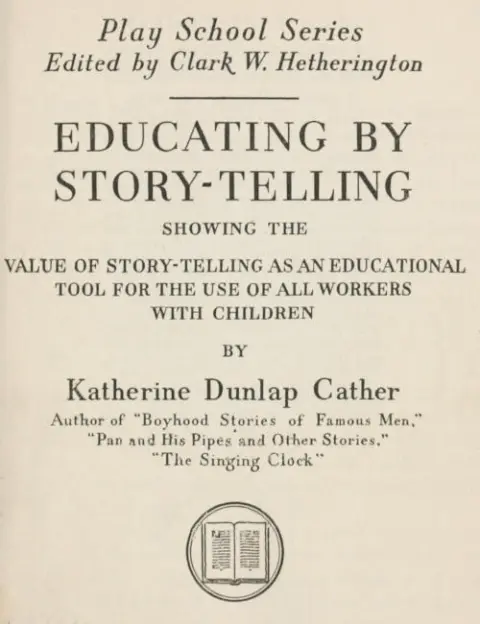
"Educating by Story-Telling" by Katherine Dunlap Cather is an educational guide written in the early 20th century. This book advocates for the use of storytelling as a powerful educational tool for those working with children, emphasizing its role in enhancing learning experiences and moral development. The author presents the value of storytelling not just as entertainment, but as a means to enrich children’s lives and education across various subjects, promoting a deeper understanding of literature and life principles. The opening of the work establishes the author's extensive experience with children and outlines the intention behind the book, which seeks to provide a structured approach to effective storytelling in educational settings. The author discusses how storytelling can be a vessel for cultural heritage and moral values, illuminating children's imaginations and interests. Cather proposes that an understanding of children's developmental stages and interests is crucial for selecting stories that will resonate with them, encouraging educators to adeptly match narratives to the psychological needs of their students. Overall, the beginning sets a foundation for the exploration of storytelling’s transformative potential in both the classroom and home environments.
Introduction adapted from the source catalogue; source summaries may be automatically generated.
Free to read · English · 121,766 words · No account needed
MAKE TIME FOR A GOOD BOOK
On by default. Untick to stop anonymous reading totals. Each page counts after 10 seconds in view. How this works.
Anonymous counting is on unless you have switched it off.
Recitations, shortening of, to give time for story-telling, 169.
“Red Riding Hood,”
first appearance of, 26;
beginning of, 54;
climax of, 56.
Reference work necessary to story-telling, 11.
Rembrandt, story of “Wilhelmina’s Wooden Shoes” dealing with life of,
283.
Repetition in jingles, surprise element in, 57.
Repetitive stories, fascination of, in rhythmic period, 13-14.
Reynolds, Sir Joshua, pictures by, suitable for young children, 98.
Rhine, legend of the, “The Pet Raven,” 317.
Rhythmic period, story interests in, 12-18.
Richards, Laura E., Life of Florence Nightingale by, 47.
“Riquet o’ the Tuft,” published by Perrault, 27.
Robin Hood,
story of, a good adventure tale, 34-35;
material for dramatic work in, 114.
Roland and Oliver, dramatic qualities in tale of, 37.
Romantic period, story interests of childhood in, 42-50.
Rubens, pictures by, suitable for children of intermediate period, 103.
Ruskin, John, on use of Bible stories, 119.
“St. George and the Dragon,” a favorite story in heroic period, 38.
Scheffel, J. V. von, Ekkehard by, 49.
Schmidt, Canon, story of “The Easter Eggs” adapted from, 229.
Schools,
place given story-telling in, 8-9;
time for telling stories in, 67;
mistake of study of literature in, by dissecting process, 75-76;
value of story-telling in, 199-200.
Schubert, Franz, story concerning boyhood of, 89-93.
Science teaching,
story-telling and, 178-190;
stories to use in, 255, 325, 331.
Scottish Highlands, story-telling in, 5.
“Search for the Seven Cities, The,” by Margaret Graham Hood, 149-167.
Sentimentalism in stories, lack of response by children to, 184.
Shasta legend, “Why Grizzly Bear Goes on All Fours,” 299.
Shedlock, Marie L., five minutes of silence after each story advocated
by, 57.
“Shepherd Who Turned Back, The,” Syrian legend retold, 311.
Sicily, knowledge of classics possessed by peasants of, 18.
“Silver Cones, The,” story of, 222.
Slavic wonder tale, “Prince Unexpected,” 239.
“Sleeping Beauty,”
“Brier Rose” a modification of same story, 25;
published by Perrault, 26.
Social instincts, development of, by use of stories with geographical or historical background, 170-171.
Southey, Robert, “The Three Bears” by, 28.
Spyri, Johanna,
Moni the Goat Boy by, 49;
story of “The Silver Cones” adapted from, 222.
Stevenson, R. L., interesting children in works of, by telling stories
about, 71-73.
Story interests of childhood,
in rhythmic period, 12-18;
in imaginative period, 20-30;
in heroic period, 32-41;
in romantic period, 42-50.
“Story of a Salmon, The,” by David Starr Jordan, 255.
“Story of a Stone, The,” by David Starr Jordan, 331.
Your reading position is saved on this browser. Take it to another device with a library code. Reading pages adapt to text, rather than matching a printed edition.
BEHIND THE BOOK
This eBook is for the use of anyone anywhere in the United States and most other parts of the world at no cost and with almost no restrictions whatsoever. You may copy it, give it away or re-use it under the terms of the Project Gutenberg License included with this eBook or online at www.gutenberg.org. If you are not located in the United States, you will have to check the laws of the country where you are located before using this eBook. Read the source licence.
The original source file, including credits and licence, is retained by this library. Request an original-format copy at no charge. Please include the book title and Project Gutenberg identifier #58255.
KEEP YOUR CURIOSITY GOING
Abby Morton Diaz
Helen Hunt Jackson
Mary Frances Blaisdell
Stuart Dodgson Collingwood

Kate Douglas Smith Wiggin
Hesba Stretton